
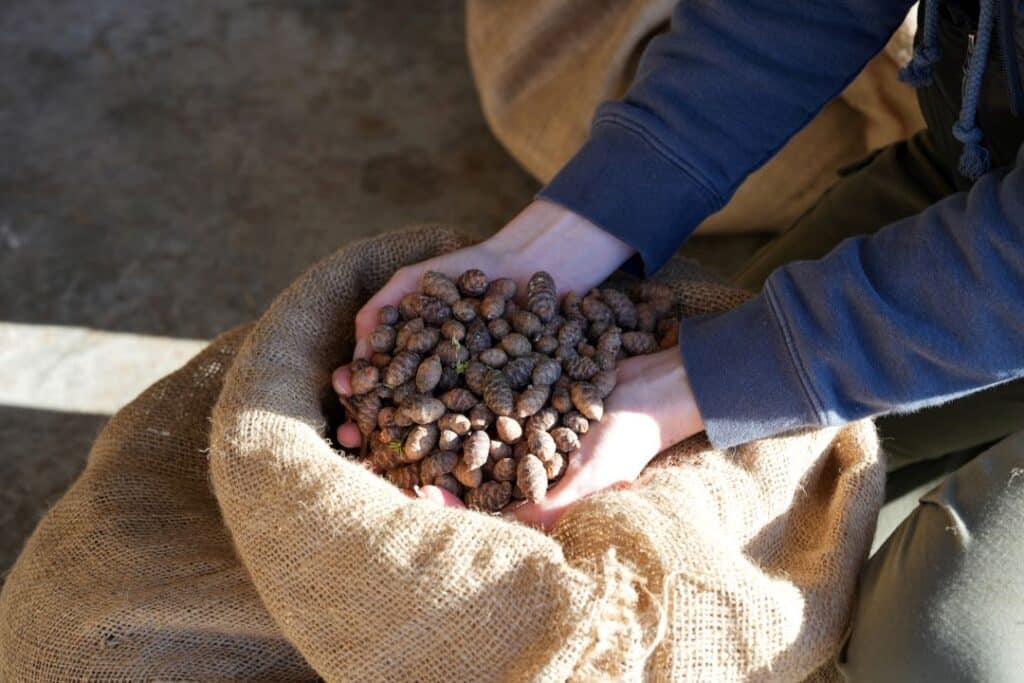
The Minnesota Department of Natural Resources is looking for people to help collect black spruce cones. Collectors will be paid by the bushel. While black spruce is spread across much of the state, it primarily grows in central and northern Minnesota. Some of the collected cones will be planted on public land in the spring, while the rest will be sent to the State Forest Nursery.
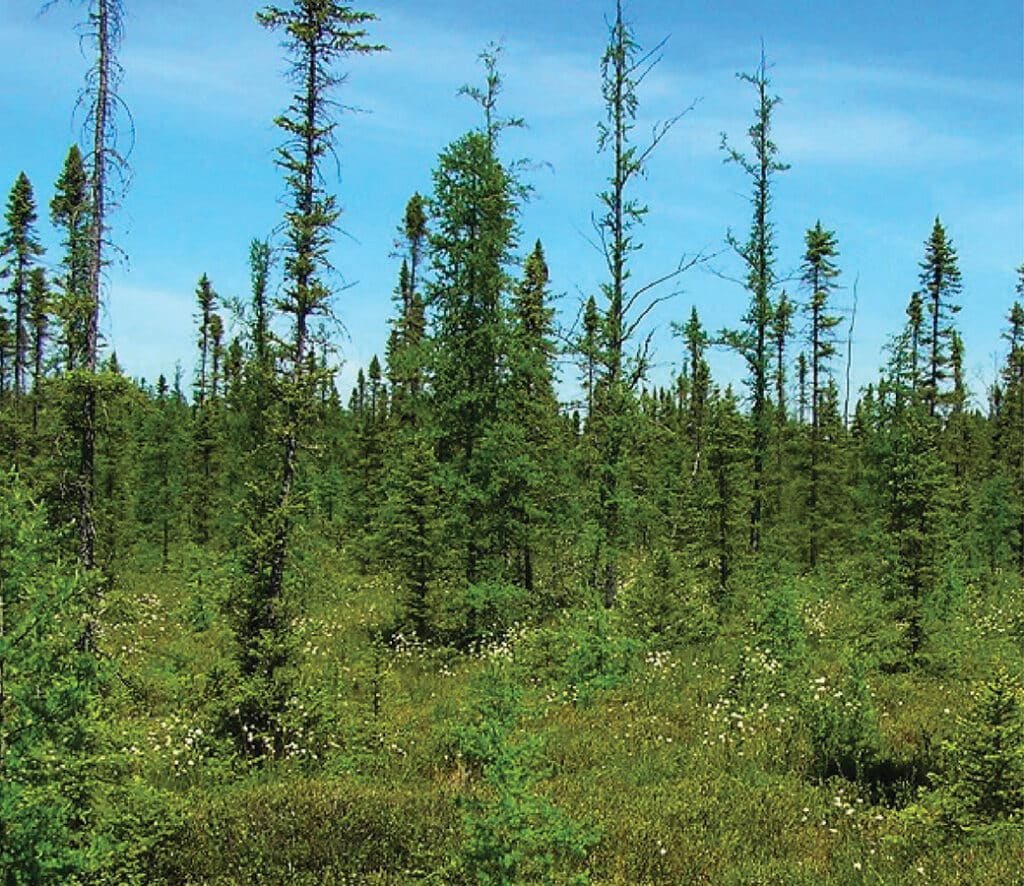
Black spruce is native to Minnesota. Iconic of northern forests, the blue-green trees are often found in marshes or bogs. Their scrappy appearance often belies their toughness.
To promote diversity and support the reforestation of Minnesota forests, the Minnesota Department of Natural Resources (DNR) urges individuals to collect black spruce cones this winter. Foresters at the State Forest Nursery will receive some of these cones, extract seeds, and grow seedlings.
When we asked the DNR about the seeding process, they explained that foresters primarily seed lowland black spruce sites after recent timber harvests. To prepare, they mix clean seed with a carrier (floor dry) to add bulk. Then they distribute the seeds from hoppers mounted on the sides of helicopters. The work is done on state- and county-managed lands in the spring or fall.
In 2025, crews reforested almost 1,2000 acres of land with 70,000 seedlings. They also spread 40 pounds of black spruce seed, or nearly 25 million seeds.
“Collecting tree seeds and cones isn’t easy work. It often means hiking through the woods in cold weather, identifying the right trees, and gathering cones for several hours,” said Sarah Ebert, DNR State Forest Nursery manager. “But for Minnesotans who enjoy being outdoors, it’s a great way to play a hands-on role in restoring and replanting forests across the state.”

How to identify and collect
The DNR asks volunteers to collect clean, closed, and ripe black spruce cones. Plus, they will pay collectors $200 per bushel for their effort. When choosing cones, volunteers should collect only native varieties and avoid nonnative varieties or strains.
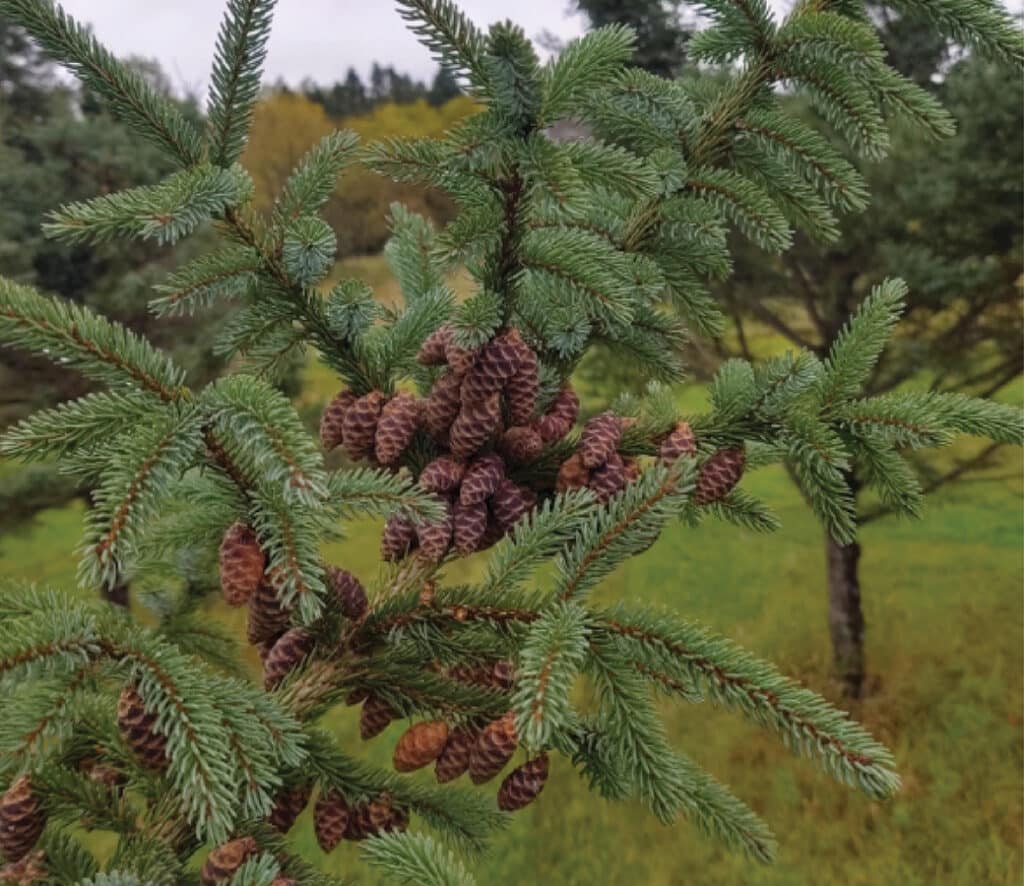
Black spruce trees usually grow to about 30 feet, but can get taller. Their bark is gray or reddish-brown and scaly, and the trees have a bluish-green hue. The needles are short, pointed, and about half an inch long. Black spruce thrives in marshes or bogs, though it can tolerate shade. When searching for cones, look for small, purplish-black cones that are about 1 1/2 inches long. Spruce and other conifers have been plagued by the worst spruce budworm outbreak since 1961. While black spruce is less susceptible than other varieties, it has still been impacted to some degree.
Volunteers can bring cones to one of the DNR offices listed on the website. Before you go, call the office to confirm whether cones are still needed. Offices that may be collecting cones in northeastern Minnesota include Two Harbors, Cloquet, Orr, Tower, and Hibbing. The agency also provides additional collection guidelines and identification tips for black spruce on its website.

More info:
- Help grow Minnesota’s future forests by collecting black spruce cones for the DNR
- Black Spruce – Minnesota Department of Natural Resources