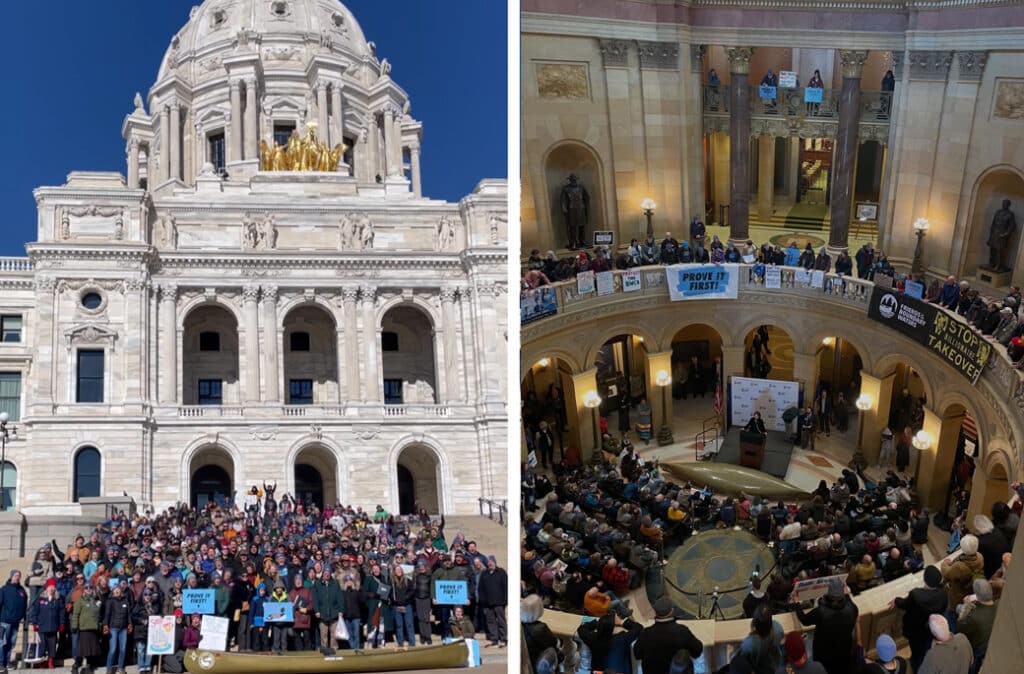
Hundreds rally for Boundary Waters as critical Senate vote looms
The fight to protect the Boundary Waters has reached a critical turning point. Following a Day of Action at the Minnesota State Capitol, all eyes are now on the U.S. Senate…

The fight to protect the Boundary Waters has reached a critical turning point. Following a Day of Action at the Minnesota State Capitol, all eyes are now on the U.S. Senate…
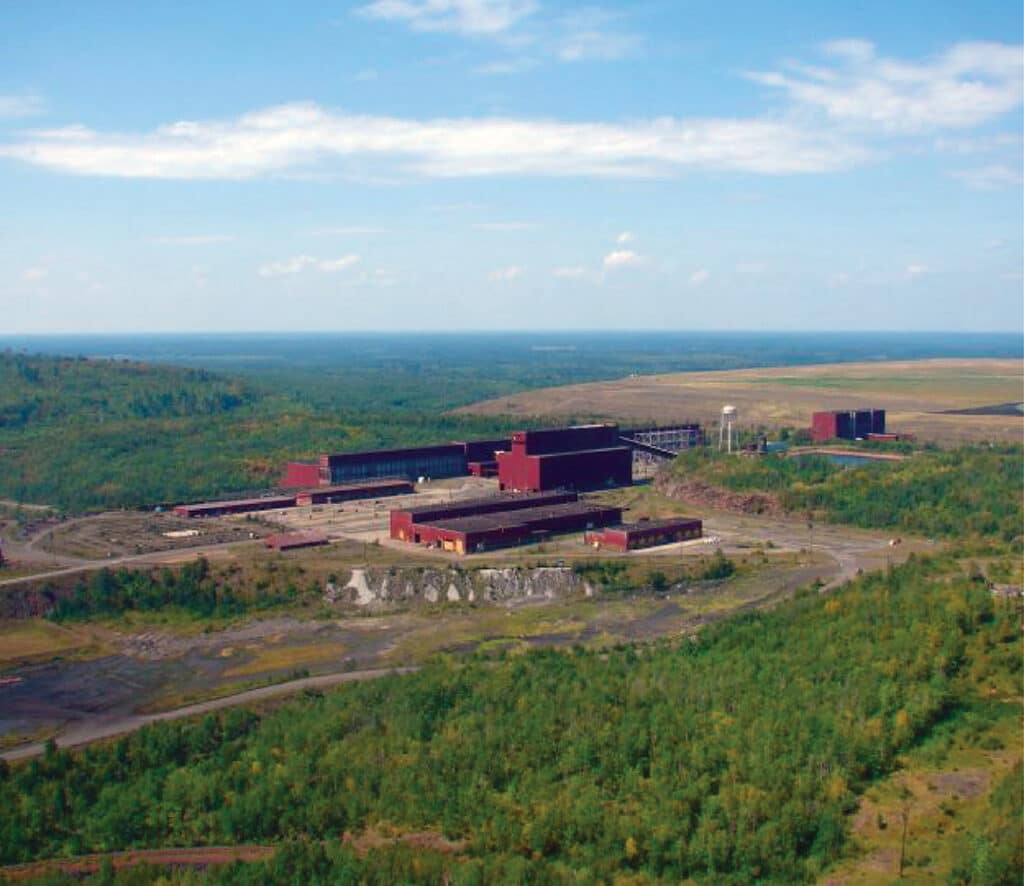
President Trump recently signed an executive order directing federal agencies to accelerate domestic mineral production in northern MN, including the proposed NorthMet mine. Advocacy groups criticize the effort, saying the current administration is ignoring science.
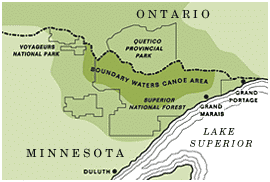
Last week, Representative Pete Stauber attached five amendments to the National Defense Authorization Act. These aim to overturn the 20-year mining ban near the Boundary Waters Canoe Area Wilderness (BWCAW). While four of those amendments were defeated, one remains under review.
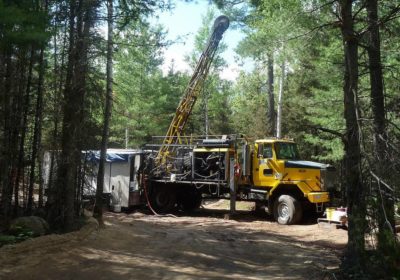
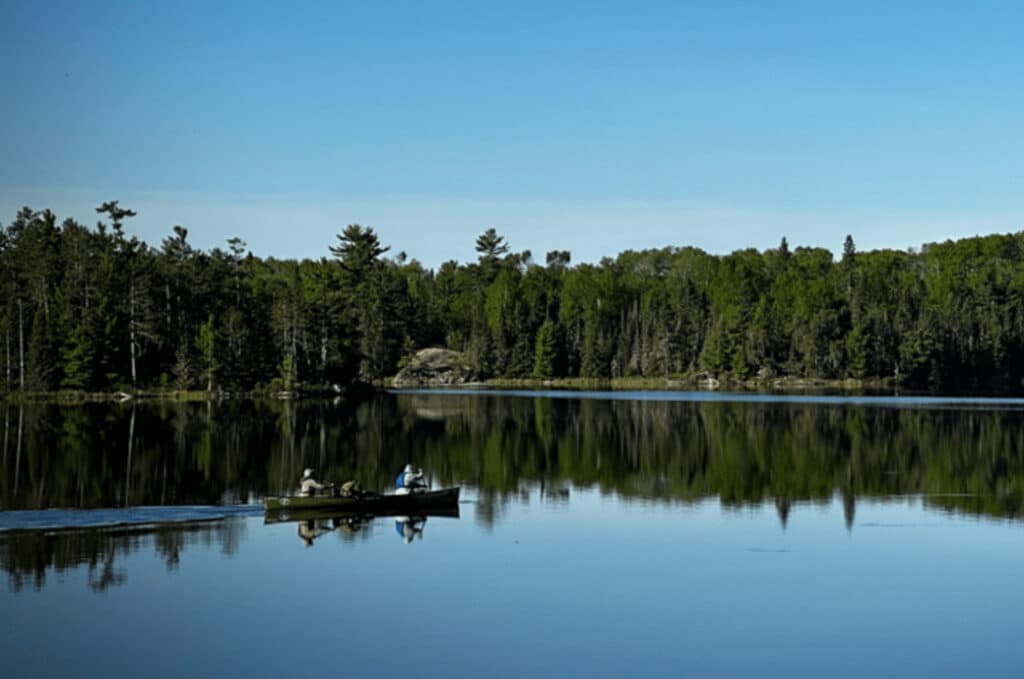
After last month’s announcement that protects the BWCAW for 20 years, more threats and protection work remains.
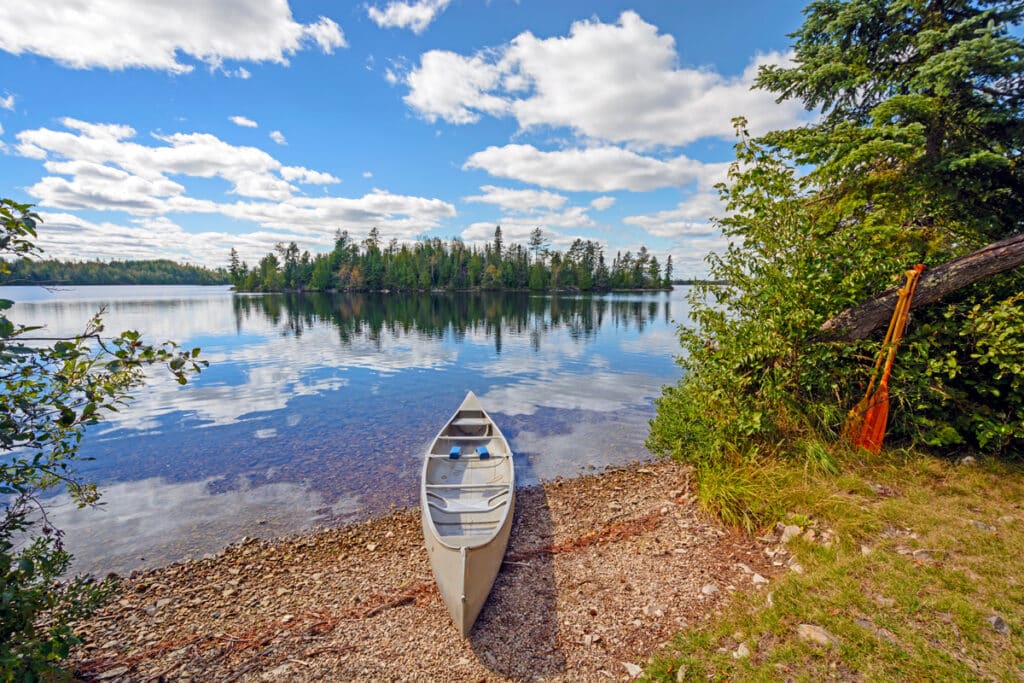
Agency order protects wilderness from mining pollution for maximum time allowed by law.
Lawyers argue most recent reversal should be overturned once again.
“The environmental assessment released today provides a strong scientific foundation for a 20-year ban on copper mining near the Boundary Waters…”
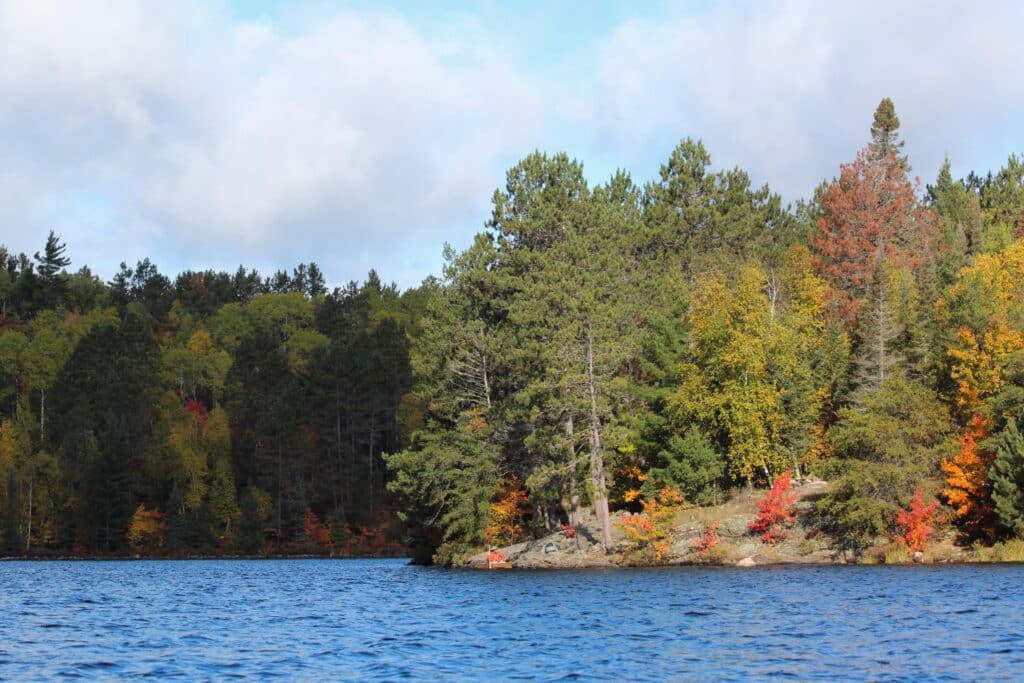
Mark Dayton: “…the only acceptable goal is permanent protection from copper mining near the Boundary Waters.”
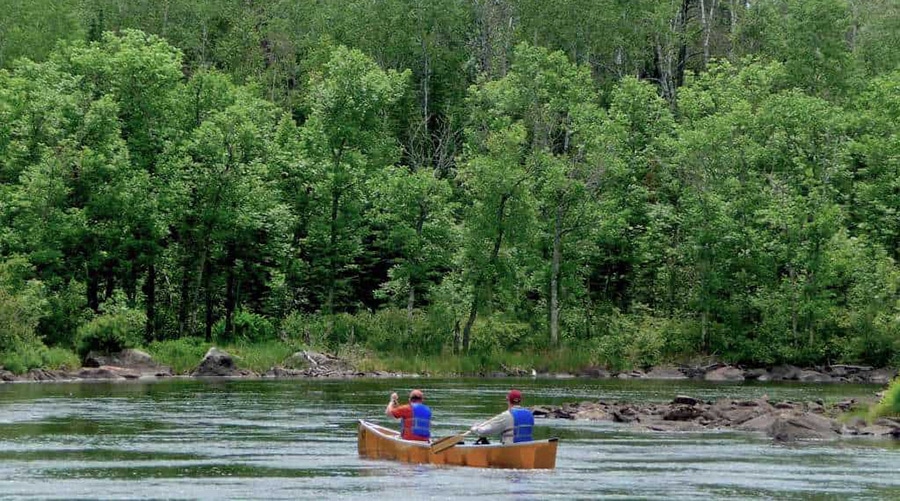
Legal settlement requires DNR to determine if untested regulations are strong enough to protect Boundary Waters.
Environmental groups have added a new complaint to their lawsuit about how the federal government decided to renew mineral leases for Twin Metals. The groups say representatives exerted “undue influence” on Forest Service personnel.
Numerous groups argue that federal government failed to follow law when issuing controversial leases to search for minerals on public land.
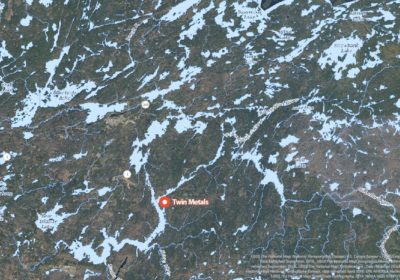
Major blow to wilderness protection comes as judge rules in favor of reversal, restoring leases to company seeking to mine at edge of Boundary Waters.
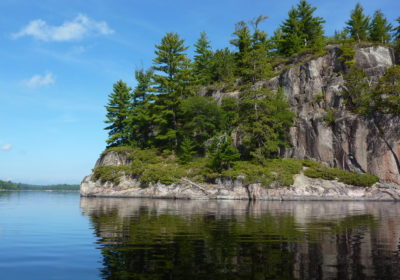
Coalition of Ojibwe bands calls on Congress to pass legislation blocking copper-nickel mines in the wilderness watershed.
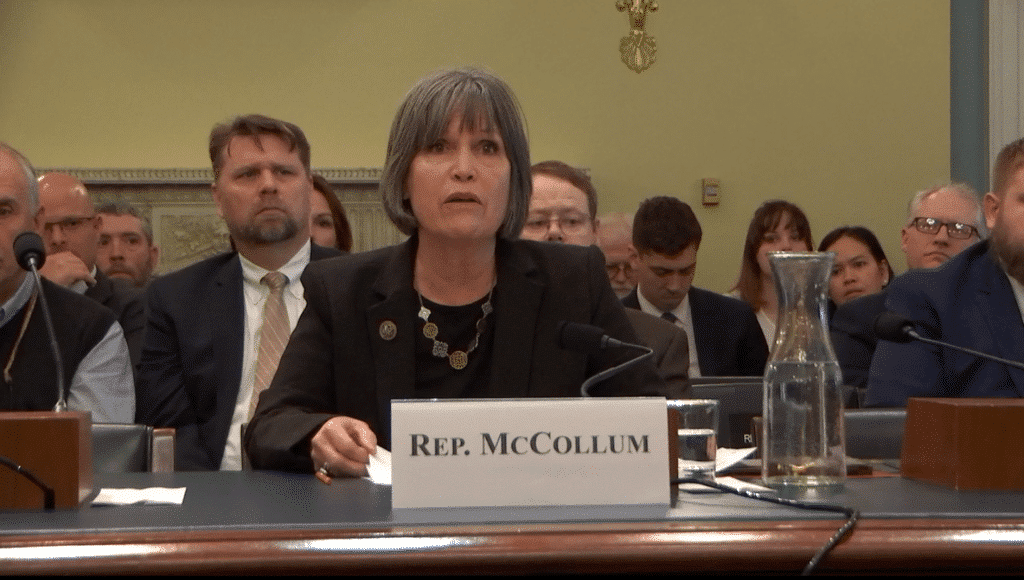
Members of Congress questioned witnesses who testified about the Boundary Waters, the economy, and past decisions to protect northeastern Minnesota’s lakes and rivers.
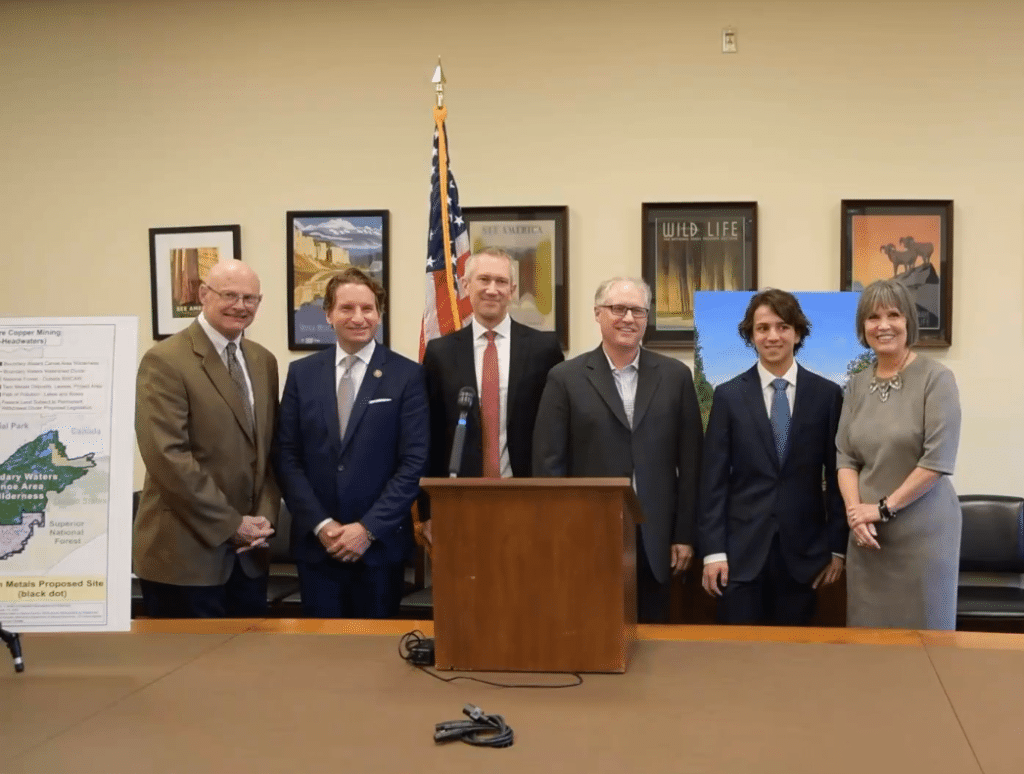
Bill introduced today by Rep. Betty McCollum seeks to stop any and all copper-nickel mining activity in parts of the Superior National Forest where water flows into the wilderness.
Proposed copper-nickel mine on the edge of the Boundary Waters is official after company submits first plans and other documents to regulators.
Biggest newspaper in the state says the risks are too great for copper-nickel mining near waters that flow into the wilderness area.
DNR announces it will analyze the project on its own rather than in partnership with the federal government, unlike the PolyMet process.
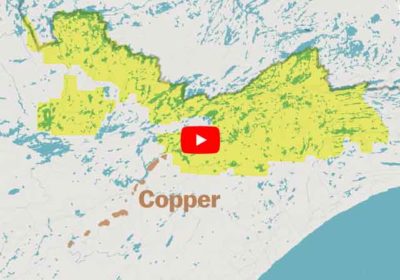
Revealing new report on the debate over Twin Metals mine proposal, features opinions in Ely and potential impacts on the Superior National Forest.
In-depth report from ‘Almanac’ features interviews with Ely residents holding diverse perspectives on the Twin Metals proposal and what it might mean for the Boundary Waters.