
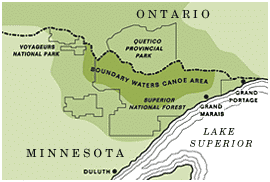
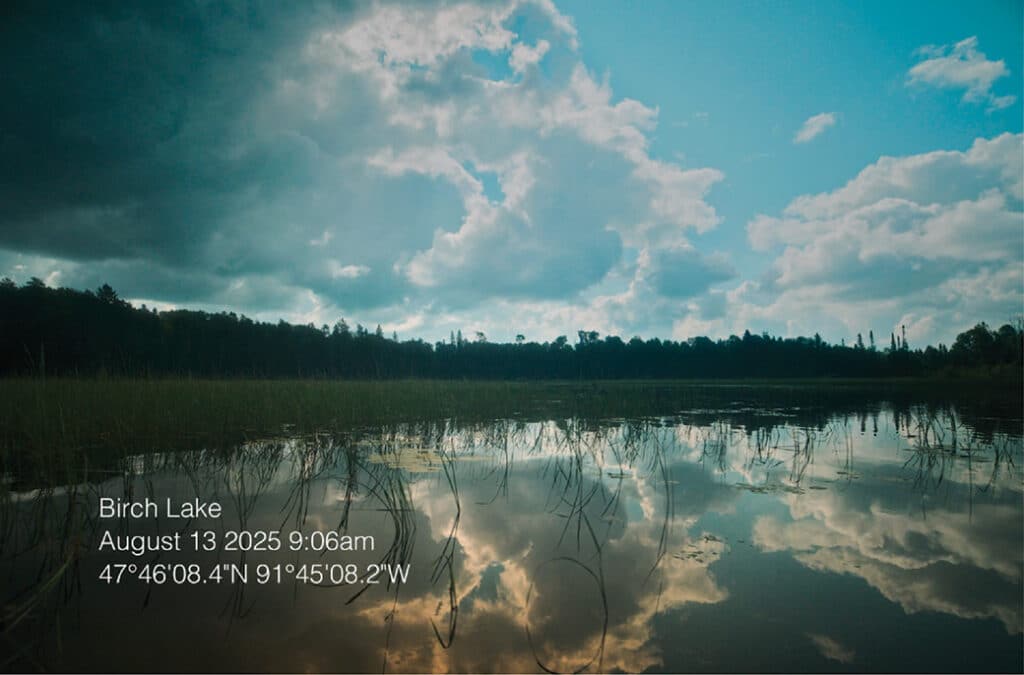
Minnesota cinematographer Alex Horner is using his camera to tell a story that may soon change forever. His latest project focuses on the fragile watersheds near the proposed Twin Metals copper-nickel mine, just miles from the Boundary Waters Canoe Area Wilderness. The region, home to some of the cleanest water on Earth, now sits at the center of a heated debate over mining and environmental protection. Through a series of short films shared on Instagram, Horner is creating a visual record — one that could serve as both art and evidence if the landscape is altered beyond recognition.
Keeping a record
Deep in the woods near Birch Lake, cinematographer Alex Horner rode his dirt bike down a Forest Road. Camera in hand, he scanned the surrounding forest. He paused near a creek, captivated by its sounds. Life stirred within that small patch of woods. Vibrant mosses and lichens clung to a rock, and arching ferns framed the edges. He paused to shoot some film and lingered in the area, capturing images that spoke louder than words.
For the past year, Horner has been working on a personal project. He is documenting the area where Twin Metals plans to build a copper-nickel mine. The proposed mine site lies 9 miles south of Ely and 5 miles from the Boundary Waters Canoe Area Wilderness (BWCAW). He’s been sharing short, atmospheric films on Instagram that draw viewers into the region’s intricate ecosystems.
Until this project, Horner had never explored the area where the mine complex would be built. Thick boreal forest surrounds the area near the convergence of Birch Lake and the South Kawishiwi River. With public lands making headlines, he decided to head north and see the region for himself. Out of this curiosity grew a personal journey to share these places before they are potentially lost forever.
For decades, the wilderness has been a place of beauty and solitude for him. In winter, he ventures into the BWCAW, pulling his sled full of gear across frozen lakes. He values the stillness that season brings, seeking quiet campsites tucked among the trees.


Decades long debate
Alex has long followed the debates surrounding mining near the BWCAW. If mining interests get their way, they could alter the forest forever. The Twin Metals mine’s push to reinstate two mineral leases has sparked controversy for more than a decade. If approved, it would allow Antofagasta, the Chilean company that owns Twin Metals, to build a copper-nickel mine. It is projected to operate for about 25 years and process 20,000 tons of ore per day.
Supporters, including Rep. Pete Stauber of Minnesota’s 8th District, say the mine would boost the economy and create jobs. Opponents, such as Save the Boundary Waters, argue that waste rock from a copper-nickel mine would generate sulfates that pollute nearby watersheds, including the Rainy River watershed that flows north.
Alex said he does not necessarily oppose mining. However, exploring the area for himself made it clear to him that the mine would likely have a negative impact. “I am trying to be impartial,” he said. “I want to understand it, see it for myself, and make sense of it with my own eyes—why it’s not a good idea to mine here. And I want to see what they have to destroy in order to accomplish that,” Horner said.


See it for yourself
He hopes his Instagram posts bring more awareness to viewers. Alex urges people to see it for themselves. “Check it out for yourself and go for a hike,” he said. “Spend an entire day exploring that area. You start imagining the impact and infrastructure needed to develop the mine.”
Most of his imagery comes from stopping alongside forest roads. He also finds inspiration while kayaking nearby lakes and creeks. “Anyone can access it. It’s part of the reason I included the locations,” he said. Over multiple seasons, and possibly the next few years, Alex will gather imagery in order to develop a comprehensive record of the area. “If the worst should happen,” he says, “then we can point to it and say look how this has changed.”
You can follow Alex’s film project on Instagram @alex_horner and also view his work at alexhorner.com.

More info:
- Mining Projects near the Boundary Waters
- Twin Metals MN appeals sulfide mining leases in court
- Birch Lake near BWCAW polluted by sulfate