
Voyageurs National Park has a new superintendent. Minnesota’s only national park welcomes Jennifer Onufer, who will begin her new post this fall.

Decades of experience
Voyageurs Conservancy announced that Voyageurs National Park has a new superintendent. Previously, Jennifer Onufer served as park manager for two different parks in California. She brings more than two decades of experience to her new role.
Pete Swisher, acting deputy director for the National Park Service – Midwest Region, said, “Jennifer brings an exceptional blend of leadership experience, operational skill, and commitment to partnerships.” He added, “Her record of strengthening communication, improving visitor safety and enhancing resource protection will serve Voyageurs National Park and its communities well as she steps into this role.”
Her prior work included roles at San Francisco Maritime National Historical Park, Grand Canyon National Park, and other NPS stations in the country.
In the release, Onufer stated, “I am honored to join the team at Voyageurs National Park and look forward to working with staff, partners and the local community to protect the park’s unique resources and enhance the visitor experience.” She continued, “Throughout my career, I’ve seen the power of collaboration and innovation in preserving our public lands, and I’m excited to bring that spirit to Voyageurs.”


State’s only national park
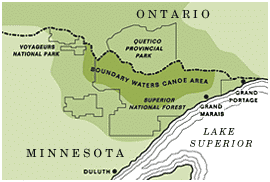
Minnesota’s only national park spans 218,000 acres. Established in 1975, it lies near International Falls in one of the state’s northernmost regions. Its water-filled landscape draws canoeists, boaters, anglers, and kayakers to its deep blue waters. The park has nearly 655 miles of undeveloped shoreline and more than 500 islands spread across numerous lakes. Many of the larger lakes share the international border between Minnesota and Canada.
While one remote lodge is accessible only by water, most visitors camp at either a frontcountry or backcountry site along a rocky shoreline or beach. All but two campsites require a watercraft to access. More developed campgrounds and RV hookups are available just outside the park. Like the Boundary Waters Canoe Area Wilderness to the east, you can find pockets of silence as many parts of the park are remote.
Throughout the season, the park has ongoing guided hikes and other educational activities for visitors. Beyond these activities, Voyageurs draws all kinds of astro-enthusiasts who flock to its dark skies. On some nights, the aurora borealis (northern lights) dances in an array of light above the lakes and the northern sky.

Wildlife is abundant in the park. Though rarely seen, wolves, black bears, and moose are among the larger animals that inhabit the park. In addition, all kinds of birds, including waterfowl, migrate through the area and stop to raise their young along its numerous waterways.
The park is named for French-Canadian Voyageurs who plied the border waters starting in the late 17th century, trading goods and seeking fur. However, evidence shows humans occupied the region for over 10,000 years. Mostly nomadic, they moved around following the seasons and wildlife. Today, the Bois Forte Band of Chippewa (Ojibwe), along with other Tribal Nations, partner with the national park as stewards of the land.
Onufer will step into her position this fall. She has a master’s degree in resource management from Central Washington University. She earned her bachelor’s degree in anthropology from Mercyhurst College.

More info:
- Voyageurs National Park Welcomes New Superintendent Jennifer Onufer – Voyageurs Conservancy
- Voyageurs National Park