June 11, 2026 Update:
The U.S. Forest Service-Superior National Forest will allow campfires again in the Boundary Waters Canoe Area Wilderness (BWCAW) beginning Friday, June 12. Deputy Forest Supervisor Drew Stroberg signed a “termination of notice” to the emergency order, according to a press release, lifting the week-long ban. Recent rains in the area have likely contributed to this change, and more rain is in the forecast for northeastern Minnesota.
Additional information on fire alerts or forest closure updates can be found at the Superior National Forest website.
June 4, 2026:
Beginning Saturday, June 6, the US Forest Service is prohibiting campfires in the Boundary Waters Canoe Area Wilderness due to dry conditions and elevated wildfire risk.
Dry conditions persist
According to a release from the USFS–Superior National Forest, the agency is prohibiting campfires in the Boundary Waters Canoe Area Wilderness (BWCAW) starting June 6. Dry conditions in the woods increases the wildfire risk.
Since the season started, multiple wildfires have broken out across northern Minnesota. Crews are currently battling a wildfire on the north shore of Burntside Lake, just 8 miles northwest of Ely. Officials are still investigating the causes of some of the fires, but they have reported that humans may have caused at least one.
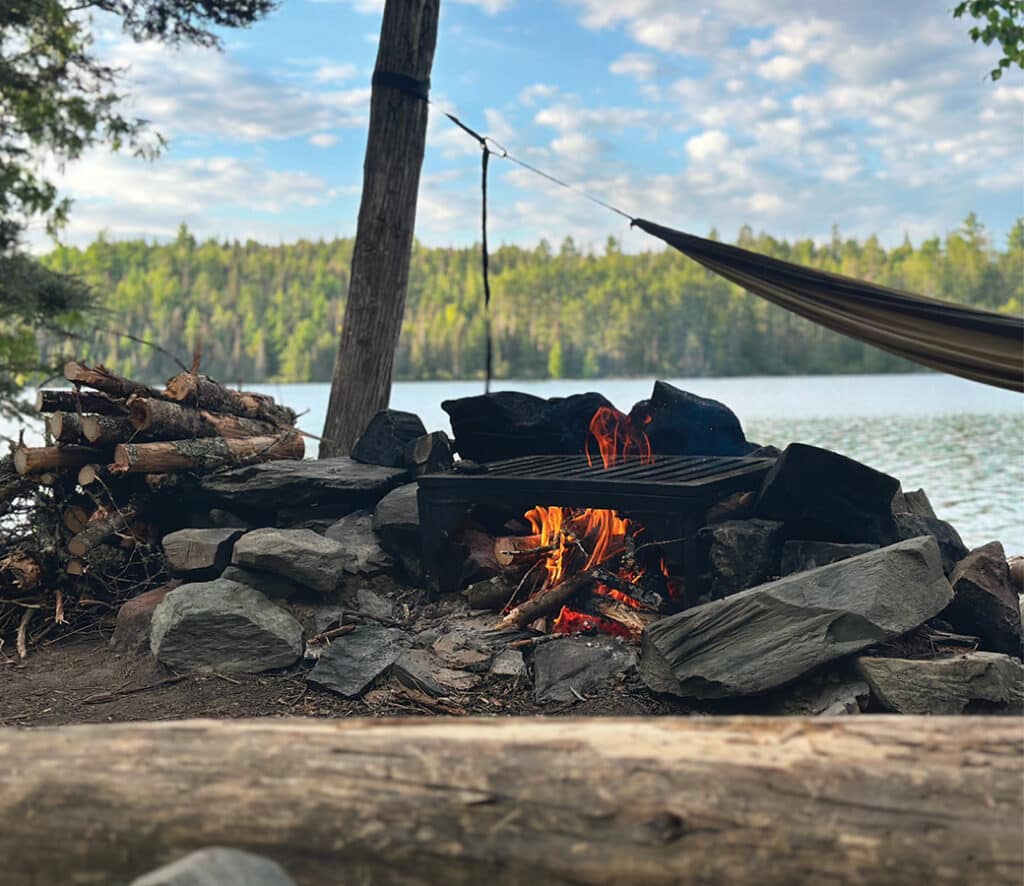
When fires break out in the wilderness, they require multiple responding agencies and substantial resources to address them. Because of the location, access to remote areas can be challenging for crews and their equipment. First-come, first-served campsites in the BWCAW include a Forest Service–installed fire grate and a log seating area.
The emergency order includes multiple restrictions , including “the ignition, building, maintaining, attending, or using a fire or campfire, including charcoal grills and barbecues, coal, and woodburning stoves.”
Although the Forest Service has banned campfires in the BWCAW, gas or propane cook stoves are allowed. However, charcoal- or wood-burning stoves and grills are prohibited. Anyone outside the wilderness area is encouraged to limit activities that could ignite a fire. Sources that could start a fire include recreational vehicles, dragging chains, and smoking devices such as cigarettes.
Get Fire Updates
Stay informed on recent wildfires, campfire bans, park closures, straight to your inbox.

Practice good fire safety
- Check that the area you’re in allows campfires or open burning.
- Always check conditions before lighting a fire.
- Keep all wood contained within a fire grate or fire ring.
- Be sure areas outside of the campfire are not at risk for lightning.
- Never leave a fire unattended.
- Keep buckets of water or hoses nearby.
- Put it out completely, saturating any remaining logs and stirring the coals with water.
The Forest Service plans to provide updates on its website and social media pages. Additional information on campfire restrictions, fire risk, and closures in northern Minnesota is available from the sources listed below.
- Superior National Forest website: https://www.fs.usda.gov/r09/superior/alerts
- Minnesota Incident Command System website: www.mnics.org
- Statewide fire restriction information: https://mnics.org/wpress/counties-added-to-spring-burning-restrictions