


This is tougher than I expected, I thought to myself as I ascended another scenic overlook along the Bass Lake Trail just outside of Ely, Minnesota. Here in northeast Minnesota, the North Shore of Lake Superior is famous for its rocky, rugged trails and breathtaking vistas. But less than 70 miles inland from the great lake lies a quieter gem: a stunning trail system in the Superior National Forest that’s sure to take your breath away.
I hadn’t planned to hike the Bass Lake Trail that day. In fact, I didn’t know the trail existed until the evening before. I was supposed to be backpacking on the Superior Hiking Trail that week with a friend. But after some unexpected mishaps, our trip ended early, and I was left looking for a last-minute adventure.

Since it was a peak midsummer weekend, every campsite along the North Shore was booked, so I decided to head inland and see what I could find. I was relieved to find a gorgeous first-come, first-served campsite at the Birch Lake Campground in the Superior National Forest. After settling into my home for the weekend, I ran into town to grab some supplies. While in town, I stopped in at the Kawishiwi Ranger Station in search of ideas for fun things to do. I grabbed some information on local hikes and headed back to Birch Lake to relax and plan the rest of my bonus adventure.
Upon reviewing the map for Bass Lake Trail, I couldn’t wait to hit the trail the next morning. I prepped my daypack for a long hike and went to bed early so I could try to beat the midsummer afternoon heat.
I was the first vehicle in the parking lot that humid summer morning. I finished the last of my coffee and fruit and grabbed my daypack. Before hitting the trail, I studied the interpretive sign near the trailhead and learned more about how this series of lakes became the stunning ridges and bodies of water they are today.


The History of Bass Lake
Before 1925, Bass Lake and Low Lake were separated by a ridge of gravel, which acted as a natural dam between the two lakes. Logging operations that occupied the area until 1920 constructed a wooden sluiceway—an artificial channel—to facilitate the easier movement of logs from Bass Lake to Low Lake. Abandoned and unmaintained, the sluiceway was eventually weakened by seepage. Then, in the spring of 1925, the sluiceway and glacial ridge washed out, leaving behind a 250-foot-wide gorge. Over the course of 10 hours, the level of Bass Lake dropped by 55 feet, reducing it to about half of its original size. Two smaller lakes, Dry Lake and Little Dry Lake, became isolated in the old lake bed.
As I hiked along the ridges of Dry Lake, it was hard to imagine that this stunning landscape was once part of a larger Bass Lake. As I looked out at Dry Falls, I tried to imagine what it was like when it was underwater. But as I made my way around the northeast tip of Bass Lake, I could easily sense that something dramatic had happened there.
Why visit the Bass Lake Trail?
If the North Shore of Lake Superior is known for its hiking, the Ely area of the Superior National Forest is known for its paddling and considered the gateway to the BWCAW (Boundary Waters Canoe Area Wilderness). Drive through town on a summer day, and you’ll see more canoes strapped to vehicles than you’ll see hikers in hiking boots.
You’ll find fewer miles of trails in the Ely area, but the ones you do find are rather spectacular. Stepping out on the trail helps you experience these seemingly endless lakes and the footpaths that connect them from a new perspective. And this trail, in particular, offers endless opportunities for adventure.


Hiking the Bass Lake Trail
One of my favorite features of the Bass Lake Trail is the opportunity to create a variety of routes. I’ve used this trail many times and have never hiked the same route twice. The most popular route is an out-and-back to Dry Falls. At just two miles round trip, the rugged terrain and abundant scenic vistas make this a great day hike for families or a nice way to catch up with old friends. Allow one to two hours to complete the trek.
Another great route is to hike the entire perimeter of the lakes. At around seven miles, you’ll want to allow four to five hours, and be sure to stash some extra snacks and water in your daypack. I’ve also done this as a figure eight, going clockwise around Dry Lake and then counterclockwise around Bass Lake for a total of about 10 miles, which will take five to six hours. On its own, the hike around Bass Lake is about six miles (three to four hours), and Dry Lake is about four miles (two to three hours).
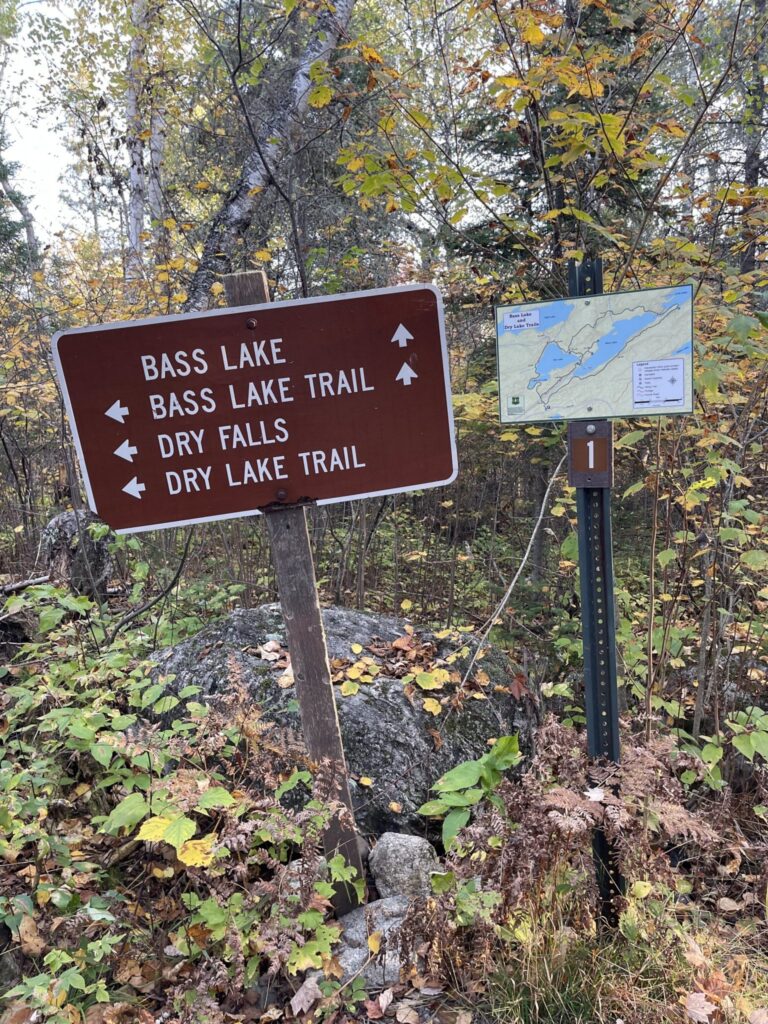
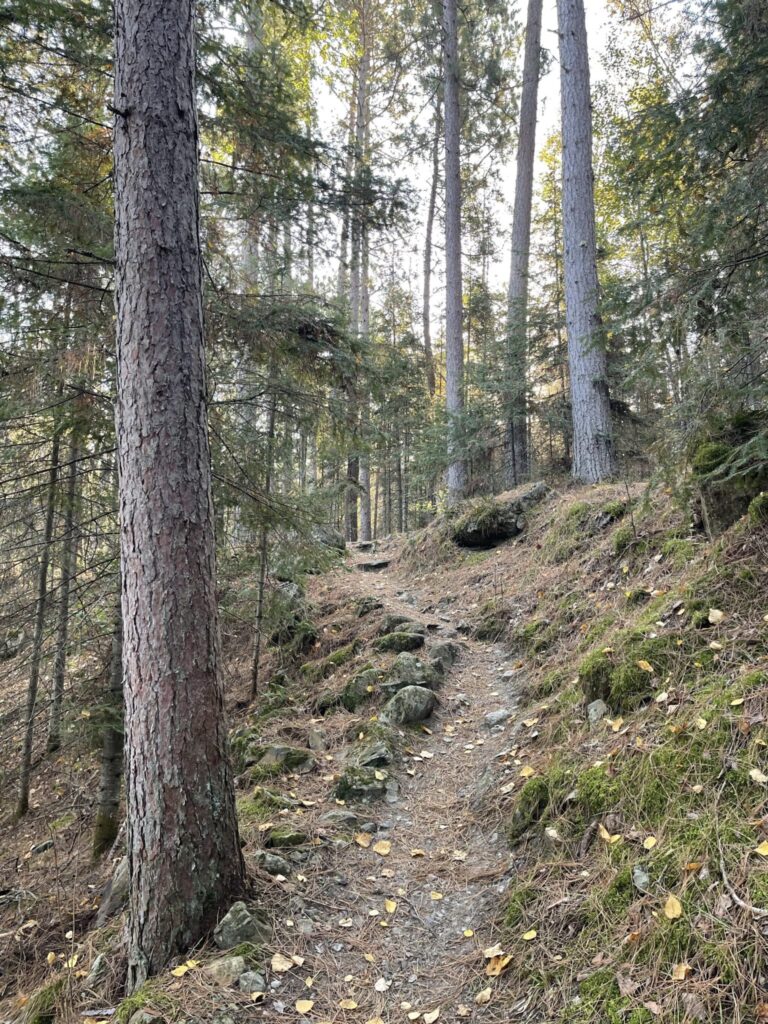
The trail is very easy to navigate with maps at each intersection. The intersections are numbered to show you exactly where you are on the map, making this a great trail to practice your map-reading and navigation skills. I would rate the difficulty as moderate due to rocky footing and plenty of elevation changes. Although your experience may vary.

Bass Lake Trail—not just for hiking
When winter comes, this is a great trail to break out your snowshoes. The trail to the right, which leads to Bass Lake, will be the easiest for beginner snowshoers. I also love breaking trail across north-country lakes once they’ve frozen over and the ice is deep enough. Always use extra care on frozen lakes. Ice is never 100 percent safe. Always review the ice safety tips from the Minnesota Department of Natural Resources here. And never venture out onto the ice alone.
If paddling is more your speed, you’re in luck. Both Bass Lake and Dry Lake are part of the Superior National Forest Circle Route. A relatively easy .6-mile portage from the parking lot leads to an easy landing on Bass Lake. From here, you can complete the whole 10-lake, 2-river backcountry canoe route, or enjoy a shorter out-and-back to Grassy Lake.
If you visit during the warmer summer months, there are plenty of great spots to stop for a swim, particularly along the north side of Bass Lake, where the old lake bottom creates a nice beachy feel. And as with snowshoeing on the frozen lake, always be sure to bring a buddy and never swim alone.
When to go
This is a stunning area to visit year-round. Spring brings new life and wildflowers, followed by long sunny days and berry picking in the summer. Fall foliage can’t be beat, and winter brings crisp quiet and solitude. My favorite time to be outdoors in northeast Minnesota, though, is September and October. The fresh, dry air, fewer bugs, and thinning crowds make it ideal for my favorite outdoor adventures.
It’s not unusual for my vehicle to be the first in any trailhead parking lot. If you enjoy solitude, this is the best time of day to go. It’s also cooler, and you’ll experience better wildlife viewing. Plus, parking is easier, especially at busy trailheads. If you’re not a morning person, later in the afternoon is another great time. Just be sure to keep an eye on the time so you can be off the trail by sunset. It’s always a best practice to carry a headlamp in your daypack, especially if you enjoy late afternoon and evening hikes.

How to get there
The Bass Lake Trail is located six miles north of Ely on the beautiful Echo Trail. Follow Highway 169, past the Superior National Forest Kawishiwi District Office, to County Road 88. Turn left on County Road 88, heading north, to County Road 116 (Echo Trail). Follow the Echo Trail for about two and a half miles until you see the parking lot for the Bass Lake Trail on your right (the north side of the road). Be prepared for a breathtaking drive.
Near the parking area, you’ll find a vault toilet. You may want to bring toilet paper and hand sanitizer, especially during peak seasons. No other facilities are available, so you’ll want to bring the water you’ll need for the day and be prepared to pack out your trash.
If giant ridges flanked with red and white pines towering over crystal-clear, undeveloped lakes sound like your happy place, you’ll want to make sure to visit the Bass Lake Trail. The moderate difficulty due to elevation changes and rocky footing makes this rewarding for experienced hikers, while the varying route options make it accessible for families and those with less experience. With the added options to snowshoe and paddle, this is a true choose-your-own-adventure outdoor lover’s dream.
Learn more:
