
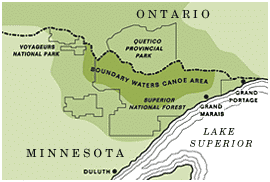

The U.S. Forest Service recently announced that it will move its headquarters to Salt Lake City, Utah. The move is part of a broader restructuring of the agency. Closer to home, two research and development facilities in Ely and Grand Rapids are slated for closure. We reached out to the Superior National Forest to learn what this may mean for the national forest.
Restructuring continues
Amid further changes at the U.S. Forest Service, the agency recently announced plans to relocate its headquarters from Washington, D.C., to Salt Lake City, Utah. The agency said it intends the move to position leadership closer to regions with the majority of the nation’s public lands. The shift is part of a broader effort to restructure the U.S. Department of Agriculture, which oversees the Forest Service.
Supporting the move, Secretary Rollins stated that, “Establishing a western headquarters in Salt Lake City and streamlining how the Forest Service is organized will position the Chief and operation leaders closer to the landscapes we manage and the people who depend on them. This includes supporting our timber growers across the country, including those in the Southeast by prioritizing a regional office and promoting policies that boost timber production, lowering costs for consumers. In the past year we have returned the Forest Service to the leading forestry and fire management organization in the world.”
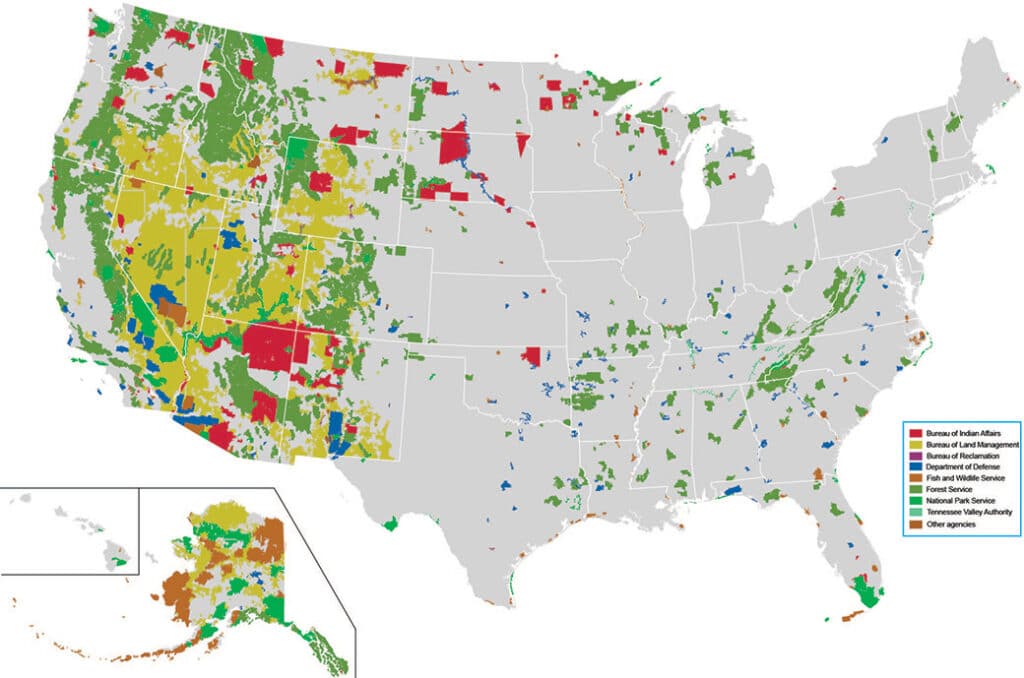
Currently, the agency oversees 193 million acres of public land. Forest Service Chief Tom Schultz stated, “This is about building a Forest Service that is nimble, efficient, effective, and closer to the forests and communities it serves.” He added that “Effective stewardship and active management are achieved on the ground, where forests and communities are found—not just behind a desk in the capital.”
According to the Associated Press, the U.S. Department of Agriculture (USDA) said it will move roughly 260 of the Forest Service positions to Utah, while the remaining 130 workers will stay in Washington, D.C.
Impacts nationwide
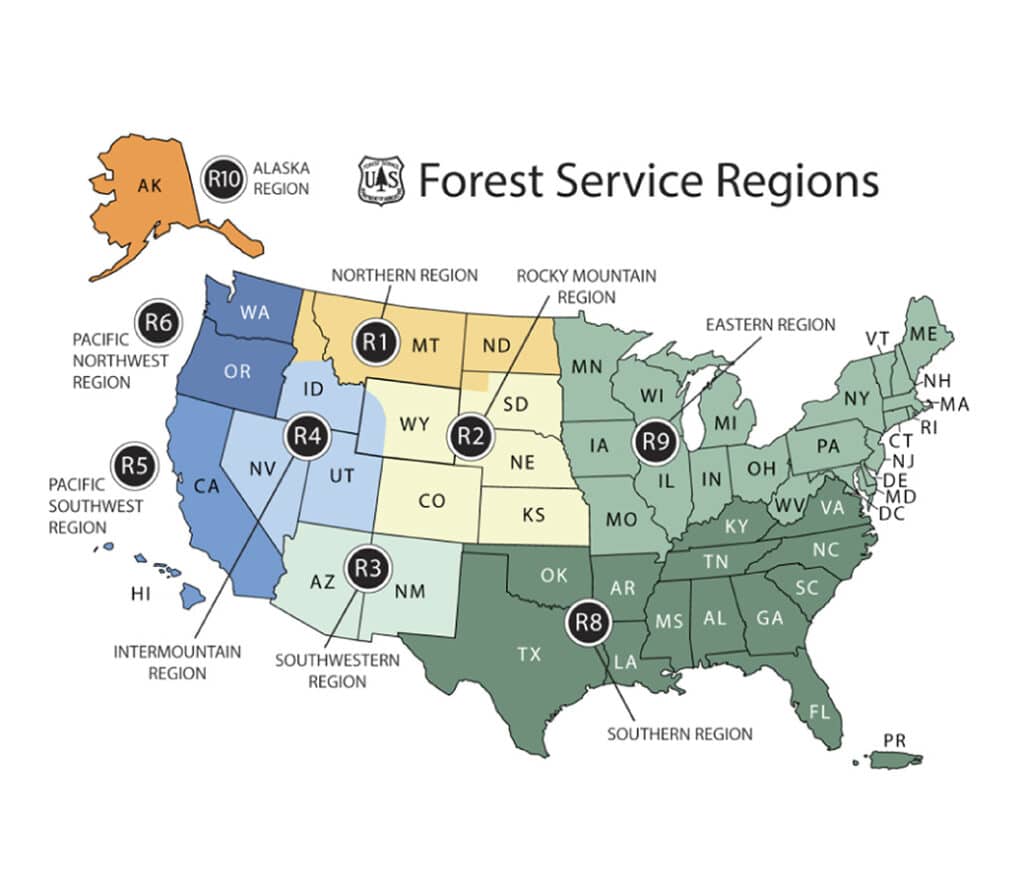
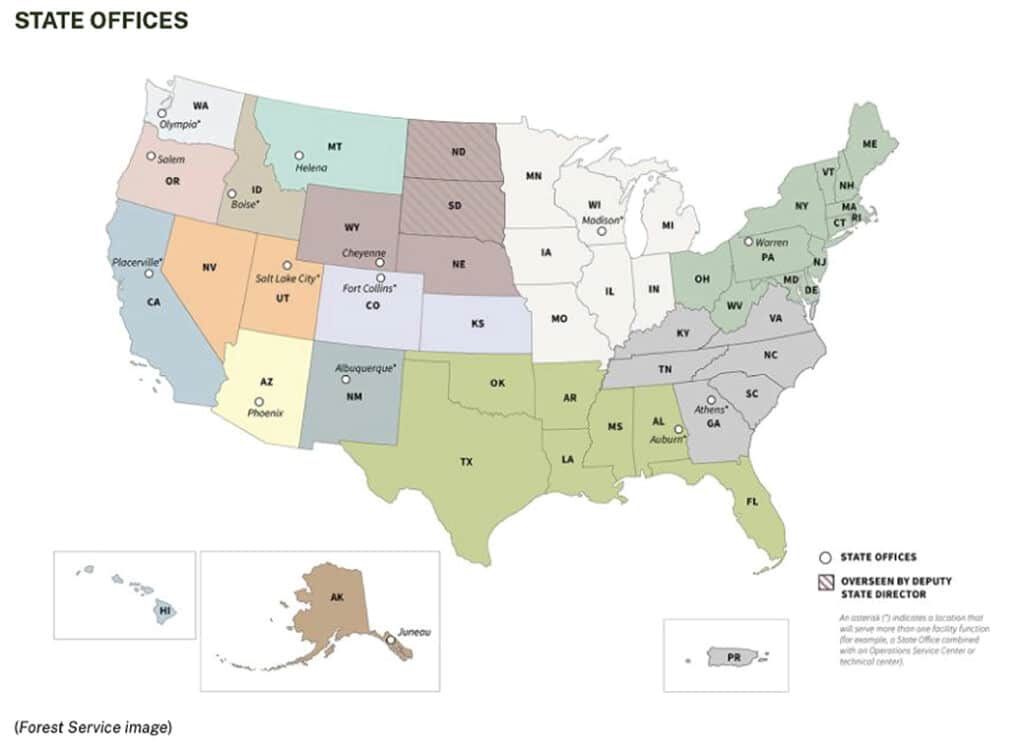
The overhaul also includes the closure of nine regional offices nationwide. Federal authorities say they are moving to what they call a “state-based organizational model”. This will mean that 15 state directors, situated throughout the country, will supervise USFS operations in one or more states. Each director oversees forest supervisors, sets priorities, and manages relationships with states, tribes, and partners. They’ll also have a small team to handle communication, government relations, and coordination.
The Forest Service’s Eastern Region (Region 9) in Milwaukee, WI, currently oversees the Superior National Forest. Under proposed reorganization plans, new operational centers nationwide may consolidate or replace regional offices. A USFS-provided map shows that an operational center in Madison will oversee Minnesota as well as numerous other nearby states.
What does this mean for the Superior National Forest?
We reached out to the USFS-Superior National Forest spokesperson about potential impacts to the forest. They told us that, “The Superior and Chippewa National Forests are committed to ensuring that all operations — including wildfire readiness and response — continue without interruption. The Forest Service’s fire readiness and response remain unchanged, and our operational firefighters and aviation resources continue to support wildfire response.” They added that, “no changes will be made to district offices or their staffing.”
However, as part of the agency’s broader restructuring, the USFS will close two research offices in northern Minnesota. Though the spokesperson did not comment when asked, KAXE reported that the Grand Rapids office is among those closures. Its facility is located on the Minnesota North College-Itasca campus. Staff there have been working on ecological forestry by seeking ways to manage forests more naturally. Their work has garnered attention both nationally and internationally. They have also studied peatlands and their role in carbon storage and climate change.
The spokesperson for the USFS did not say which research office in Ely will close, but the Kawishiwi Experimental Forest lies near Ely. In 1931, researchers set aside the forest as a place to practice silviculture, the study of how people can grow and manage forests effectively. The site does not have any facilities. The Northern Research Station oversees the Ely and Grand Rapids research facilities and 22 experimental forests.
Concerns grow over changes
Brian Palik, who recently retired from the Grand Rapids station, worked as the senior scientist for applied forest ecology for the USFS. He expressed his concerns over the impact the closures would have, telling the KAXE news that the success of “…these long-term, large-scale studies [in northern Minnesota] that are impacting how people manage wetlands and forests nationally and internationally — is because we’re close to the resource and can develop these partnerships with the different people that actually steward these ecosystems.”
Palik is not alone in his concerns. Both locally and nationally, people have questioned the changes. When Secretary Rollins announced the restructuring of the USDA last summer, thousands of people submitted comments. Critics warned that centralized oversight and budget cuts could compromise ecological management and public access. Opponents also highlighted the potential loss of local and institutional knowledge.
In a follow-up email, the federal agency clarified details circulating in the news about the changes. “Thank you for the opportunity to clarify misconceptions and correct misinformation about the consolidation of management and facilities for Forest Service Research and Development. These reorganization changes do not eliminate scientists, end research programs, or reduce our broader geographic presence; research will continue across the country. In many cities, the “closures” refer only to individual buildings where small groups of scientists sit today, and those staff and programs are simply moving into fewer facilities, ” said a USDA spokesperson. They added that “specific location information is still forthcoming.”
This latest major restructuring is part of work that has been happening for the past two years. Last year, the federal government implemented a reduction in USFS staff. Then, last April, two ranger stations in northern Minnesota said they would no longer issue BWCAW permits. It remains to be seen exactly how the latest moves will impact the Superior National Forest.
More info:
- USDA Prioritizing Common Sense Forest Management, Moves Forest Service Headquarters to Salt Lake City – Forest Service, U.S. Department of Agriculture
- Forest Service Reorganization – Forest Service, U.S. Department of Agriculture
- Feds to close Grand Rapids lab that does global-leading research on forestry, climate change – MPR News
- Forest Service overhaul sows confusion, concern – High Country News
- About the Northern Research Station – U.S. Department of Agriculture