
The Camping and Education Foundation
Home to Camp Kooch-i-ching and Ogiche Daa Kwe
by Alissa Johnson
In 2005, Camp Ogiche Daa Kwe opened its doors for its first official session: 14 counselors-in-training and 10 staff welcomed 24 campers. It was an historic moment, five years in the making and in some ways, the culmination of a vision more than fifty years old. Ogiche Daa Kwe is a girls-only camp drawing its name from the Ojibwe word for strong-spirited woman. It’s the sister camp to Camp Kooch-i-ching, a boys’ program based on more than 85 years of wilderness and canoeing tradition. By opening Ogiche Daa Kwe, the Camping and Education Foundation realized the vision of its founding fathers—to serve both girls and boys.
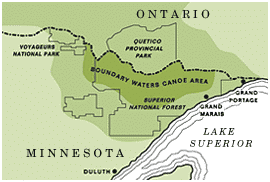
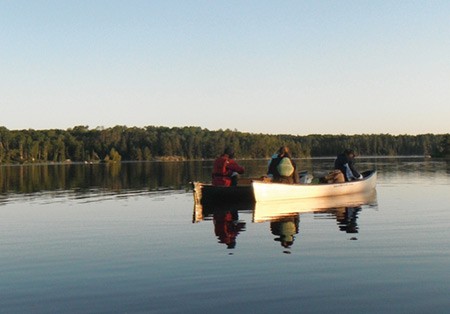
Camp Kooch-i-ching has made its home on Rainy Lake’s Deer Island since 1924. Its program offers a unique blend of a traditional residential camp and wilderness tripping. Boys come to camp for three-, four- or eight-week sessions, dividing their time between life on the island and wilderness tripping. Kooch-i-ching campers paddle the historic rivers of Canada—like the Bloodvein that flows into Lake Winnipeg or the English River in the Hudson Bay drainage—and hike the peaks of the Wind River Range in Wyoming. They’ve recently started sea kayaking, too. But Hugh Haller, president of the Camping and Education Foundation, believes that it’s the blend of the residential and tripping programs that sets Kooch-i-ching apart.
“There are only a handful of successful wilderness camps that do both and develop both in a meaningful way,” he said. At Kooch-i-ching, it’s the overlay of Native American culture and traditions that gives the camp a deeper sense of meaning and spirituality. The tradition stems from the 1940s. Camp Kooch-i-ching began as a training camp for football athletes in the 1920s, when its founder saw that wilderness experiences taught leadership and built strength. But in the 1940s, Dr. Bernard Mason took over the camp, and Native American culture fascinated him. He’d written his PhD thesis on camping and education, and when he re-launched Kooch-i-ching in 1948 the camp had a renewed focus on education through camping and wilderness experience. Native American cultures and tradition were deeply integrated into his approach.
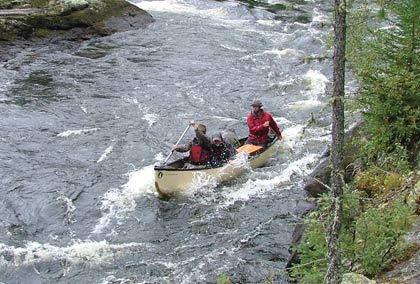
Today, Native American lore still has a significant presence. In camp, kids choose from athletics like sailing, basketball, and tennis, but they also study Native American dancing, learn to sew their own moccasins or start fire using Native American techniques. On trail, particularly on canoe trips, the boys travel in a primitive style reminiscent of the tribes that once traveled the region. It’s an element of the program they take seriously and treat with respect.
“It makes us appreciate where we fit into nature,” Haller said. “The Native American programs that we have are very involved, and very authentic—woodsmanship, Indian crafts, an authentic dancing program that centers around a pow wow. It allows the boys a real understanding of the culture and the tribes and the lore. We take it seriously, and we’re sensitive to the tribes. We have had many Native Americans come to our pow wows and they come away feeling well represented.”
The result is a sense of place and belonging that keeps many boys coming back for years—both as campers and counselors. About 95 percent of Kooch-i-ching staff were once campers, and some families have sent three and four generations to camp. “We always say if you want to really get to know someone, spend three weeks in a canoe with them. These become the best friends of your life, and the community speaks for itself. We are four generations now,” Haller said.
There was, however, one missing aspect of the program. When Dr. Mason revitalized the camp during the 1940s, he bought it with a man named John Holden. Holden took over when Mason passed away a few years later, and as the story goes, he inherited Mason’s soul. He oversaw the camp for 30 years, and during the 1960s, he led its transformation from a for-profit entity to a non-profit. The process required a presentation to Congress, and Holden made his request based on a mission to educate boys and girls through outdoor and wilderness experience.
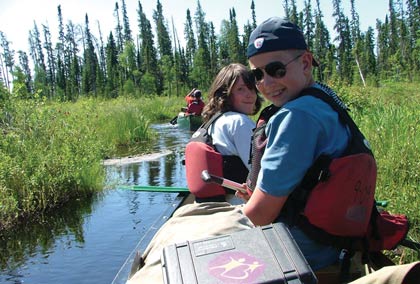
“The original vision put forth an educational charter and introduced the idea that the camping organization had an educational mission… [To become a not for profit] it couldn’t just be a financial need or just strictly camping. It had to have an educational purpose, and part of the way it was written was the support of young men and young women,” Haller said.
Congress granted the request, establishing the Camping and Education Foundation, which owned and operated Kooch-i-ching. It was in part to honor that mission that the advisory board explored the creation of a girls’ camp in 2001—the Foundation wanted to maintain single-gender environments and needed to determine whether it could run two camps. “Above and beyond the mission, you can look at it from two other perspectives, a moral and philosophical need and motivation to do it. If you’re going to call yourself an educational organization serving youth, you can’t be complete if you’re serving one side,” Haller said.
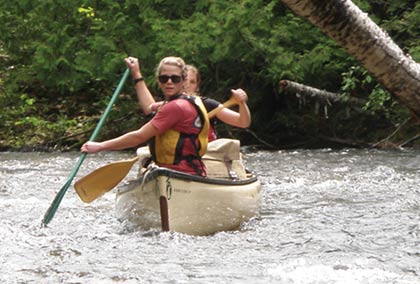
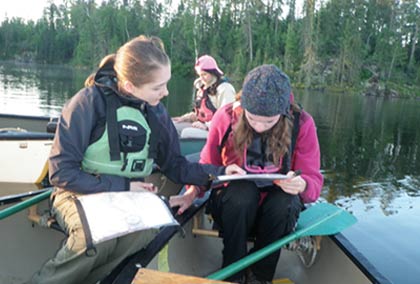
They launched the program and it has only continued to grow. Now, Kooch-i-ching serves 250 to 275 boys, and Ogiche Daa Kwe serves about half of that. The girls go on wilderness trips just like the boys, and according to Haller, staff like to say say you can spot an Ogiche girl a mile away. There’s just a certain way about her. But perhaps former Kooch-i-ching director Tim Heinle says it best: “There are girls out there who don’t want theatrics and don’t want horses. They want adventure, and they go out there and do a hell of a job.”
For more information:
www.campingedu.org
This article originally published in Quetico Superior Wilderness News – View the PDF here