
The University of Minnesota recently released a study on the economic impact of wildfires that spread throughout the Boundary Waters Canoe Area Wilderness during the 2026 season.
A new study released by the University of Minnesota Bureau of Business and Economic Research showed the economic impact of wildfires that spread across parts of the Boundary Waters Canoe Area Wilderness (BWCAW) in July.
For nearly two weeks in mid-July, the U.S. Forest Service (USFS) closed the BWCAW to all visitors after multiple wildfires broke out across the region. Many people’s vacation plans came to an abrupt halt as Forest Service crews scrambled to evacuate paddlers still in the wilderness.
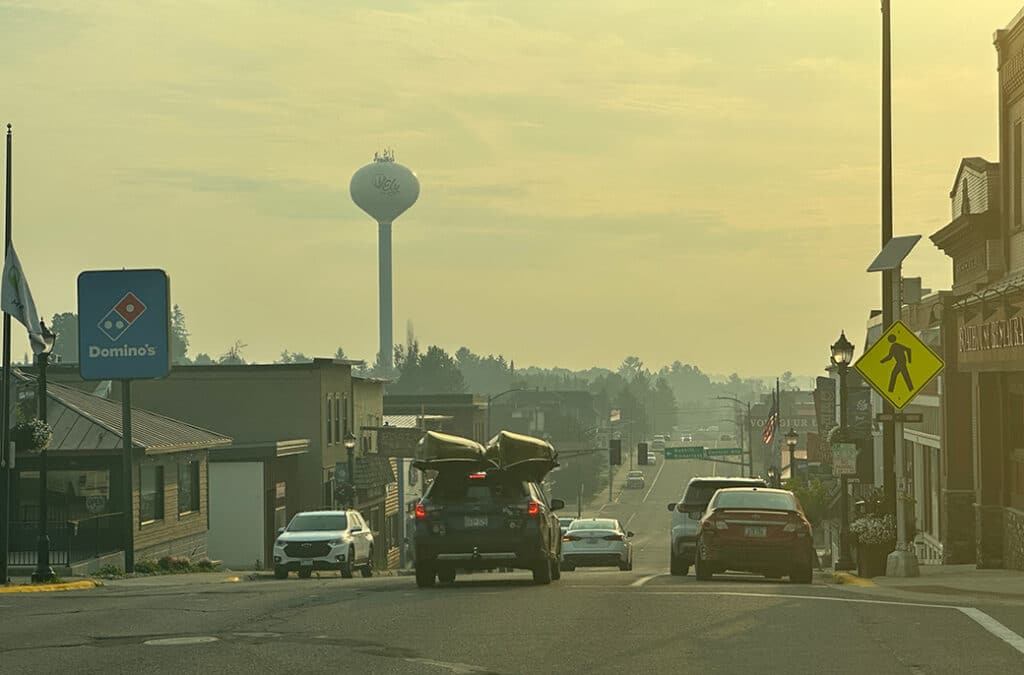
Outfitters worked tirelessly to answer questions over the phone while either refunding or rescheduling upcoming canoe trips. Local communities felt the impact as shops and restaurants changed their hours. Resort and summer camp staff evacuated guests outside of Ely. The sheriff’s office, in partnership with the USFS, initiated evacuation orders in some areas while others were on standby. Many left town to seek safety away from smoke and fire.
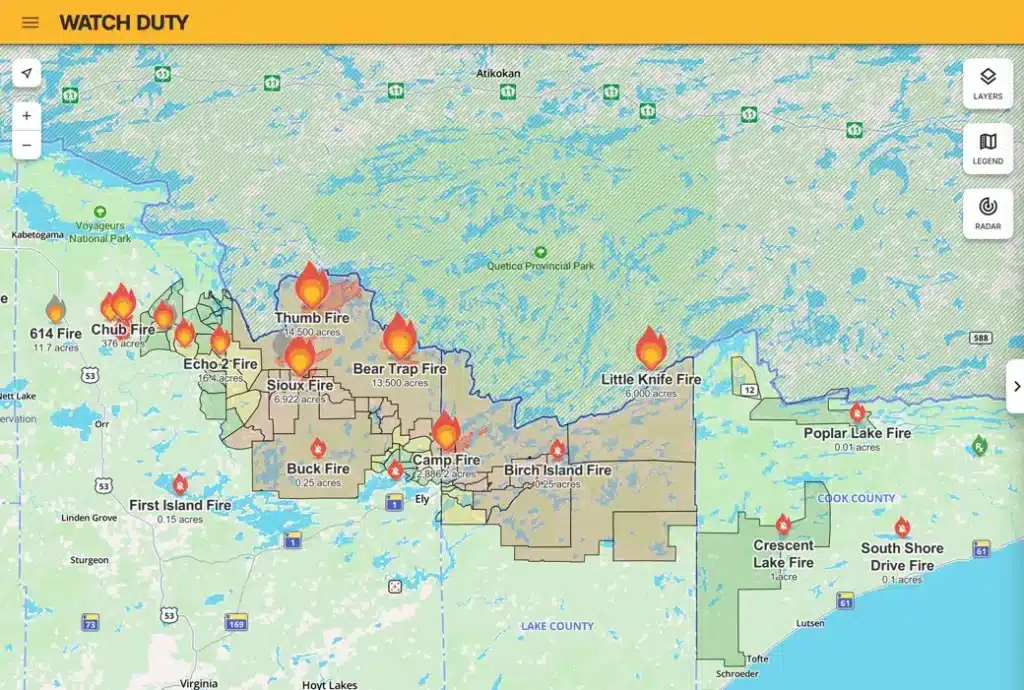
Even after the Forest Service began gradually reopening certain areas of the BWCAW, visitor numbers in the region recovered slowly. In the end, lightning-caused wildfires consumed roughly 70,000 acres of the 1.1-million-acre wilderness.
Numbers hit all-time low
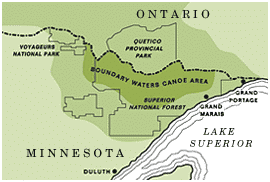
This caused significant economic impact on small communities such as Ely, Tofte, and Grand Marais, all of which are gateways to the BWCAW. The BWCAW is one of America’s most visited wilderness areas in the country. It draws roughly 150,000 visitors each year, most of whom explore the area by canoe, although hiking trails and winter activities are also popular. This doesn’t include the millions of people who recreate in the Superior National Forest (SNF), which the BWCAW is a part of. Other communities within the SNF were also affected by fires and wildfire smoke this past summer.
The report didn’t include the impact on Canadian tourism from lost revenue from camping fees associated with entering Quetico Provincial Park via the BWCAW. According to a 2011 survey, 83% of park visitors to Quetico were from the United States, and many entered from the southern boundary. Much like the BWCAW, Quetico dealt with numerous wildfires this year.
The study included data on out-of-town visitor-days in July over the past three years. Not surprisingly, by the last week or so of July, weekly numbers fell from 13,702 in 2025 to 6,507 in 2026. Ely canceled one of its largest annual events, the Blueberry Arts Festival. This was due to extremely poor air quality, which spiked initially when the winds changed. The festival draws people from all over, and the population of about 4,000 expands to around 40,000 visitors during the event.
Overall, the study found that Ely recorded just 182,000 visitor days, well below the 204,000 average in 2024 and 2025. “The lost visitors to the region would have spent money on hotels, restaurants, souvenir shopping, and more — and their absence has left businesses and communities struggling to recover. For outfitters, guides, resorts, restaurants, and retail shops, a few bad weeks in July can prove devastating, since so much of their annual revenue is earned during the short peak summer window.”

The Boundary Waters, delivered weekly
Join thousands of readers receiving free wilderness news and weekly updates from the Northwoods.

Visitor losses add up across the region
The wilderness closure also affected Grand Marais, located in the northeastern part of the state. Tourists avoided the small town of about 2,500 residents as smoke settled over the harbor. Resorts and businesses along the Gunflint Trail, the main route from Grand Marais into the Boundary Waters, also felt the impact. These businesses depend on summer tourists who visit the area to fish in pristine lakes and camp in the wilderness.
During the wilderness closure, weekly visitor numbers in Grand Marais for the end of July went from 9,328 in 2025 to 5,597 in 2026. However, the USFS opened most entry points in the BWCAW on the eastern side earlier. “Despite the relatively quick recovery in visitor numbers, Grand Marais recorded 25,647 fewer visitor-days in 2026 compared to the previous two-year average.”
The region felt the economic loss. Estimates indicated that Ely suffered suffered $4.4 million in lost economic activity, while Grand Marais lost $4.6 million.
Researchers used several methods to estimate the losses. According to the report, “These estimates come from the Bureau of Business and Economic Research (BBER), using previous visitor surveys to calculate average spending, and IMPLAN input-output software to model the total economic impact on Ely and Grand Marais,” which together put roughly 72 local jobs at risk.
Wildfires affected numerous jobs, forcing some businesses to reduce hours or, worse, eliminate staff. This created added challenges, especially for seasonal workers, whom so many outfitters depend on. Overall, wildfire impacts cost 47,717 visitor-days in July 2026.
Some closures remain in effect
A few areas of the wilderness in the northwest region remain closed. The full extent of the impact on campsites and portage trails in those locations is still unknown. Forest Service staff will need to assess the damage and identify areas that need restoration. They will also decide whether they need to extend any existing closures. This has happened in past wildfires. In those cases, some campsites have remained closed even after travel routes through the surrounding waterways have reopened.
Separately, the report did not account for the effects on Canadian tourism resulting from lost camping fee revenue associated with visitors entering Quetico Provincial Park through the BWCAW. According to a 2011 survey, 83% of Quetico visitors were from the United States, with many entering the park along its southern boundary. Wildfires also created significant challenges for Quetico this summer, as around 175,000 acres (71,000 hectares) had burned by the end of July.
The BWCAW is a fire-dependent landscape, and its ecosystem benefits from natural cycles of fire. However, these wildfires occurred during peak visitor season. Time will tell how significantly the fires and subsequent closures affected the shops, resorts, restaurants, outfitters, and other tourism-based businesses.


Images taken from the Knife Lake area. Lightning caused wildfires burned around 70,000 acres in the BWCAW and beyond.