


The Boundary Waters offers numerous hiking trails that draw backpackers to beautiful, remote sections along wilderness lakes. While the trails are rustic, multiple trail-clearing crews manage them in partnership with the USFS-Superior National Forest. One of those volunteer groups, the Boundary Waters Advisory Committee, recently posted upcoming trail-clearing opportunities. We also asked them about improvements made over the past year and what volunteers can expect when they sign up.
Miles of wilderness trail
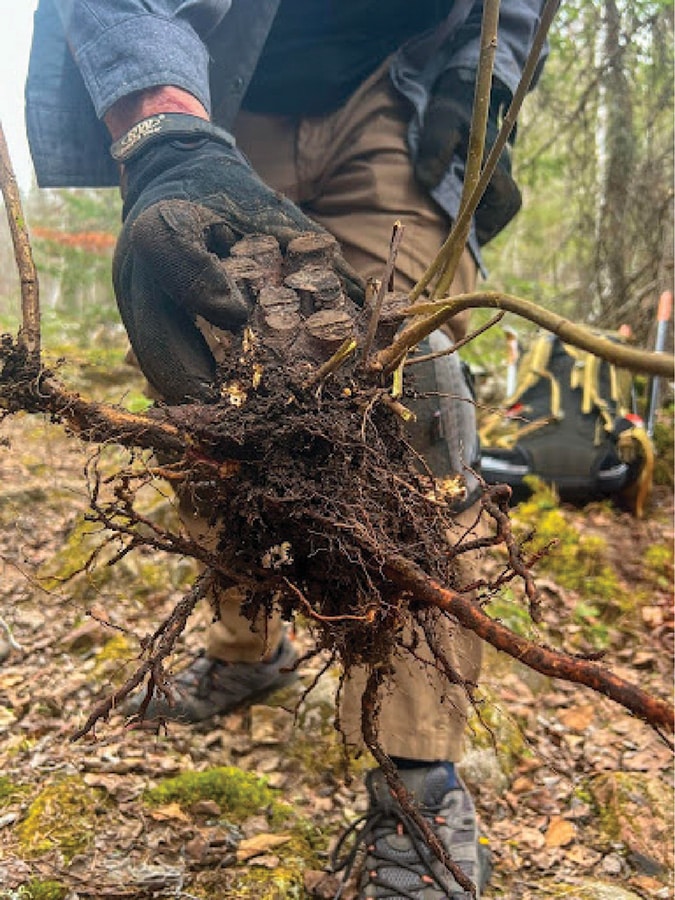
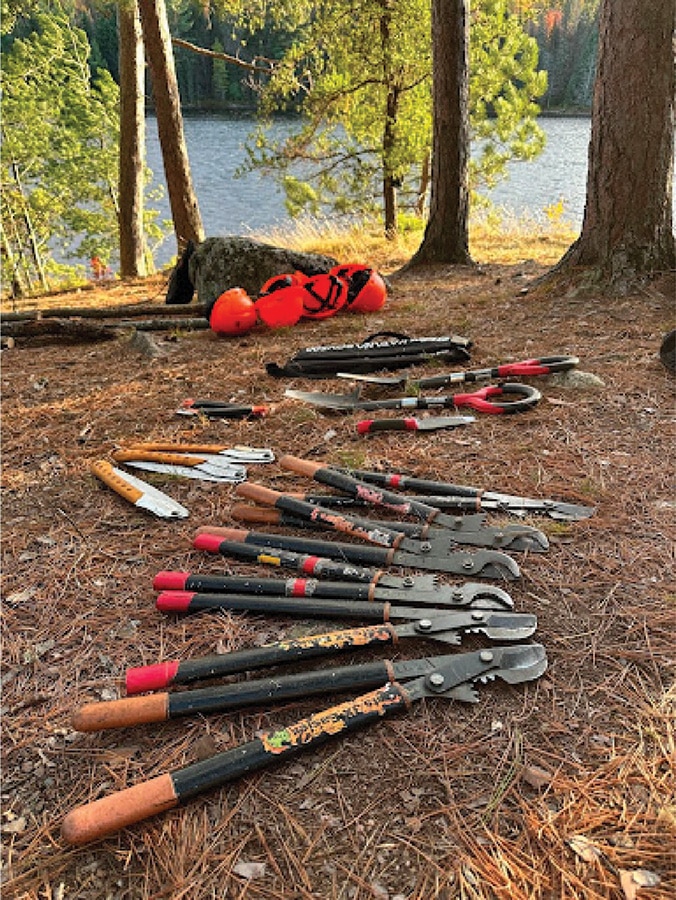
Throughout the Boundary Waters Canoe Area Wilderness, there are about 200 miles of hiking trails. Some are short and take only an hour or so to explore, while others are multi-day adventures. They are wild and remote, covering all parts of the almost 1.1 million-acre wilderness. Volunteers work with crew leaders provided by the BWAC and train to use clearing tools such as saws, trowels, shovels, and clippers.
Thanks to a collaboration between the USFS-Superior National Forest (SNF) and multiple volunteer groups, trail-clearing events take place throughout the spring, summer, and fall. The Boundary Waters Advisory Committee (BWAC) is one of the groups whose volunteer trail-clearing trips will start soon.
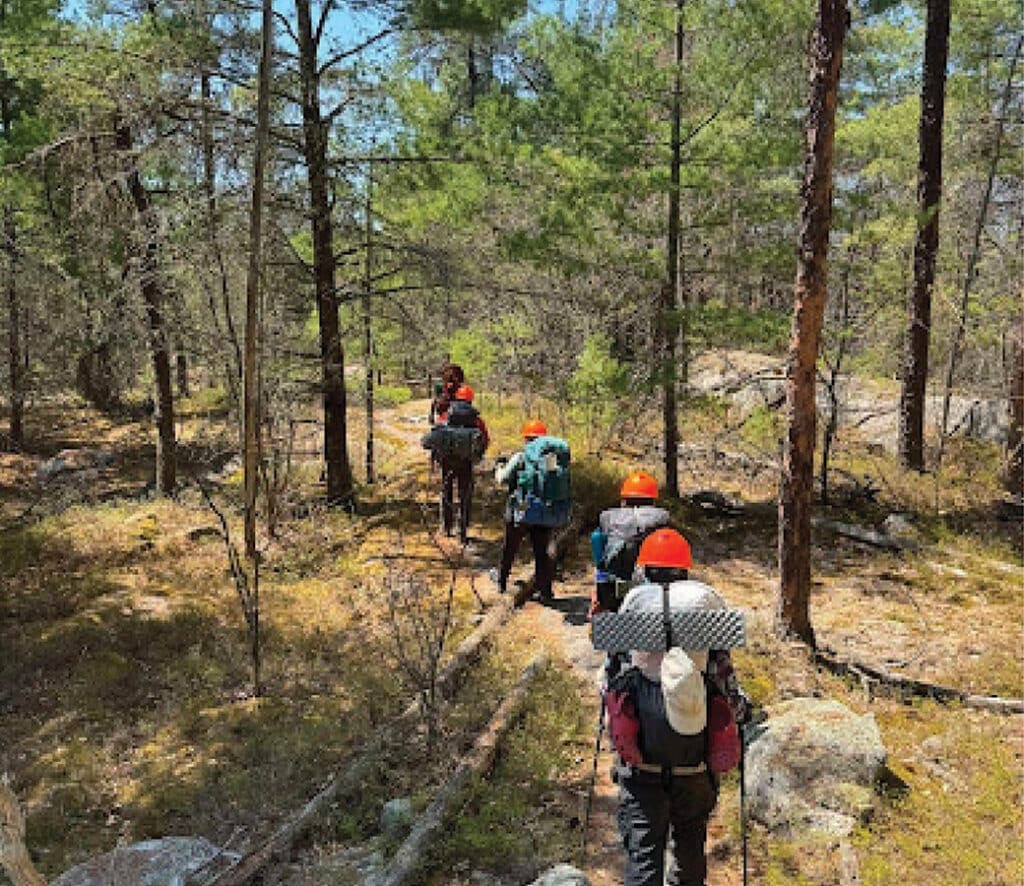
The BWAC takes groups of up to nine people out to clear trails on day, weekend, or multiday trips. While some trips require volunteers to carry their gear and camp at rustic, backcountry campsites, not all do. Some trips are based out of cabins where crews work near trailheads. Volunteers work with crew leaders provided by the BWAC and train to use clearing tools. People of all experience levels are welcome on trips.
We reached out to the BWAC to learn about trail improvements over the past year and what volunteers can expect on a trail-clearing trip.
Quetico Superior Wilderness News: What improvements did the BWAC make over the past year, and what work are they planning for this year?
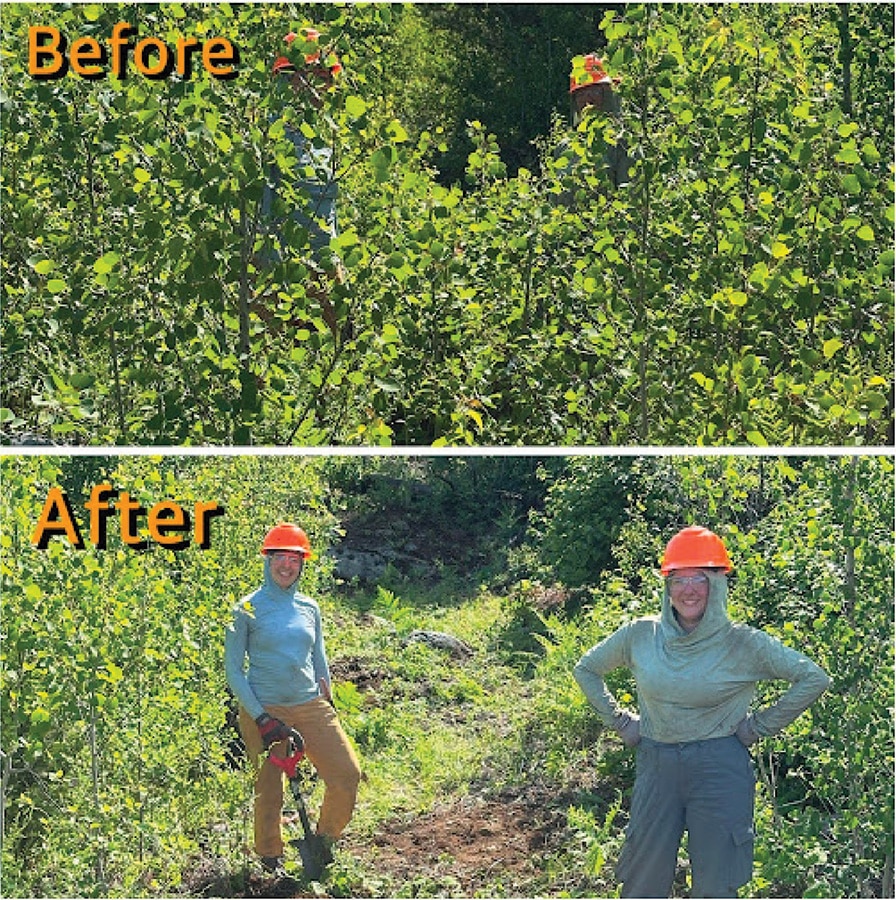
Lucas Raudabaugh, Board member, Trail Committee Chair, Crew Leader, former President: The Powwow Trail Restoration is complete as of Fall 2025! After 90% of the trail disappeared in the 2011 Pagami Creek forest fire, BWAC volunteers lobbied for restoration and then hacked their way through the destruction for over 10 years. Hundreds of volunteers head to the trail each year, clearing thousands of deadfalls and encroaching brush in the post-fire regrowing forest.
For the ultimate benefit of hikers, all eight of the pre-fire backpacking campsites [along the Powwow] have been restored with existing firegrates, newly installed latrines, and safe tent pads. USFS-SNF intends to circle the trail in early May, verifying the campsites and cutting any hazard trees in campsites.
Along with our eleven spring trail maintenance trips, we have partnered with the USFS-SNF east zone for a new-to-BWAC project on the Eagle Mountain Trail. It is the most used BWCAW trail with over 1,500 permits, with the majority of day hikers climbing the mountain, MN’s high point. It is a rougher trail with overuse erosion of avoidance trails, exposed rocks, roots, and sinking boardwalks.
With guidance from the SNF, BWAC compiled a project plan for the rebuilding of three boardwalks inside the wilderness. The SNF was able to allocate funds for material purchase and transportation to the work area in late January 2026. This required taking a snowmobile with a sled to the wilderness boundary, then 30+ trips with a dogsled team to the work area. The first section, consisting of 300 ft, will begin construction in Late June and early July. Building crews will remove sunken boards and reconstruct a taller and wider structure. The two remaining boardwalks, a total of 120 feet, will be temporarily repaired and then fully replaced in 2027.
QSWN: What does a typical day of trail work look like?
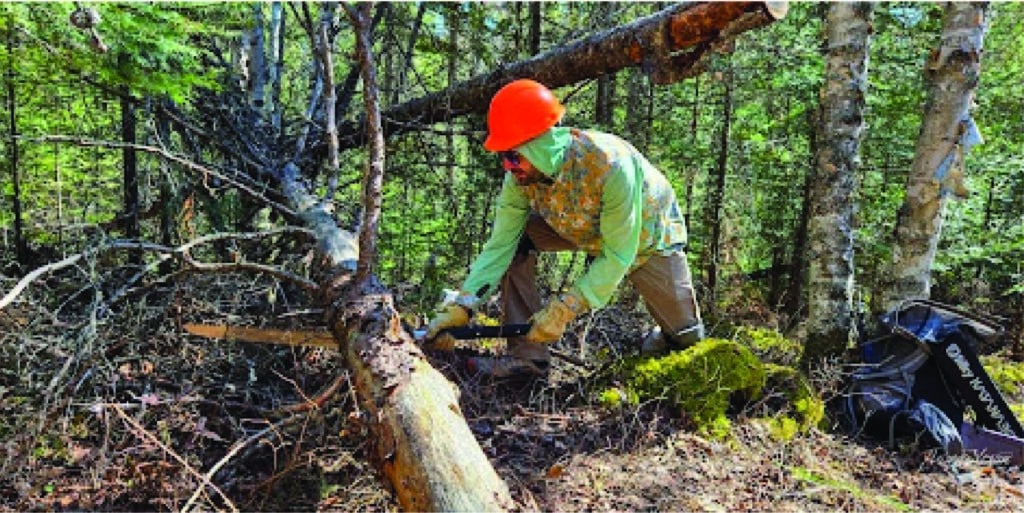
Raudabaugh: All crew members agree to a 6:30-7:00 am wakeup time; the group gathers for breakfast and packs workday gear. The crew hikes to the work area and receives instructions. Clearing is done in small sections, with leaders at the front and rear of the group, working toward the middle. Each section is 100% cleared. Volunteers work together in pairs to assist each other with cutting and moving deadfalls, swamping brush into the forest, and digging and cutting rootballs.
The workday ends between 4 and 5 pm. The hike back to camp is the most rewarding time of the day, admiring our hard work and progress. Leaders record GPS tracks of the cleared areas for reports and future trail condition updates. Back at camp, the crew freshens up, treats water, and gathers for dinner—sometimes eating at dusk with headlamps. The crew discusses the workday progress and the plan for day two of clearing.
QSWN: What are some of the ways volunteers are supported?
Raudabaugh: BWAC Crew leaders have the goal of providing safe and rewarding trips. During our crew member vetting process, we determine the experience and comfort level of the potential volunteer to best achieve these goals. Our spring in-person orientation for all crew members consists of safety training in canoeing, hiking, and trail clearing, trip expectations, and BWAC-specific required gear. Crew leaders communicate and work closely with new-to-the-wilderness volunteers, providing gear lists and resources for gear rental. Each trail crew meets at a local park a few weeks before departure for a Meet-and-Greet.
A Crew Leader’s perspective
QSWN: Tell us about your experience as a trip leader supporting volunteers.
Gretchen Godbout, Board member, Outreach & Recruitment Chair, Crew Leader: I didn’t know what to expect when I first hit the trail with BWAC, but what I found was a strong sense of camaraderie and empowerment. It’s hard work—but I’ve loved every second of it, because you can see the difference you’re making—literally as you go. My favorite moments are when hikers and backpackers pass by while we’re working and thank us for improving their experience. That’s when it really hits home.
QSWN: What are some memorable experiences people have on trail-clearing trips?
Godbout: Volunteers often encounter incredible wildlife—everything from lynx and moose to bears, wolves, beavers, and grouse—making each trip feel truly immersive. Beyond the scenery, one of the most meaningful aspects is the sense of connection.
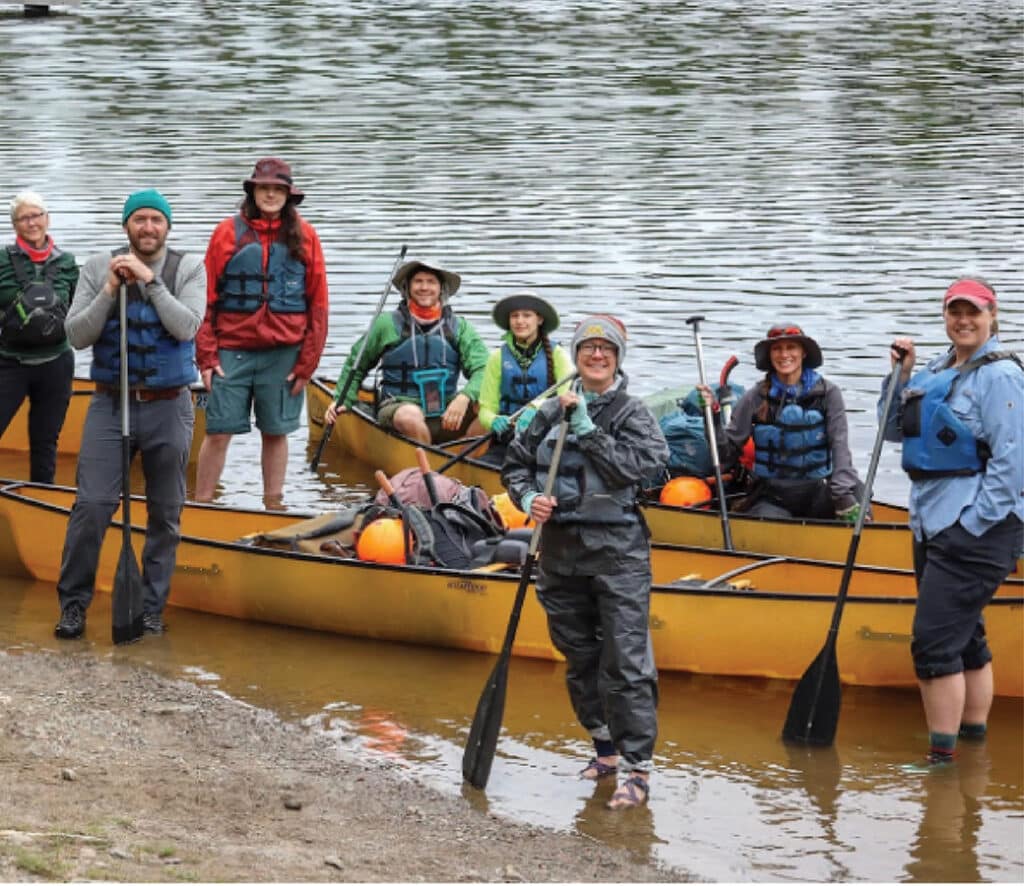
People from all walks of life come together around a shared goal and a common love for the Boundary Waters, forming strong bonds through teamwork and shared experience. There’s also the adventure itself—canoeing across remote lakes, portaging gear, and camping in true wilderness. It’s a hands-on way to experience the BWCAW that goes far beyond a typical visit. Volunteers also face real challenges, from rugged terrain to unpredictable weather. Pushing through those moments builds confidence and leaves people with a lasting sense that they can do hard things.
QSWN: Who provides all the gear?
Godbout: For the most part, volunteers bring their own personal camping gear and food for the trip. That said, BWAC provides all of the trail-clearing equipment and safety gear, including tools, helmets, and safety goggles, as well as canoes, paddles, and the necessary permits. We also bring shared club gear on each trip, including water treatment systems, first-aid supplies, and tarps to support the group while in the field.
One of the best parts of these trips is the team dynamic. Because the group is made up of such supportive and experienced volunteers, people are always willing to help each other out—whether that’s lending gear, sharing resources, or helping someone find what they need to be successful on the trip. It’s a collaborative, can-do environment where everyone pitches in, supports one another, and gets the job done together.
QSWN: How can volunteers stay involved beyond a trip?
Godbout: While trail-clearing trips are a core part of what we do, there are many ways to stay involved and support BWAC’s mission beyond time on the trail. Volunteers can contribute by making a donation, which directly supports training, tools, and trail maintenance efforts. Others choose to donate door prizes for events, helping us recognize and thank our volunteers in meaningful ways. There are also important off-trail opportunities, including outreach, event planning, and administrative support—these roles are essential to keeping our organization running strong. Finally, one of the simplest but most impactful ways to help is by spreading the word.
Maintaining trails is a collaborative effort
Raudabaugh told us that after each trip, crew leaders identify areas of the trail that will require future maintenance. Groups also conduct survey hikes to assess trail conditions a couple of times a year. Then the committee works together to put together a maintenance plan and future trip-clearing dates. Finally, the BWAC submits plans to the USFS, which reviews and approves them.
The BWAC has worked in collaboration with the USFS since 2016 to maintain trail systems throughout the Boundary Waters. All trail-clearing work within the wilderness is done with hand tools, as gas-powered tools are prohibited. More information on upcoming trail-clearing trips can be found on the BWAC’s website.
More info:
- Boundary Waters Advisory Committee
- Calling on volunteers for Boundary Waters wilderness hiking trails – Quetico Superior Wilderness News