


As the ice begins to melt across the Boundary Waters Canoe Area Wilderness, paddlers are gearing up for early spring canoe trips. While this is an exciting time to get on the water, it also comes with many risks. In this piece, experienced guide Pam Wright shares important tips for staying safe in cold, wet conditions.
Cold weather and water can last well into June
Before you know it, the ice will be gone and lakes will open up in the Boundary Waters Canoe Area Wilderness (BWCAW) for canoeing. Spring can be a great time to experience the woods as they awake from their winter slumber. As temperatures rise, spring ephemerals begin to emerge, adding brief bursts of color and life to the landscape. Many lakes are still pretty quiet, though, attracting those seeking solitude before the busy summer season. Anglers venture out as well, casting lines in hopes of landing big fish in their favorite hidden honey holes.
However, because the water is still cold, there are risks to early-season canoe trips. Cold water can last well into late June, depending on the weather. According to the Minnesota Department of Natural Resources (DNR), “Each year approximately 30 percent of all fatal boating accidents occur during the cold-water period, defined as anytime the water is below 70 degrees.” As a result, it’s essential that visitors take every precaution against cold-related injuries, illnesses, or an unexpected dump in the water.

Cold related illness and injuries
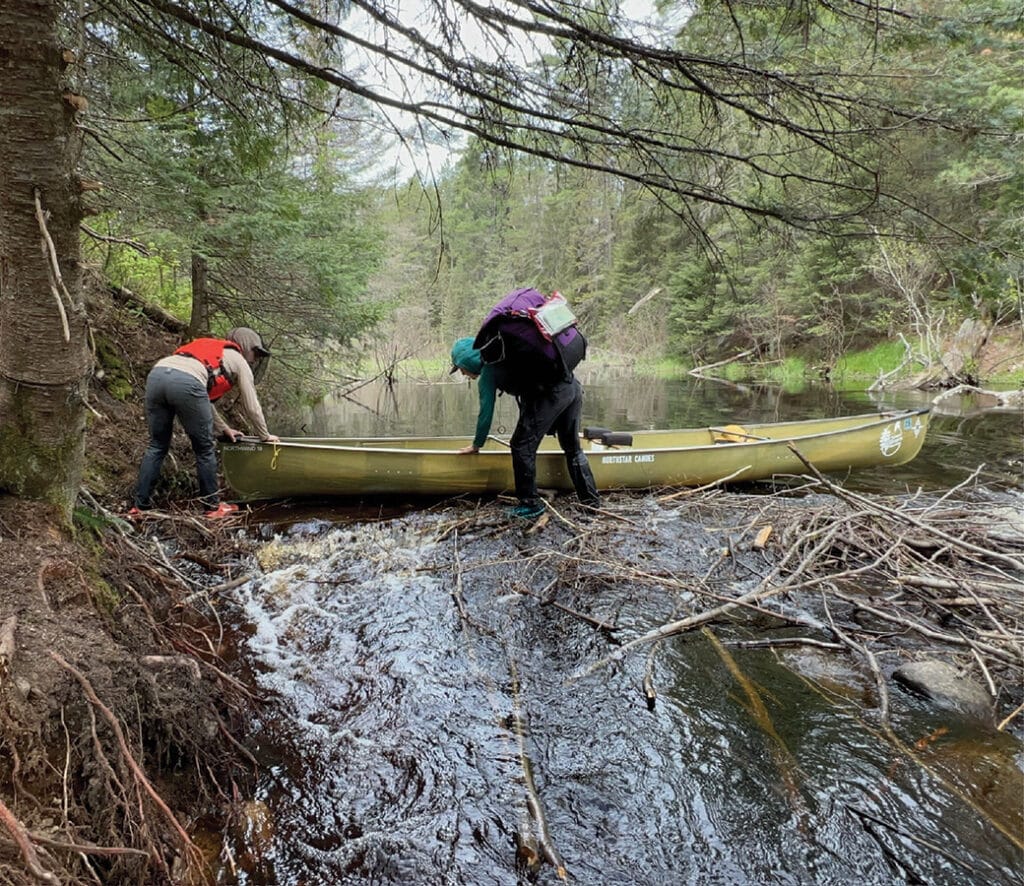
While cold-water-related deaths are uncommon in the BWCAW, many happen in the spring or fall. In early May of 2025, a man was found deceased near his capsized canoe on Iron Lake, near the Canadian border. While the cause of death has not been reported, he was found wearing a life jacket. It’s unknown if temperatures were a factor, however water temperatures average in the 40s°F immediately after ice-out to the low-to-mid 50s°F by late May.
When people fail to prepare for cold, wet conditions, there is very little time before hypothermia sets in. According to the Red Cross, “Hypothermia is a potentially life-threatening, cold-related emergency that occurs when the body loses heat faster than it can produce heat, causing the core body temperature to fall below 95° F (35° C).” Some of the first signs include shivering, stumbling, or fumbling. It is best to treat it right away before it worsens. This means removing wet layers and getting into dry ones, as well as getting into a warmer place, like a sleeping bag and a tent. It may mean stopping early instead of pushing forward.

The Boundary Waters, delivered weekly
Join thousands of readers receiving free wilderness news and weekly updates from the Northwoods.
According to the DNR, capsizing and falling overboard are the most common causes of boating fatalities in the state. Even if someone falls into the water while wearing a life jacket in the spring, they have little time before their body no longer responds. The 1-10-1 rule may save your life. You have about a minute to get your breathing and panic under control. Then you have about 10 minutes to make a plan, locate other group members, self-rescue, and determine how to call for help. Finally, you have about one hour, depending on conditions, to limit heat loss.
When help is needed, a call goes out, either from a satellite communicator or phone, and multiple parties respond. This includes the sheriff’s department and crews from area search-and-rescue squads and possibly other EMS. St. Louis County Rescue Squad, based in northern Minnesota, may be one of the responding parties. Their volunteers will respond to everything from wilderness rescues to underwater recovery operations to steep-angle rope rescues. In a recent Facebook post, the St. Louis County Rescue Squad stated, “We conducted 149 wilderness operations involving 148 subjects and 4 rope rescues. We responded to 92 water operations [in 2025].”
We’re reminded to be aware of the risks of shoulder season adventures and to prepare for cooler temperatures and cold water.

Good to know before you go
I’m sharing some recommendations to help you plan and stay safe on spring canoe trips. As a wilderness canoe guide and wilderness first aid instructor, these are things I take into account before heading out onto the water and into the woods. The list is not exhaustive, but it will provide you with a good place to start.
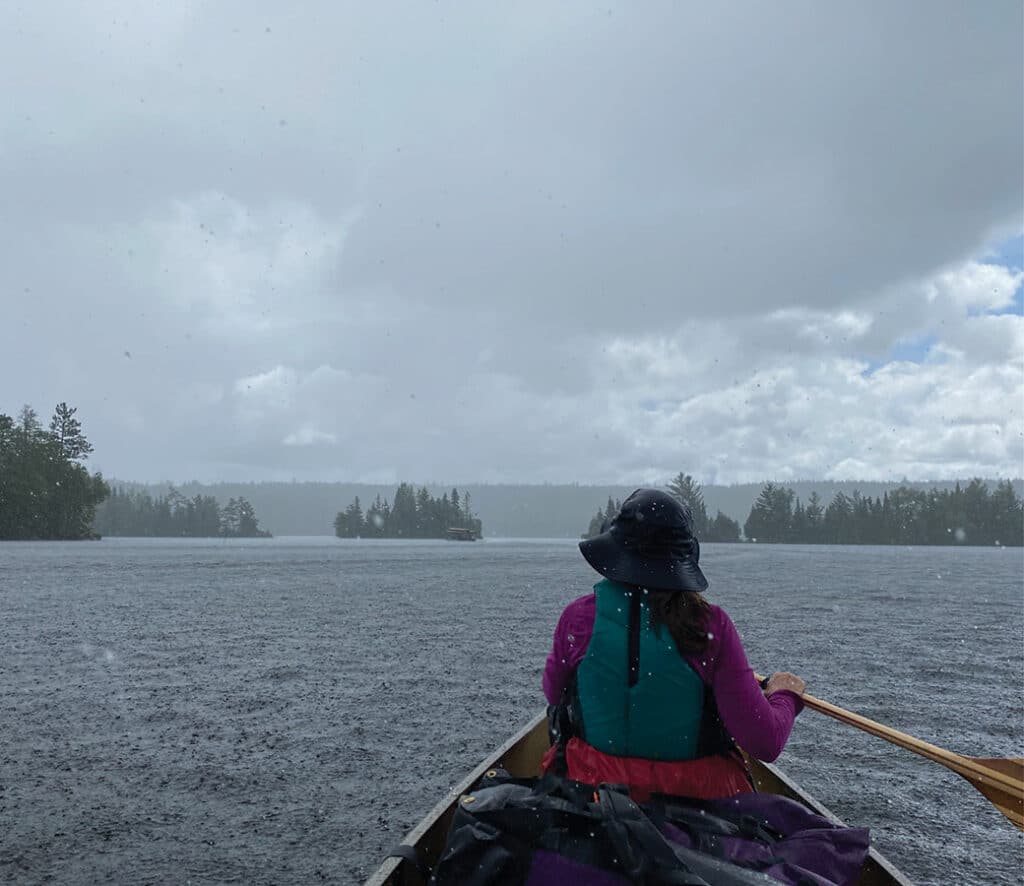
Weather plays a major role during the shoulder season. Cold, wet conditions can catch people off guard, and hypothermia is a real risk. Be ready to change your plans and adapt as needed.
- Stay flexible. As weather and conditions change, you may need to adjust your plans or route. Allow extra time for unexpected delays.
- Lakes may be cold well into late June. According to the DNR, cold water is defined as anything below 70ºF.
- Pay attention to the weather and wind. While some springs are mild and dry, others are wet and cool with multiple days of rain.
- Plan for possibly winter-like conditions. Pack wool-blend baselayers, along with warm flannel and fleece tops and bottoms. Multiple pairs of hats, gloves, and mittens may be needed. Insulated, paddling gloves can make the difference between staying comfortable and feeling miserable on wet paddling days. Wear wool-blend socks and muck boots or rain boots. Bring another pair of shoes and additional pairs of warm socks for camp. Remember, when things get wet, you may have a hard time drying clothes out over a campfire. If you do get sun, stop and dry any wet things out.
- Don’t rely on a campfire to cook on in especially wet conditions. Pack a backpacking stove or two for cooking. Don’t forget some warm beverages! When I do make a fire, I create a dry “platform” of split wood to start it on top of. I prepare and gather my wood and fire starting tools before lighting.
- Bring good, reliable rain gear. Consider buying one size larger for layering. In especially cold and wet conditions, paddlers may want to consider bringing two pairs. One pair can be used for travel days when gear is likely to get damp from perspiration, and one pair for camp when movement is more relaxed. I started doing this after an especially cold and wet spring trip.
- When it rains, portage trails may become waterlogged. Trails may become more like creeks, making it more challenging to move gear across them. Use caution as they may be slick and muddy.
- Creeks and rivers that are benign in the summer may develop faster currents after spring rains. They can also flood nearby banks and canoe landings. Paddlers should use caution around all rapids and swift-moving water. If a portage is there, take it.


More safety tips
- Wear a reliable life jacket. Many life jackets fit comfortably and do not impede paddling or fishing. Choose one with pockets that can hold a ditch kit. This is a small, waterproof bag that includes (but isn’t limited to): items to start a fire, an emergency blanket, a small compass, whistle, some cordage, multi-tool, and some first aid. Anything else that doesn’t fit in my life jacket goes into my fanny pack (sun block, bug dope, snack, etc).
- Carry one or two thermoses. Fill them with hot beverages or soup on travel days.
- Bring a reliable, easy-to-set-up tarp. Practice setting it up before your trip so you’re not rushing to do it in camp. Plus, if you become weather-bound, you can hang out, play games, and cook under it.
- Stick closer to shore. If the weather changes or the wind picks up, you will be able to reach land quickly. Use islands or other landforms to protect yourself from direct wind.
- Paddle with another buddy. We all know there is safety in numbers. Two people have a better chance of handling challenges that arise. If you plan to go solo, know that it carries greater risk, so proper planning and extra caution are essential.
- Plan a trip that matches your group’s skills and abilities. This means travel days and distances may need to be shorter. Practice with your canoe and test your gear before you head north.
- Carry a satellite communicator. Clip it to your life jacket or put it in a life jacket pocket. If you don’t own one, you can rent it from a local outfitter. Some have features that allow you to check the weather while on the trail.
- Reach out to a local ranger station or outfitter for current conditions. They have a wealth of knowledge about lakes and routes.
- Lastly, leave an itinerary with your emergency contact at home. List what you’re wearing, include the color of your tent and canoe. Add who your with and what route you plan to take. Give them specific instructions for when to seek help if you have not checked in or returned.
For those planning trips, the National Weather Service provides updated water temperatures for lakes in northern Minnesota. Spring conditions vary each year, but with some planning and preparation, you can have a safe and memorable adventure in the BWCAW.


More info:
- Cold water dangers – Minnesota Department of Natural Resources
- Minnesota yearly watercraft & water accident records and statistics – Minnesota Department of Natural Resources
- DNR warns of cold water dangers on Minnesota lakes – InForum
Wilderness guide and outdoorswoman Pam Wright has been exploring wild places since her youth. Remaining curious, she has navigated remote lakes in Canada by canoe, backpacked some of the highest mountains in the Sierra Nevada, and completed a thru-hike of the Superior Hiking Trail. Her professional roles include working as a wilderness guide in northern Minnesota and providing online education for outdoor enthusiasts.