
Bugs are a fixture of the northern Minnesota landscape, chasing bare-legged campers into their tents as the sun sets. As early as March, they can begin to appear, starting with ticks. By June, black flies, gnats, and mosquitoes are common. All that buzzing and biting can exhaust unprepared campers. We’re sharing ways to beat the bugs or at least co-exist safely with them. The Minnesota Department of Health has also provided guidance on dealing with bugs.
More reports of bites
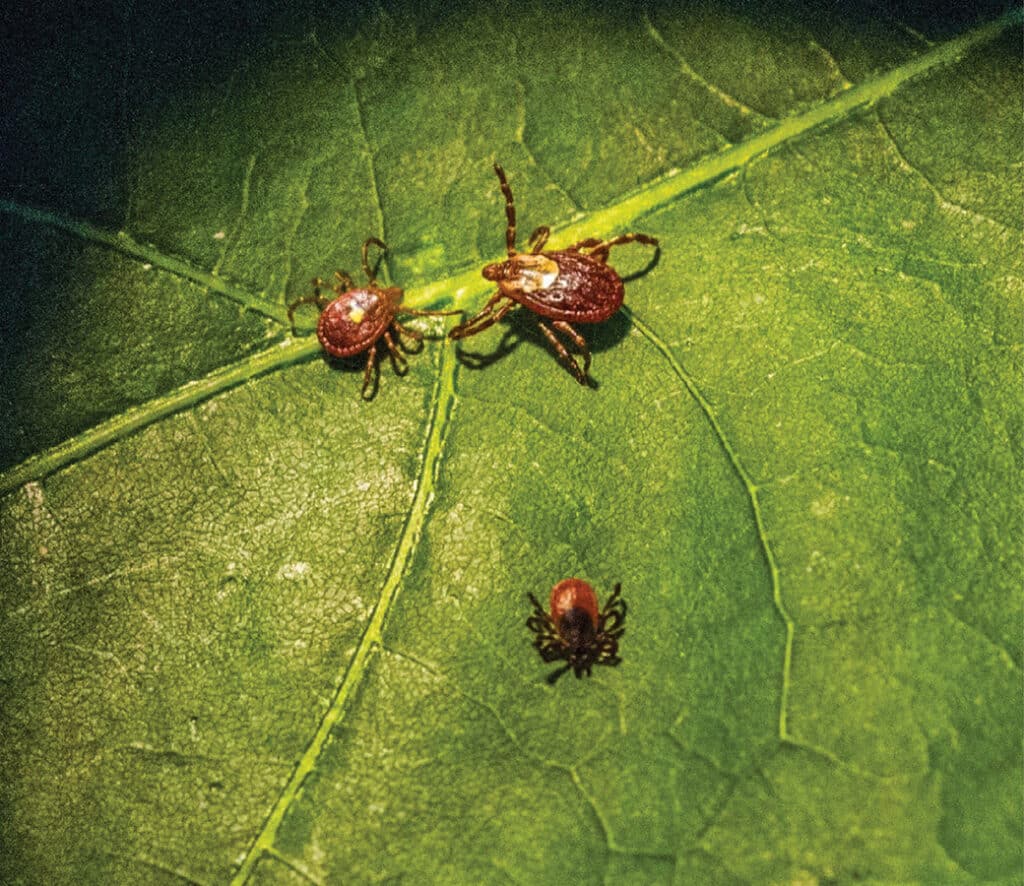
Tick season is off to an early start across the country, according to a report by CBS News. They report a spike in emergency room visits for bites—about 100 in April alone. The Centers for Disease Control and Prevention tracks data on emergency department visits for tick bites by region, year, month, age of individual, and gender. In the northeastern part of the state, blacklegged ticks (deer ticks) and American dog ticks (wood ticks) are commonly found. The blacklegged tick poses the greatest concern because it can transmit Lyme disease.
The increase could be related to a variety of reasons. Jordan Mandli, vector ecologist at Metropolitan Mosquito Control District in St. Paul, told CBS that, “It’s kind of a combination of a lot of things. Ticks might be more active, there might be more ticks, people are encountering them in places where they don’t expect them, and part of it is we’re doing a really good job of informing people about ticks and tickborne diseases.” He added later that tick populations appear to be about average for this time of year.
In Minnesota, ticks are just one of several nuisance insects to be aware of when spending time outdoors during the warmer months. Depending on the season, mosquitoes, black flies, gnats, and other biting insects may be present. While these insects play an important role in the ecosystem, nobody wants to be bitten by them.


The Boundary Waters, delivered weekly
Join thousands of readers receiving free wilderness news and weekly updates from the Northwoods.
How to keep away those pesky bugs
Bug reports, like weather reports, are a big topic among social media and online forums, and rightfully so. They can make a trip challenging to the unprepared camper. To help you prepare, we’re sharing ways you can make your trip more bug-free and minimize the chances of an insect bite.
- Start with your clothing. Before you head north, spray your clothing with permethrin. Found at most outdoor stores, this synthetic insecticide kills insects. You can also buy clothing that has been pre-treated with insect repellent, or send your clothing to a service for treatment. Be sure to read the permethrin label for application and possible reactions. Pick clothing that is loose-fitting and ideally, lightly colored.
- Cover your head. At a minimum, carry a bug head net. These can be a lifesaver when you’re trudging down buggy portage trails with a canoe on your shoulders or fishing alongside a trout stream. Otherwise, consider picking up a bug shirt made of breathable no-see-um mesh.
- Pick a breezy campsite. Check the weather each day to see which way the wind will be blowing. Choosing a campsite that faces the wind can really help keep bugs down. Also, try to avoid a campsite that’s near a boggy area.
- Survive the trip to the latrine. This is where your patience can be really tested. Putting on a little extra bug repellent can help, but that may not be enough. I’ve used Thermacell products with some success, though their range is limited. These portable mosquito repellents have no odor or sound and work by warming an insect repellent that then releases into the air. The other option is to set up a bug net over the latrine if you have good tree cover.
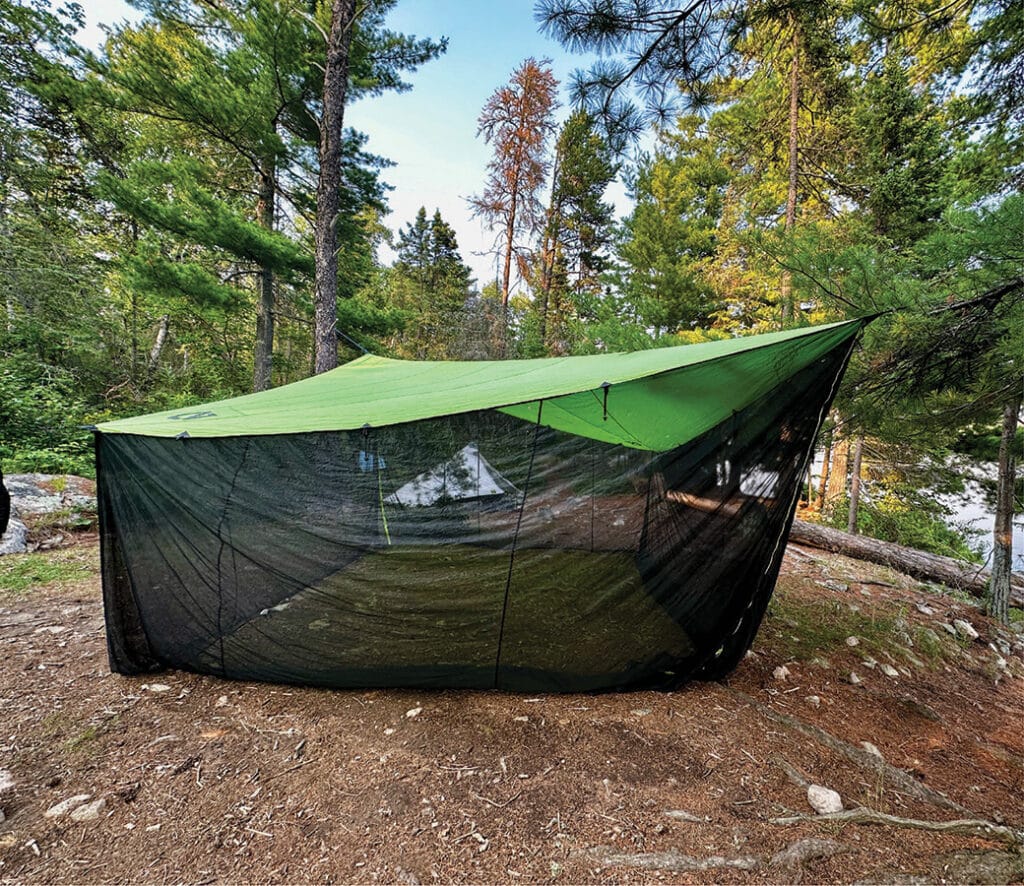
- Set up a screen house. A tarp with integrated mesh walls can be handy during June and July. The only downside of these is that they take a little more work to set up and may be heavy and bulky. They are best used for base or car camping.
- Use bug repellent. There are a variety of options available that come as sprays, aerosols, or lotions. With some preparation, you may only need to use a little. Don’t forget to wash off any bug spray before going into the water.
Insects can spread disease
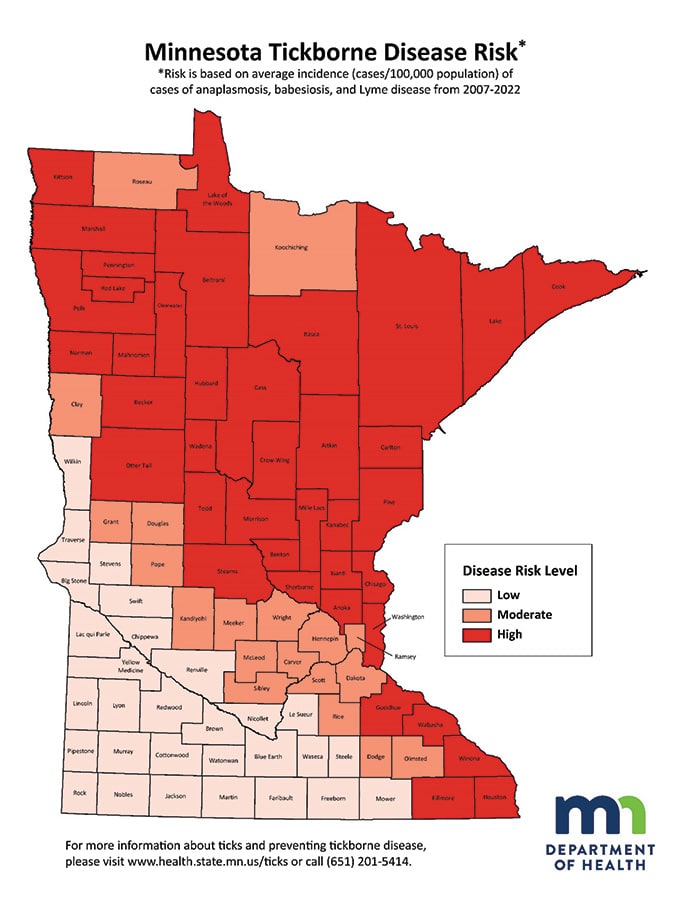
According to the Minnesota Department of Health website, “about 1 in 3 adult blacklegged ticks and 1 in 5 blacklegged tick nymphs (immature stage) are infected with Lyme disease bacteria.” Lyme disease is the most common tick-borne illness in the United States. It’s a good idea to check for ticks after you’ve been out in the woods. While they can be present anytime it’s warm out, they are most active in the spring and fall.
While there are about 50 species of mosquitoes in the state, thankfully, only a few varieties can transmit diseases to humans, including the West Nile virus. The health department also has a short video on choosing and using bug repellent effectively. If you get bitten by an insect and think you may be having a reaction, seek medical advice. Be sure to include some anti-itch ointment in your first aid kit.
We may wonder about the benefits of some of these bugs, but with a little preparation and planning, you can enjoy your time in the woods.

More info:
- Tick season is off to an early start across the U.S. Here’s what that means for Minnesotans. – CBS News
- Preventing Tickborne Disease – Minnesota Department of Health
- Preventing Mosquitoborne Disease – Minnesota Department of Health
- Tick Bite Data Tracker – CDC