


Wildfire-burned trees in the Superior National Forest not only benefit the ecosystem but also supply material for forest products. A local company is using trees damaged on state and federal lands to make lumber, pallets, and other products. As crews open areas, the U.S. Forest Service will restore some of the fire-impacted land with new tree seedlings and seeds.
Wildfire timber finds new life
When a wildfire happens in northern Minnesota, some of the burned trees become standing snags, creating habitat for wildlife, while other wood eventually decomposes, returning nutrients to the ground. According to the Superior National Forest (SNF), some of it has been used to produce wood products, as in the case of the Brimson Complex Wildfire in May of 2025.
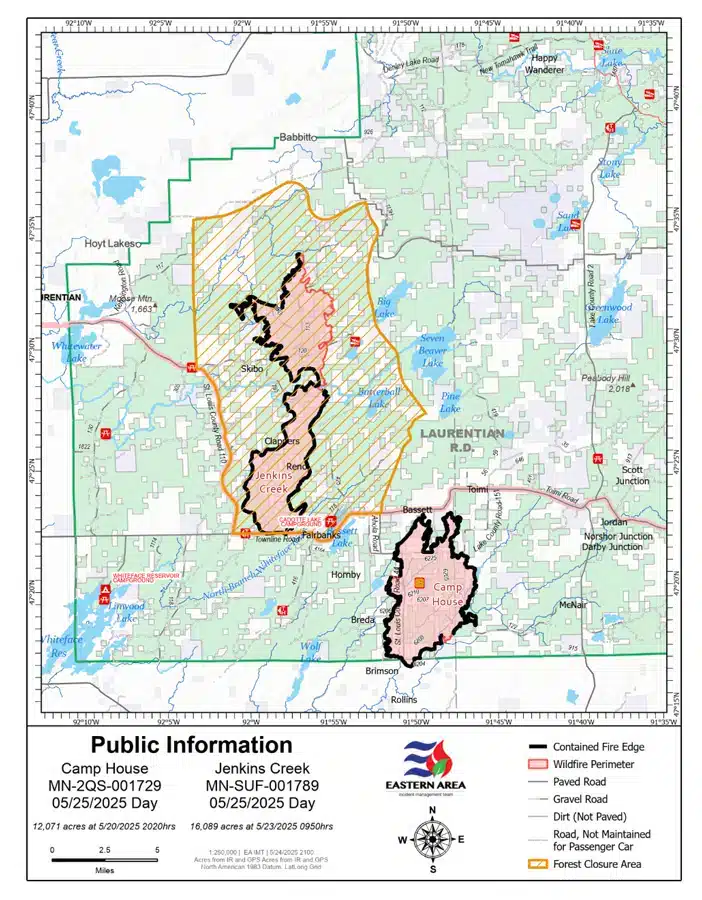
The Brimson Complex fire, which included the Camp House and Jenkins Creek fires, began a couple of miles north of town and about 45 miles north of Duluth. An unattended campfire caused it, despite burn restrictions prohibiting campfires. Because of drier conditions and strong winds, it spread quickly, eventually burning 28,000 acres on public and private lands. It also destroyed 150 structures, making it one of the biggest wildfires in Minnesota in recent history. Spruce budworm has impacted trees throughout the north by killing them. While native to the state, sustained outbreaks have contributed to a volatile fire situation.
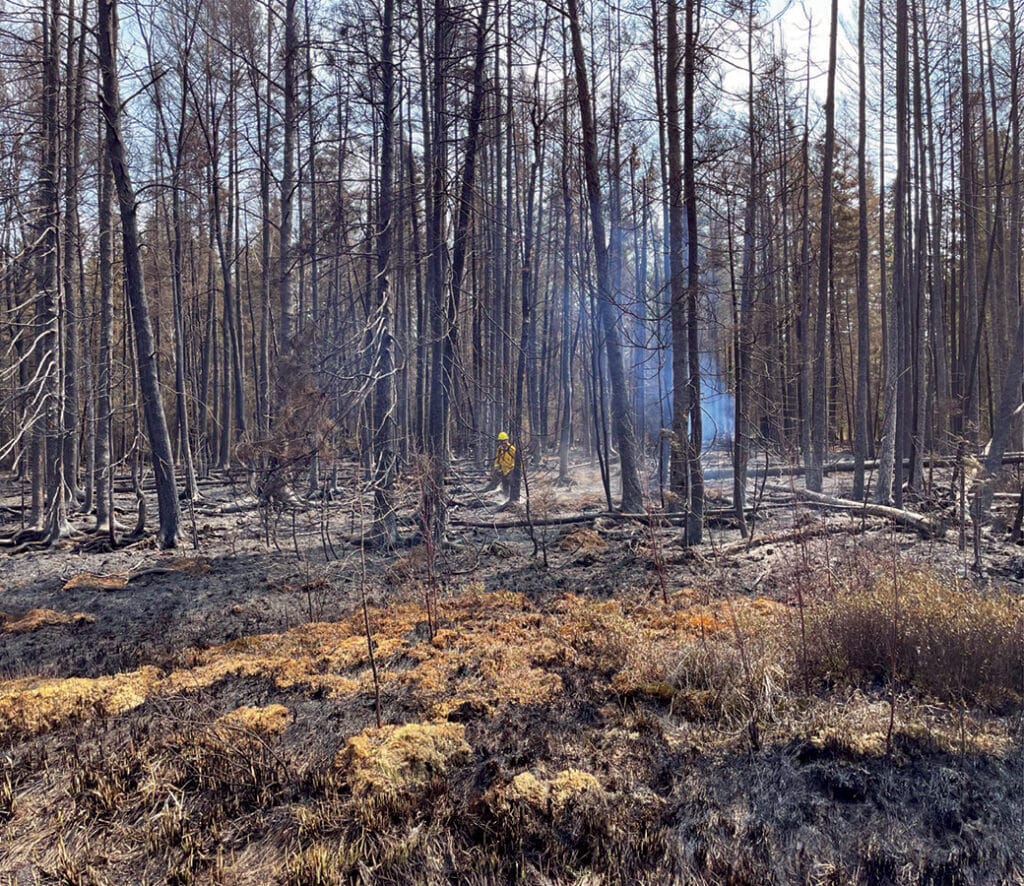
Within state and national forest lands, this provided an opportunity. Forest service staff from the Laurentian Ranger District were able to reclaim roughly 5,291 hundred cubic feet (CCF) of burned timber. The national forest then partnered with Savanna Pallet Inc., a state manufacturer, to convert it into forest products. From those damaged trees, the sawmill produced pallets and lumber. Burnt treetops are converted into sawdust and mulch for animal bedding in farming.
“Working with a local mill that processes burnt trees was key to the success of this project,” said Superior forester Kirsten Rosenberger. “Wildfires are never planned. However, these collaborative opportunities help implement active management for forest landscapes to thrive for future generations to come.”


The Boundary Waters, delivered weekly
Join thousands of readers receiving free wilderness news and weekly updates from the Northwoods.
Benefits to local economy
Forest managers say that using some wildfire-damaged wood for forest products benefits the local economy. Additionally, removing the wood helps forests recover by creating open areas. In some of these areas, crews will plant or seed new trees in the spring.
The SNF says that, “Collaborating with industry and local companies is vital for forest health and forest products, as timber sales are an essential tool of sustainable forest management.” Each year, the Superior National Forest offers certain tracts of timber within the national forest for sale. In addition, the Minnesota Department of Natural Resources sells some timber under an agreement with the Forest Service.

More info:
- Charred, not wasted: Putting burned trees to work – USFS-Superior National Forest
- Timber Sales – USFS-Superior National Forest