
By Fred Sproat
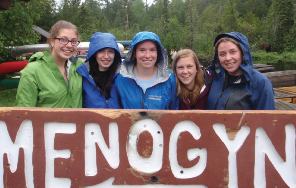
Wilderness is many different things to many different people; it can be a grocery store or a sanctuary, a playground or a classroom. It can be all of the above or something completely different. I have made the canoe country wilderness my office by turning passion into profession and working as a seasonal guide for YMCA Camp Menogyn.
My “work week” begins when two large coach buses turn north off the Gunflint Trail and come rumbling down our narrow gravel road. They come to a grinding halt amidst swirling clouds of dust, and a steady stream of 12 to 17 year olds cascade down the steps into the boreal forest. It’s late June, and we’re standing on the shore of West Bearskin Lake. First impressions are being made as cell phone screens read, “no service” and eyes turn upward and outward. Beyond the familiar settings of city, family, and friends emotions vary and are reflected in their questions,
“Are we going to catch fish?”
“Are we going to have fires?”
“Are we going to go swimming?”
“Yes, yes, and yes,” I tell them.
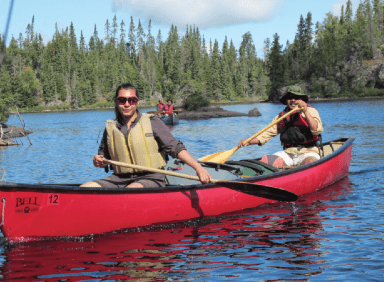
This is more their trip than it is mine; their chance to take a piece of charcoal or a set of watercolors to the wilderness canvas and sketch their dreams, desires, and necessities on it. I will tell them as much as I can about the flora and fauna or natural history of the region and I’ll suggest places to fish or ways of making their canoe track straight, but ultimately I’m just a facilitator. It’s up to them to discover and digest the canoe country character.
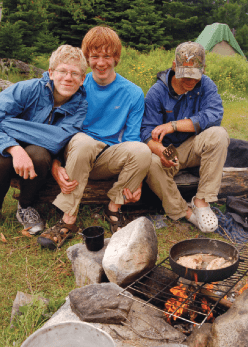
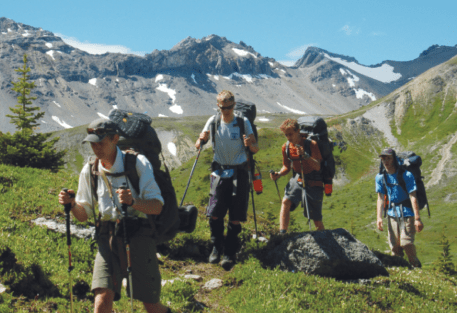
For the next week, two weeks, or 50 days these kids will live and work together as they travel through wild places. From the Superior Hiking Trail to Northern Alaska and the Quetico-Superior region to the Northwest Territories they’ll experience the real world as only a fraction of today’s population has. They’ll learn as much about navigating with a map and compass as they will about themselves. The kids I take on trips and make carry heavy packs and paddle into headwinds are tomorrow’s lawyers and politicians; tomorrow’s business owners and land holders; anglers and hunters; conservationists and developers.
The way in which we treat wilderness is dictated by how we perceive wilderness, and how we perceive wilderness is dictated by how we experience it. I do what I can to showcase the best of what’s out there, but ultimately it’s up to the individuals who step off that bus and into the fresh air of the canoe country wilderness to determine its value and role for the youngsters who come after them.
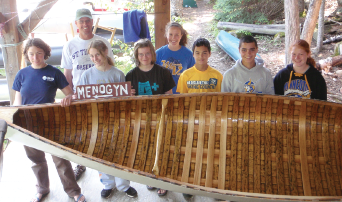
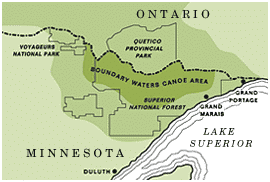
YMCA Camp Menogyn, located a literal stones throw away from the Boundary Waters Canoe Area Wilderness, is a year-round wilderness tripping camp whose mission is to provide transformational wilderness experiences. Summer time trips include backpacking, canoeing, and rock climbing and are open to teenagers between the ages of 12 and 18. Once the lakes freeze and snow falls, canoes are traded in for dog sleds and hiking boots for snow shoes. Opportunities also exist for group retreats and trips.
Menogyn (min-o-jin) from the Ojibwe language means “To grow fully.”
Camp Menogyn is part of The YMCA of the Greater Twin Cities. For more information visit:
www.campmenogyn.org
This article first appeared in Wilderness News Spring 2012