

“Our first day could be very unpleasant,” I told my spouse after realizing that the BWCAW permit I recently secured required about 10 miles of paddling and portaging before we reached entry point 70—North Fowl Lake. In a rush to hurry up and book a last-minute BWCA trip through Minnesota’s rugged cliffs, I mistakenly assumed that we had to make it to the campsite on North Fowl Lake. But through further research and trip planning, I realized that entry point 70 was the portage into Moose Lake. We decided it was best to drive up the night before and get to the outfitter right when they opened to pick up our permit, so we could get on the water sooner rather than later.
Big winds and wet weather are part of the Boundary Waters experience. But this trip was through many large lakes—several more than seven miles long—and I knew that day one could be a problem. We always leave plenty of extra days in our trip plan to allow for fishing, exploring, and rough weather. But the rules on when and where you can enter are firm to protect the wilderness and visitor experiences. So, we got on the water as early as possible since the wind is typically calmer in the morning and evening. We were rewarded with an easy and uneventful day of paddling.

Why a Last-Minute Trip
It doesn’t matter how well we plan. Our short Minnesota summers always seem to slip by before we’ve had a chance to do all of our favorite activities. And the one thing we really wanted to prioritize this year was a nice, long BWCA trip. While we enjoy all outdoor activities, nothing beats slowing down to the speed of a canoe and disconnecting from the modern world and all of its distractions. So, one evening, as summer was winding down, my spouse and I sat down and planned what turned out to be a surprising and unforgettable Boundary Waters trip.
There are countless benefits to planning in advance, but we were surprised to find just as many by planning last-minute. Being limited to six options, we went in on a Tuesday, rather than a Saturday, and enjoyed an easy drive there and back with limited traffic. We got to experience an area that is undoubtedly one of the most breathtaking in the state, which likely would have remained on the back burner due to its small size and proximity to entry points. And we saved a lot of time by not excessively researching, so we could live our best summer.
Planning a Last-Minute BWCA Trip
I wrote a separate story about how to plan a last-minute BWCA trip that details our process. If you missed it, I recommend checking it out here as it provides deeper context to the story. For this story, I want to share some additional thoughts about how we plan our Boundary Waters trips.
We try to take one nice, long trip each year where we’re in the wilderness for more than a week. It takes a minute for the two of us to slow down and appreciate the rhythm of the wilderness, so we always enjoy taking longer trips. These longer trips allow us to have margin to fish, explore, and stay put if the wind and weather turn difficult. Since the distance for this trip was shorter than what we usually plan, we had more days to explore than usual. It turned out to be perfect for this area with lots of wonderful fishing and hiking opportunities. Finally, I always like to set goals for my trips so that I can prioritize what I want from each adventure. For this trip, I wanted to slow down and savor our time in nature, catch and eat fish, and see new sights.

Hurry Up and Slow Down
Since we planned this trip last-minute, our entry day was on a Tuesday, which we appreciated in the end. We had enough time over the weekend to pack up the truck, and on Monday morning, we fastened the canoe. While my spouse spent that Monday at the office, I finished up last-minute details for our trip and double-checked our packing lists. When he got home, we wasted no time hopping in my vehicle and hitting the road.
Another great thing about going in on a Tuesday was that we had no problem finding an open first-come, first-served campsite on a Monday night. We arrived after dark, wound down, and went to bed in anticipation of an early alarm.
The next morning, we got up in the dark and enjoyed our first cup of camp coffee that trip. We moved through getting ready and packing up quicker than I anticipated, and had plenty of time to check and screenshot the weather and aurora forecasts for the week. We arrived at the outfitter to pick up our permit before they opened their doors and were on our way ahead of schedule. We still had a long drive, stopping once for gas. By mid-morning, we were on the water, ecstatic about the perfect weather.
We’d been in such a hurry the previous 24 hours that I found myself rushing and trying to paddle faster as we made our way from Little John to John Lake. I caught myself with a reminder that a canoe can only go so fast. We’re in the wilderness now. It’s okay to slow down.
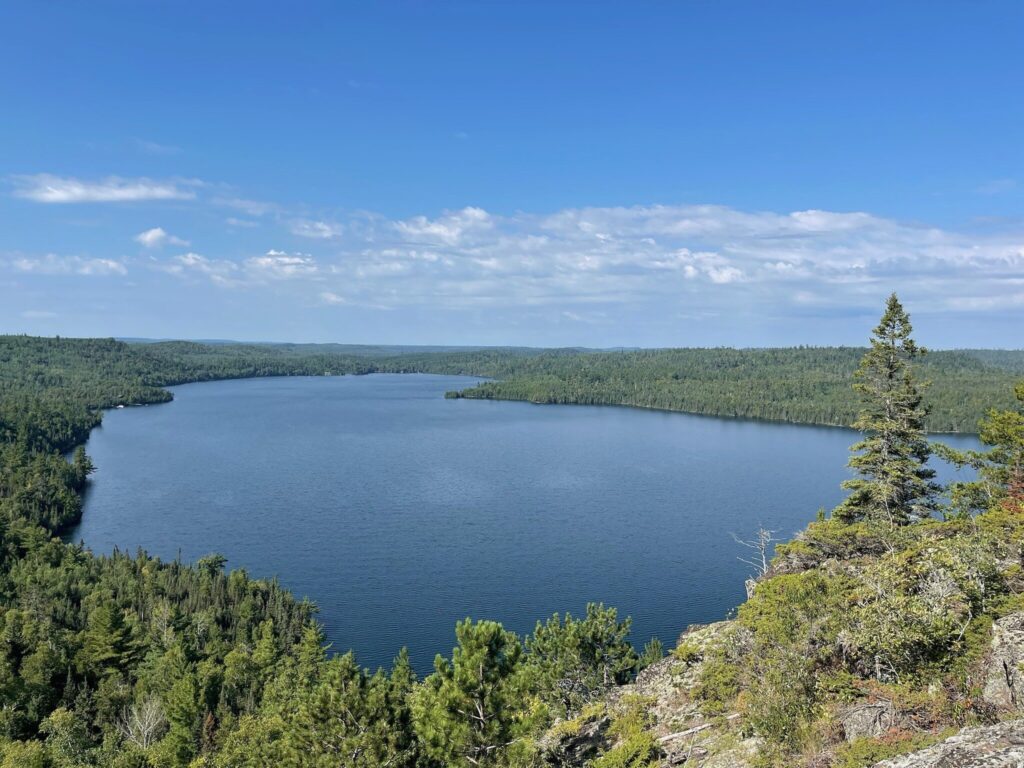
Moose
It was a perfect day for a long paddle. We marveled at the breathtaking cliffs that guard John Lake and the Fowls, and complained about our heavy packs and the excessively rocky portage to Moose. Before we knew it, we were set up for our first night on Moose. The next morning brought rain showers, so we enjoyed our first full day of staying put and not having to do anything. Once the rain let up, we enjoyed a simple lunch and caught some fish for dinner.
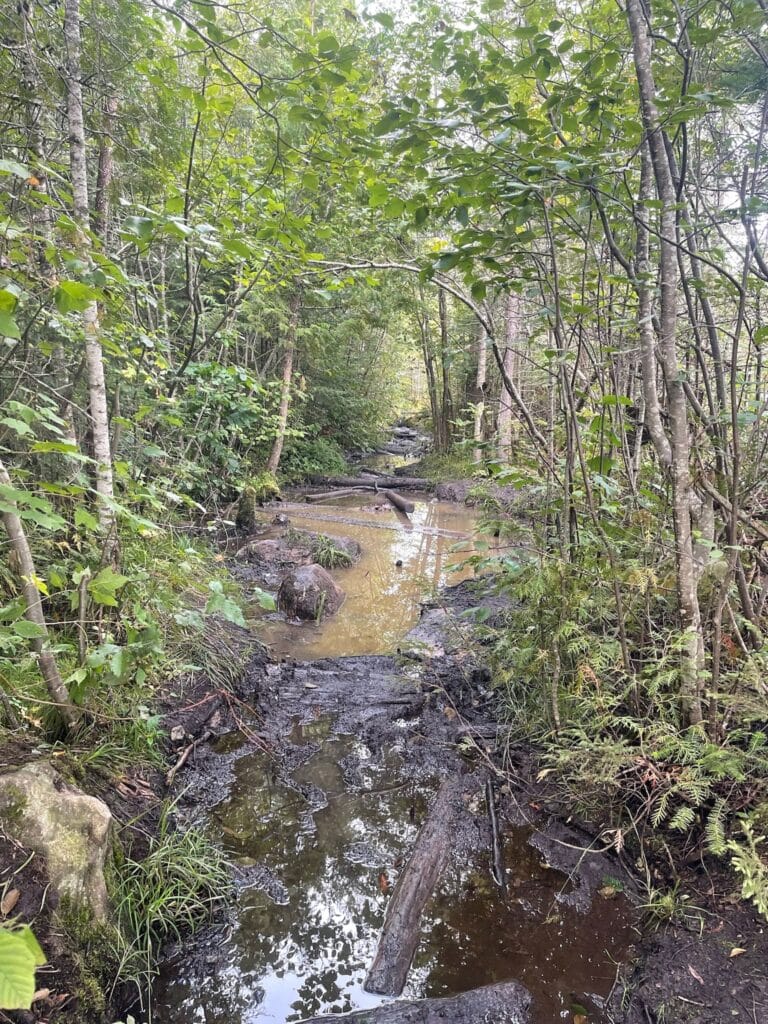
While the campsite on Moose had a lovely view, the tent pads were less than desirable, so we decided that the next morning we’d move on. We got up before the sun and enjoyed packing up while watching the fog dissipate from the lake and listening to the loon calls echo off the cliffs like a joyful chorus welcoming the day. After a short paddle to the end of Moose, we were at the start of three portages. Traveling east to west, there wasn’t much elevation, which I would have gladly taken over what we found on the Lesser Cherry Portage. Most of the 90-rod portage was deep, slick mud and muck. It was slow going, watching every step. We both slipped and nearly fell, but what we found at the end made the challenge worth it.
These lakes have a reputation for turning treacherous when the west winds pick up. But for most of our trip, these giant bodies of water were like glass. It was a treat paddling down the flat water on Mountain, enjoying the stunning rocky ridges reflected on the lake.
Clearwater
After learning that Clearwater was an entry point lake that allowed motors, my husband was opposed to spending a night there. I had my reservations, too, but it also made the most sense for some of the exploration we wanted to do. After making my case, he hesitantly agreed, and as things always work out, we found the perfect spot for us in a back bay. Like much of this trip, our time on Clearwater surprised and delighted us and was better than we expected.
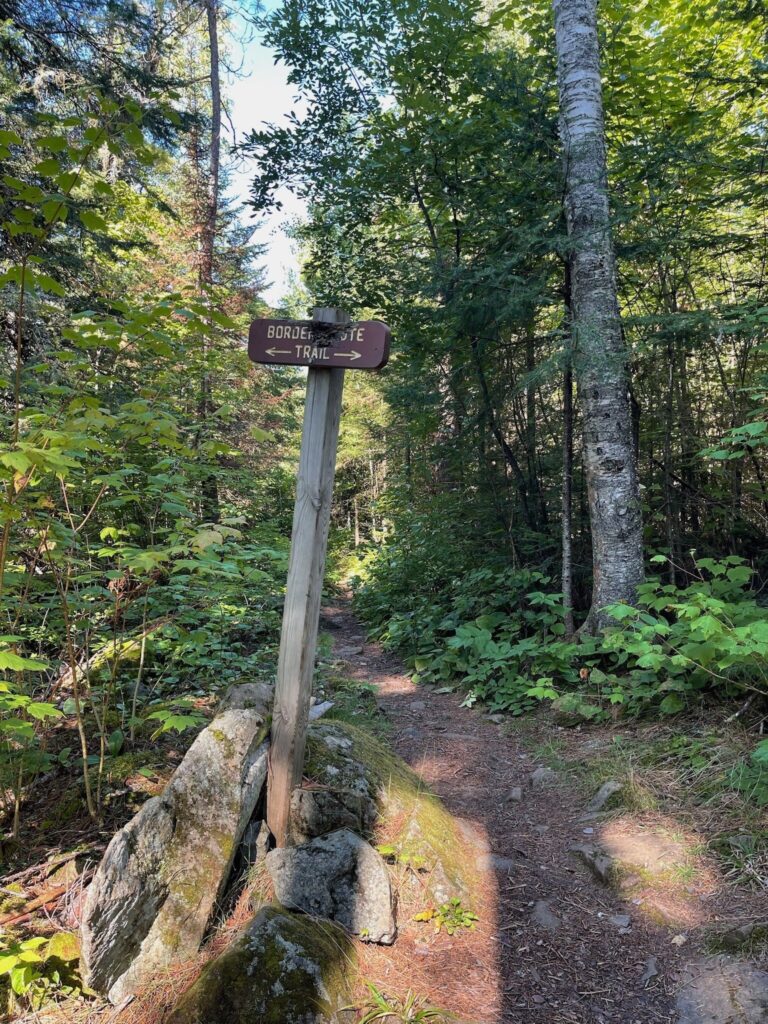
If you get a chance to paddle this area, be sure to leave time for some hiking. The Border Route Trail (BRT) runs through here and offers another impressive perspective of this stunning area. Toward the west end of Clearwater, you’ll find a trail up the Palisades, which offers more jaw-dropping scenic vistas.
Moving On
Going into the trip, we didn’t have an exact route planned. We wanted to be flexible with the weather, busy lakes, and whatever else came our way. As we prepared, we gathered information on all the lakes we might want to travel through.
This is another great feature of this area. There are so many options to be flexible. In addition to North Fowl, you could do similar loops through John, Pine, Clearwater, and even East Bearskin. You could do the longer route like we did, looping through Moose, Mountain, and Pine. Or come in on John and go through East and West Pike, circling back through Pine or Moose. You could even hire an outfitter to shuttle you and do a shorter one-way trip. We chose to loop through Pine for the fishing.
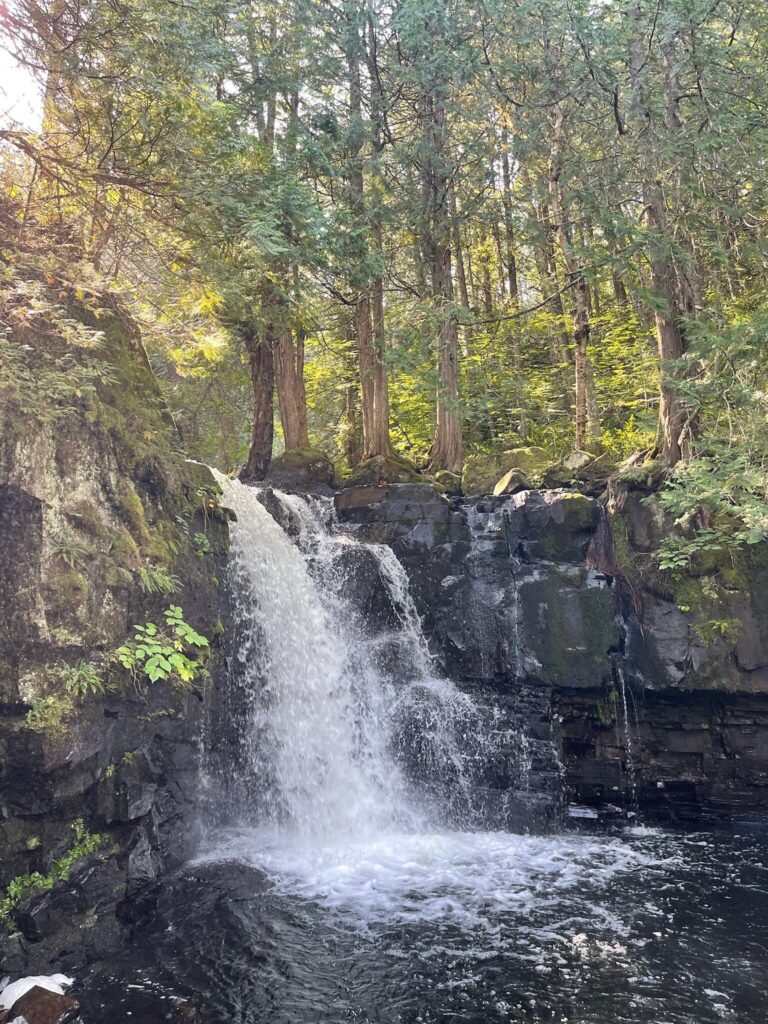
On Sunday morning, we packed up and paddled across a small bay to the portage to Caribou. This is where the heavy traffic we were expecting appeared to be, with every campsite on Caribou and Little Caribou occupied. After crossing the beautiful portage from Little Caribou to Pine, we paddled to the portage that connects to the trail to Johnson Falls. We tucked our gear aside and took the short half-mile trail to the falls. We visited Johnson Falls in our early years of getting to know the region. It was delightful to visit again, a bit more experienced.
Pine
As we paddled down Pine, I commented on how I didn’t expect it to be so beautiful. And we both commented on how it doesn’t feel like you’re moving when paddling down these long, narrow lakes. But we were grateful for another day of perfectly calm conditions on our last big day of paddling.
The first couple of sites on Pine looked open from across the lake, so we kept paddling, hoping to find something toward the middle. Apparently, everyone else had the same plan, and campsite after campsite was full. I could sense my spouse’s frustration as the day grew hotter and longer. I had a good feeling that we were going to find the exact perfect spot for us while he worked through what we’d do if everything was full.
“I think that’s the campsite,” I said as we got closer to the last site on the lake. “And it looks open.” We pulled up to find one of the loveliest spots in all of the BWCA, its only occupants were the red squirrels snacking on nuts and apple cores left by the previous guests.
Rainbows and Sunsets
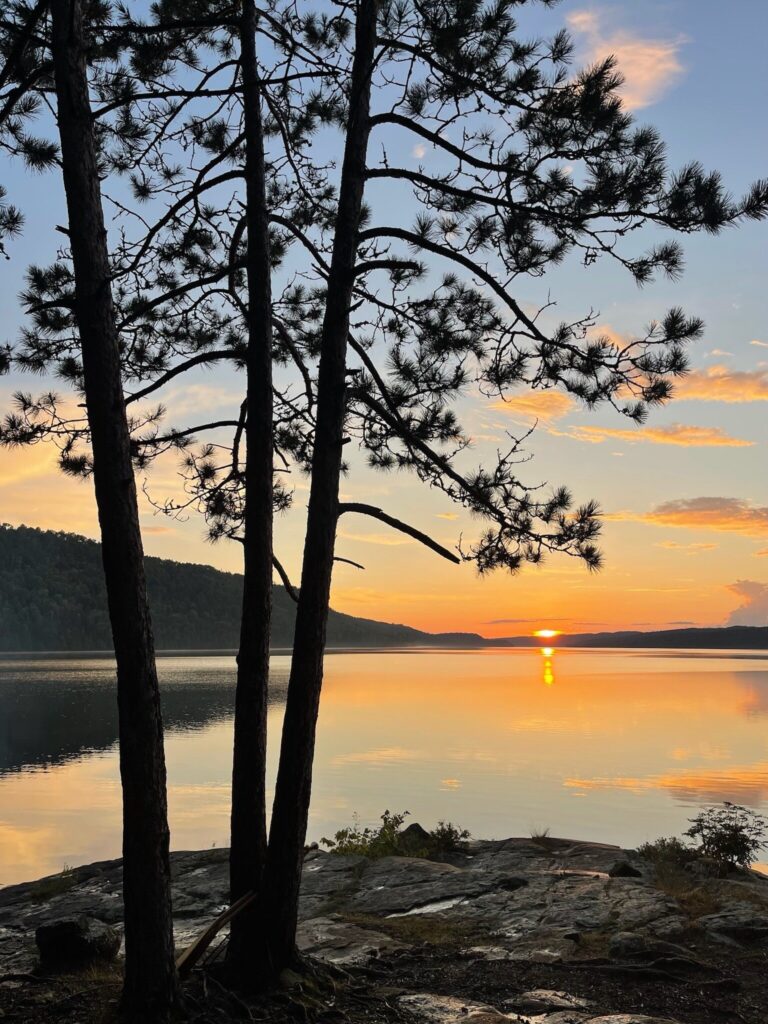
Everything on this trip so far had gone much better than expected. The lakes were quiet, the weather was perfect, and the rugged beauty is tough to beat. Then, just as we were about to relax after setting up camp, we looked up and saw a storm coming down the lake. We buttoned everything up and hopped in the tent for the first of several heavy rainstorms on the last leg of our trip. The storm moved through quickly, and we were able to enjoy an evening around the fire with a stunning sunset.
The weather radio predicted thunderstorms and high winds for the last two days of our trip. We considered leaving a day early to be safe. Before packing up and moving on, we decided to check the Garmin for a more detailed forecast and I’m glad we did. We enjoyed a perfect last day and great fishing before more rain rolled in that evening.
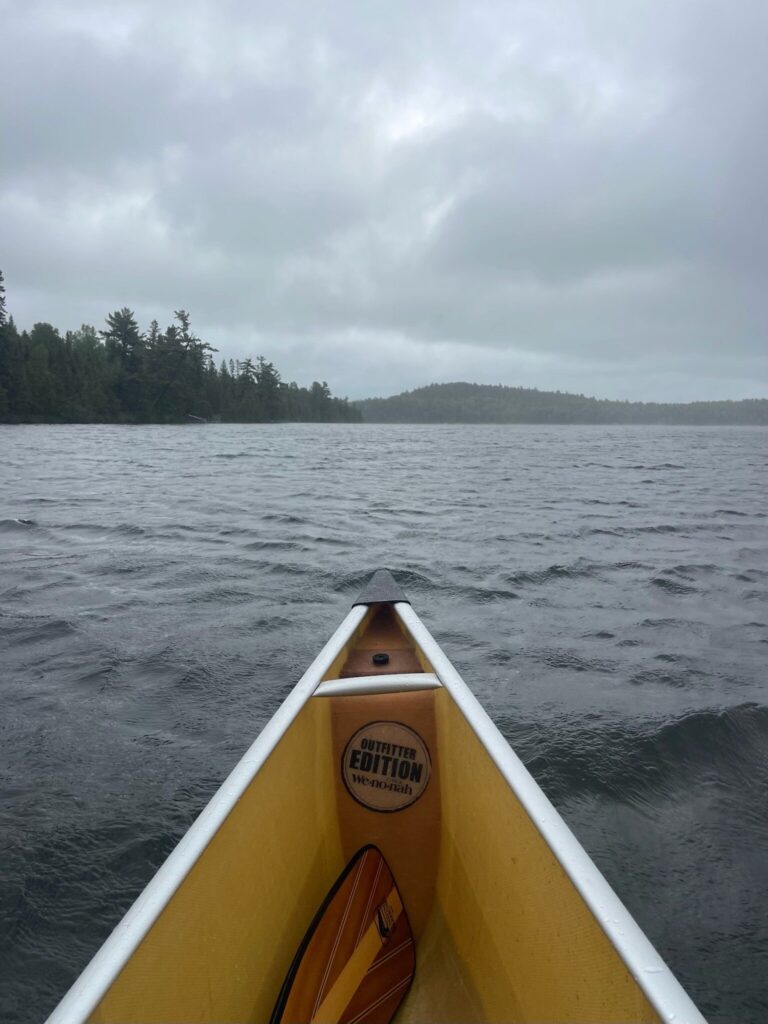
No trip to the BWCA is complete for us without a day of cold, wet, and windy conditions, and that’s exactly what we woke up to on our last morning. We quickly packed up and were on our way. “Are you still enjoying your trip?” my husband asked as we paddled down McFarland in the rain. “I am,” I replied. “And you?” “Yeah, even with this weather, I’d rather be here than anywhere else,” he agreed.
Lesson Learned
We learned an important lesson this trip. A lot of time and energy can be spent planning the perfect trip, securing the best permit, and trying to make everything just right. But by planning a trip last-minute, with just six good options to choose from, we learned that it doesn’t really matter where you go in. Any trip to the Boundary Waters wilderness will be a magical and memorable experience.
Holly Scherer is a Minnesota-based writer, photographer, outdoorswoman, and guide. She’s most at home in the great outdoors; camping, hiking, paddling, cycling, and gardening. When she’s not on an adventure, she and her husband live in the Twin Cities where they’re fond of saying, “home is where we store our outdoor gear.”