
The Superior National Forest is a place where visitors explore its vast woodlands, countless lakes, and winding waterways year-round. Although the federal government manages the forest, numerous organizations and groups work to preserve and protect this irreplaceable landscape. Friends of the Superior National Forest, a nonprofit based in northern Minnesota, brings people together to care for the Forest through volunteer stewardship, outreach, and skills-building clinics.

Friends of the Forest
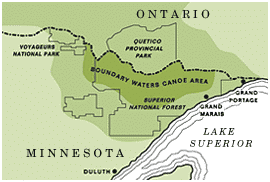
The U.S. Forest Service (USFS) oversees the management, protection, and preservation of the Superior National Forest (SNF) in northern Minnesota. Although it’s been reported that several hundred employees work for the agency, they can’t accomplish all the work needed to care for the 3.9 million-acre landscape. Tribal nations, nonprofit organizations, and other community groups partner with the Forest Service and each other to support a healthy ecosystem while helping to maintain recreational opportunities.
One of these organizations, Friends of the Superior National Forest (Friends), reorganized and rebranded in 2025 to better reflect its ongoing stewardship and connection to the land. The organization began in 2014 as a nonprofit called Northwoods Volunteer Connection. A small group of people, including former Forest Service employees and a local outfitter, banded together around a shared mission: supporting land stewardship through volunteerism.
Since then, the organization has grown into a 10-member team of mostly volunteers that collaborates with the Forest Service and other partner organizations on projects that benefit the SNF. Its volunteer-led projects span the entire forest, including the Boundary Waters Canoe Area Wilderness (BWCAW).


Renewing a mission

We spoke with Jo Swanson, executive director, to learn more about the work Friends of the Superior National Forest has accomplished over the past decade, how the organization has evolved in recent years, and what lies ahead.
Swanson joined the organization a couple of years ago, during a period of reevaluation and renewed focus on its mission. She previously worked with the Superior Hiking Trail Association, where her role was more behind-the-scenes.
When the executive director position with Friends opened up, Jo saw an opportunity to make a broader impact across the entire Forest. The role would let her keep collaborating with Forest Service staff she had enjoyed working with in the past while taking on a much broader stewardship role. Rather than focusing on a single stretch of trail, she could contribute to stewardship efforts across the entire Forest.
Since she started, she has played an instrumental role in rebranding Friends of the Superior National Forest, which included changing its name. She noted that the previous name, Northwoods Volunteer Connection, caused confusion and did not clearly communicate the group’s mission. The response to the change has been positive, and the new name has helped increase awareness and recognition of the organization’s work.
Additionally, she wanted to strengthen their working relationship with the USFS. “We were having meetings with the Forest Service, and they brought up the fact that they really wanted an overarching ‘friends’ group for the entire forest that could fill in some gaps that they were seeing. And that was, you know, precisely why our organization had been founded. The goal of our work was to fill in some of the gaps that the Forest Service didn’t have capacity for,” Swanson says.


Volunteers are the heart of the work
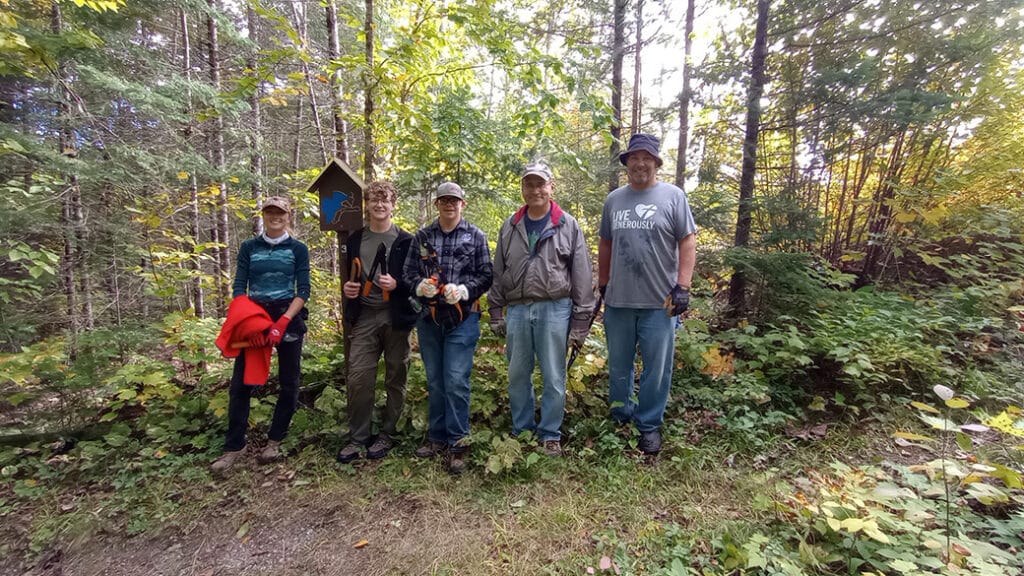
Volunteers carry out all the work, with many returning season after season. Projects include trail and portage restoration, campsite assessment and maintenance, invasive plant removal, clearing brush and deadfall, and planting trees and native seeds.
Swanson says it’s important that those who live outside of the region, not just locals, engage in stewardship of the Forest. “We love and need our local volunteers 100%, but we also need to draw in people who come here to recreate and instill a stewardship ethic in them so that they’re also giving back. We don’t have large enough population centers [up north] to do all the work that needs to be done.”
There are projects for everyone, regardless of age, interests, or abilities. Some projects last just a few hours and take place in easily accessible areas. Other projects require half-day or multi-day commitments. Generally, volunteers don’t need prior experience or specialized skills, as they receive training on necessary equipment. Swanson noted that the organization matches volunteers with projects that best suit their interests and abilities.
Friends also helps fund seasonal volunteer “rangers” who work directly with the Forest Service. These volunteers paddle or hike into the BWCAW to restore portage trails, pick up garbage, and monitor campsites. In 2026, volunteers contributed 3,700 hours. Friends has also begun offering canoe trips into the wilderness for those who want to spend a few days working on projects in more remote areas.
At the beginning of each season, the USFS provides Friends with a list of potential projects. From there, the organization prioritizes the work and builds a calendar of volunteer projects from spring into fall. Some projects continue over multiple seasons. Projects take place all over the forest. Swanson noted that the partnership with the Forest Service has been “extremely positive and beneficial” to both parties.

The Boundary Waters, delivered weekly
Join thousands of readers receiving free wilderness news and weekly updates from the Northwoods.
Engaging a younger generation
Swanson says that many partner groups have said their volunteer base is aging. Recruiting a younger crowd can be hard. Traveling to more remote locations may require extra gas money and time away from school or work.
“Something that’s worked well for us is partnering with other organizations. There’s a really fabulous nonprofit based out of the Twin Cities called Great River Greening. And they have a completely different reach than we do, including youth and families. They’ve been working to expand into greater Minnesota.”
In one example, Great River Greening and Friends partnered to plant 2,025 tree seedlings at Pfeiffer Lake Campground in Cook County in 2025. Storms and wildfires had damaged the area, making the project an opportunity to involve younger volunteers in restoration efforts. Swanson also noted that the organization has engaged scouting groups in various projects.
Friends also conducts outreach year-round. Through tabling events, they connect younger generations with the organization’s work and encourage them to get involved. In one instance, they set up a welcome table at Pincushion Mountain, a popular trailhead near Grand Marais, where visitors enjoy activities like mountain biking, skiing, and hiking.

Expanding partnerships and reach
Partnerships with other organizations and groups are especially important. For example, a hiking or ski trail club may not have the tools necessary to carry out trail restoration projects.
“Over 100 different partner groups do projects across the Superior National Forest. And some of them are really small. They may not have a big pile of equipment. We can lend those things out, free of charge,” Swanson notes. She adds that all groups need to do is reach out, and the organization will do its best to provide the resources they need, sometimes delivering the equipment themselves.
Jo emphasizes that strengthening these partnerships and providing collaborative opportunities will remain a key focus in the coming years. Understanding each organization’s strengths and working together will ultimately benefit the entire ecosystem.
To support these efforts, the organization is launching a partnerships committee for people interested in helping guide and strengthen these relationships. The committee will include individuals already involved with other organizations in the Superior National Forest who want a voice in this work without taking on a larger organizational commitment.
In one example, “We’ve been really focused and trying to make sure that we’ve had a presence on the west side of the Superior National Forest. So often people think of the Superior National Forest, and they’re thinking Grand Marais and Tofte, and that’s totally true.” Still, she adds, “The Superior National Forest extends all the way to the west side. We did a big outreach push out there last year.”


Growing outreach through hands-on learning
To expand its public outreach, the nonprofit began offering skills-building clinics. These include classes in map-and-compass navigation, dry-land canoeing skills, and Leave No Trace instructor training. The organization also sponsored a Wilderness First Aid class open to any Superior National Forest partner.
Much of its educational programming this past year was made possible through a generous grant from the Boreal Waters Community Foundation. Most of the events were held at the Forest Service headquarters in Duluth and at local libraries throughout the region.
New transition ahead
The organization is preparing for a transition as Swanson steps down as executive director to take on a new position outside the organization that will keep her connected to the forest. She describes her time as executive director as deeply meaningful and that she’s confident the organization is well positioned for a new leader who is passionate about northern Minnesota’s woods.
Funding for the nonprofit comes primarily from private and public donations, along with grants from the Boreal Waters Community Foundation and the Lloyd K. Johnson Foundation. The Forest Service also occasionally provides funding. For those who’d like to get involved, the Friends website lists ways to give, along with upcoming projects and events.
