
Senate advances permitting bill that conservation groups warn could permanently lock in mining leases near the BWCA

The U.S. Senate voted 73-25 on Nov. 9 to advance the Bipartisan American Affordability and Jobs Act, a sweeping overhaul of federal permitting. The bill does not name the Boundary Waters Canoe Area Wilderness. Conservation groups warn that its “project certainty” provisions could make federal mineral leases for the proposed Twin Metals mine nearly impossible to reverse once issued, while supporters say the bill would speed energy and infrastructure projects.
On Monday, Nov. 9, the U.S. Senate voted 73-25 to move ahead with the Bipartisan American Affordability and Jobs Act (S. 5653), known as BAAJA. The procedure opens the floor for debate to advance the bill; however, it has not passed yet.
The legislation was introduced Sept. 30 by Sens. Shelley Moore Capito (R-W.Va.), Mike Lee (R-Utah), Sheldon Whitehouse (D-R.I.) and Martin Heinrich (D-N.M.), according to the Congressional Research Service. It would rewrite parts of the National Environmental Policy Act, the Clean Water Act, the Endangered Species Act and the National Historic Preservation Act, and change how power lines are planned and approved. The sponsors released an amended version on Nov. 7, two days before the vote.
Minnesota’s senators were split on the vote. Sen. Amy Klobuchar, the state’s governor-elect, voted to advance the bill, and Sen. Tina Smith was one of 25 senators opposed, according to Senate roll call vote 257.
Supporters cite faster permitting
Supporters describe the bill as a long-overdue fix for a slow federal review process. Capito, who chairs the Senate Environment and Public Works Committee, said on the Senate floor that the legislation would prevent “unnecessary delays and endless litigation,” Boise State Public Radio reported.
The National Association of Counties supports the bill, in part because it recognizes counties as cooperating agencies in federal environmental reviews.
The mining industry is also urging passage. After the Nov. 9 vote, National Mining Association President and CEO Rich Nolan said the bill would open up mineral production at home while keeping environmental reviews rigorous. He said it is time to ensure “made in America is also mined in America.”
No mention of wilderness, but a “project certainty” title
The bill does not change wilderness designations or mineral withdrawals, according to the Congressional Research Service summary. Its only mining-specific section in that summary deals with mill sites on public land.
The concern for the Boundary Waters lies in a section titled “Project Certainty.” As the Congressional Research Service describes the bill as introduced, Section 1401 would generally bar federal agencies from revoking, suspending or amending a federal authorization that is in effect on or after Sept. 16, 2026. In plain terms, a permit or lease issued by one administration would be difficult for the next to take back. The summary lists exceptions, including court orders, permit violations, fraud and a request from the permit holder.
The provision grew out of a dispute over clean energy. Whitehouse and Heinrich, the bill’s Democratic sponsors, broke off permitting talks last December after the Trump administration halted work on five offshore wind farms, citing “illegal attacks on fully permitted renewable energy projects,” Utility Dive reported. The bill’s drafters included the project certainty title to prevent that kind of interference, according to the Clean Air Task Force. Conservation groups say the same protection would extend to mining leases.
Other sections would shorten the window for filing lawsuits over environmental reviews to 150 days and limit when courts can block a project, according to the summary.
Conservation groups warn of locked-in leases
Earthjustice argues that mineral leases would likely qualify as a federal authorization under the bill. The group says the Trump administration is likely to reinstate leases for the Twin Metals mine, and that a future administration seeking to revoke or amend them could be blocked.
Save the Boundary Waters urged senators to vote no in a Nov. 10 action alert. The group says a future administration could not cancel or withdraw Twin Metals’ federal leases, mine plan or permits, even if they were found to be unlawful.
Ingrid Lyons, executive director of Northeastern Minnesotans for Wilderness and Save the Boundary Waters, told Quetico Superior Wilderness News:
“Protecting the Boundary Waters has always depended on our ability to undo harmful and unlawful decisions made in Washington. The Bipartisan American Affordability and Jobs Act would take that ability away, locking in this administration’s attempts to advance the Twin Metals mine and the ensuing irreparable harm to one of America’s most treasured wild places.”
Lyons said the group’s opposition stems from Section 1401, which she said would place significant restrictions on both executive and judicial avenues for correcting what she called the wrongs of the Trump administration as it works to push the Twin Metals mine forward. She also cited changes to the Clean Water Act and the National Historic Preservation Act that would limit the authority of states and Tribes to protect clean water and severely alter Tribal consultation and public input.
Amended bill draws mixed reviews
The sponsors changed the permit certainty provisions in the Nov. 7 amendment in response to some objections, Inside Climate News reported. The amended section adds an exception for permit changes needed to prevent harm to human health or the environment, and its limit on amending permits now applies only to material changes, according to a Clean Air Task Force analysis. That analysis concluded the revisions fall short and leave key terms unclear. Earthjustice said the amended bill offers “some meaningful improvements” but does not resolve its central concerns.
The Wilderness Society reviewed the updated text and said it still opposes the bill, naming the Boundary Waters among the public lands it considers at risk. The National Congress of American Indians said the amendment still threatens Tribal sovereignty and sacred places.
Tribal views are not uniform. The Coalition of Large Tribes and the Crow Nation have expressed support for the bill’s permitting framework, City Journal reported. In Minnesota, the Bois Forte, Grand Portage and Fond du Lac Bands hold treaty rights in the region where the Twin Metals mine is proposed.

The Boundary Waters, delivered weekly
Join thousands of readers receiving free wilderness news and weekly updates from the Northwoods.
Twin Metals leases not yet reissued
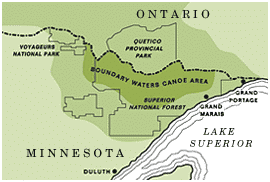
The debate over the bill follows a year of federal action on mining near the wilderness. Twin Metals Minnesota, a subsidiary of the Chilean company Antofagasta, has proposed an underground copper-nickel mine near Birch Lake, upstream of the Boundary Waters. The company’s two federal mineral leases were canceled in 2022.
In April, the Senate voted 50-49 to overturn the 20-year ban on new mineral leasing across 225,504 acres of the Superior National Forest, and President Trump signed the measure April 27. A House spending bill advanced in June would require the Department of the Interior to reissue the leases.
The leases had not been reissued as of Nov. 13. Lyons told the Quetico Superior Foundation that day she expects them to be reissued at any time.
At the state level, Gov. Tim Walz issued an executive order in August halting state permitting and environmental review for nonferrous mining in the Rainy River Headwaters Watershed. Save the Boundary Waters notes that Minnesota would still have a say in permitting under the federal bill, especially on state-owned land.
What happens next
The Senate is expected to resume debate the week of Nov. 16, though a date for a final vote has not been announced. If the bill passes the Senate, it would go to the House.
Lyons urged Minnesotans to contact their members of Congress. “This legislation will likely head over to the House in the near future, and it is important to engage our entire delegation when expressing concerns about how BAAJA will impact Minnesota’s special places, native sovereignty, clean water, public lands, and more,” she said.
More info:
- Congressional Research Service: Bipartisan American Affordability and Jobs Act (BAAJA) of 2026: Summary of All Sections
- Save the Boundary Waters: Tell Congress to oppose bill that threatens the Boundary Waters
- Earthjustice: Some of the Great Wild and Special Places the Senate Permitting Bill Puts on the Chopping Block
- The Wilderness Society: The Wilderness Society still opposes S.5653
- Inside Climate News: Senate Advances Permitting Overhaul But Roadblocks Loom
- National Association of Counties: U.S. Senate advances Bipartisan American Affordability and Jobs Act in initial procedural vote