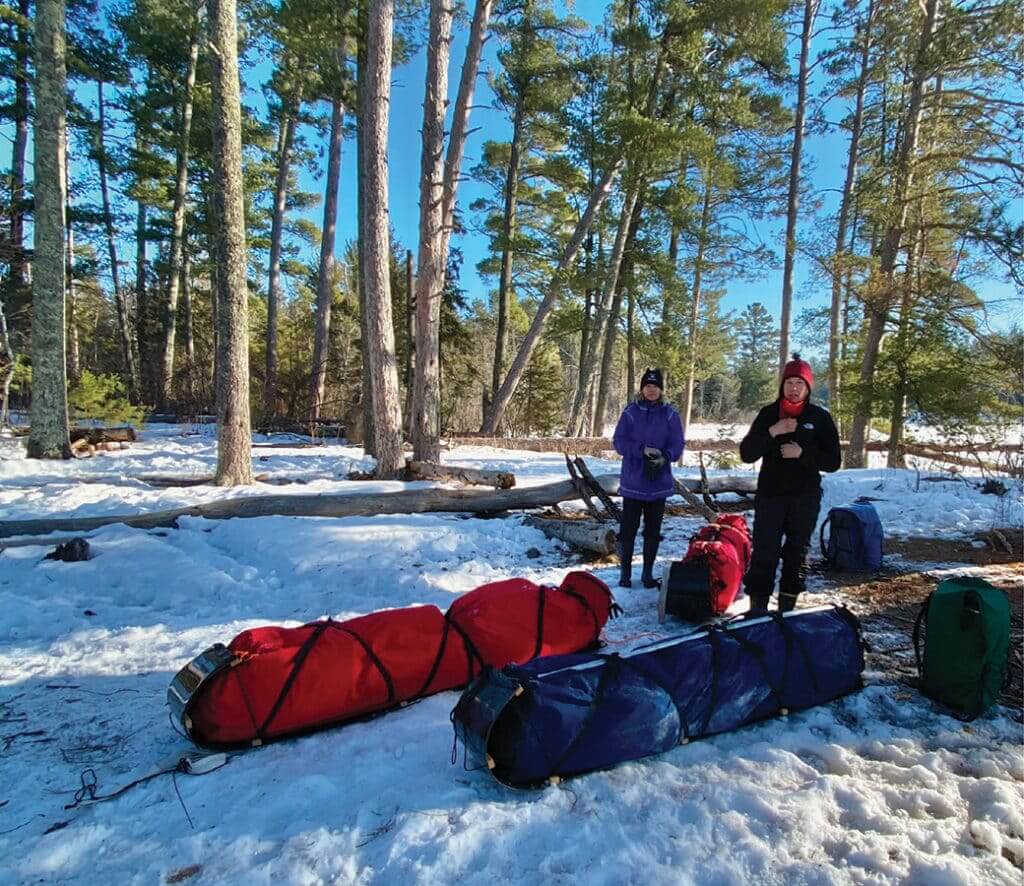
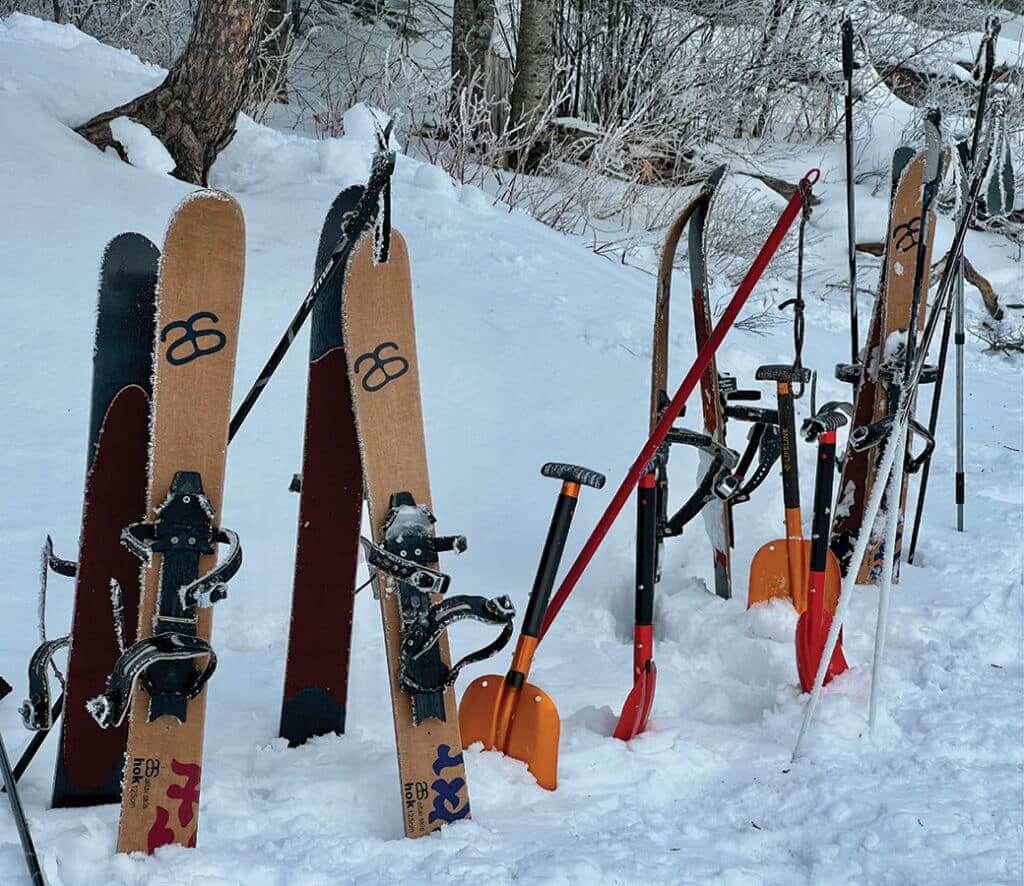
Minnesotans have become increasingly interested in winter camping, particularly in the Boundary Waters Canoe Area Wilderness. But, as in other seasons, it’s essential to minimize our impact and practice good etiquette. We’re sharing both written and unwritten guidelines to help everyone enjoy a positive experience while protecting the natural environment.
When you visit the Boundary Waters Canoe Area Wilderness (BWCAW) in the summer, you experience its incredible beauty. Vibrant skies reflect on the water, and the wind whispers through the white pines. These are moments many of us are familiar with. You also likely know the rules and practice good trail etiquette.
But have you explored the BWCAW in the winter? In the colder months, snow blankets the wilderness, and pastel skies contrast with the stark landscape. While much of the etiquette and rules remain the same, we offer additional guidelines to help you leave a lighter footprint. This way, the next visitor can experience the same magic you did.
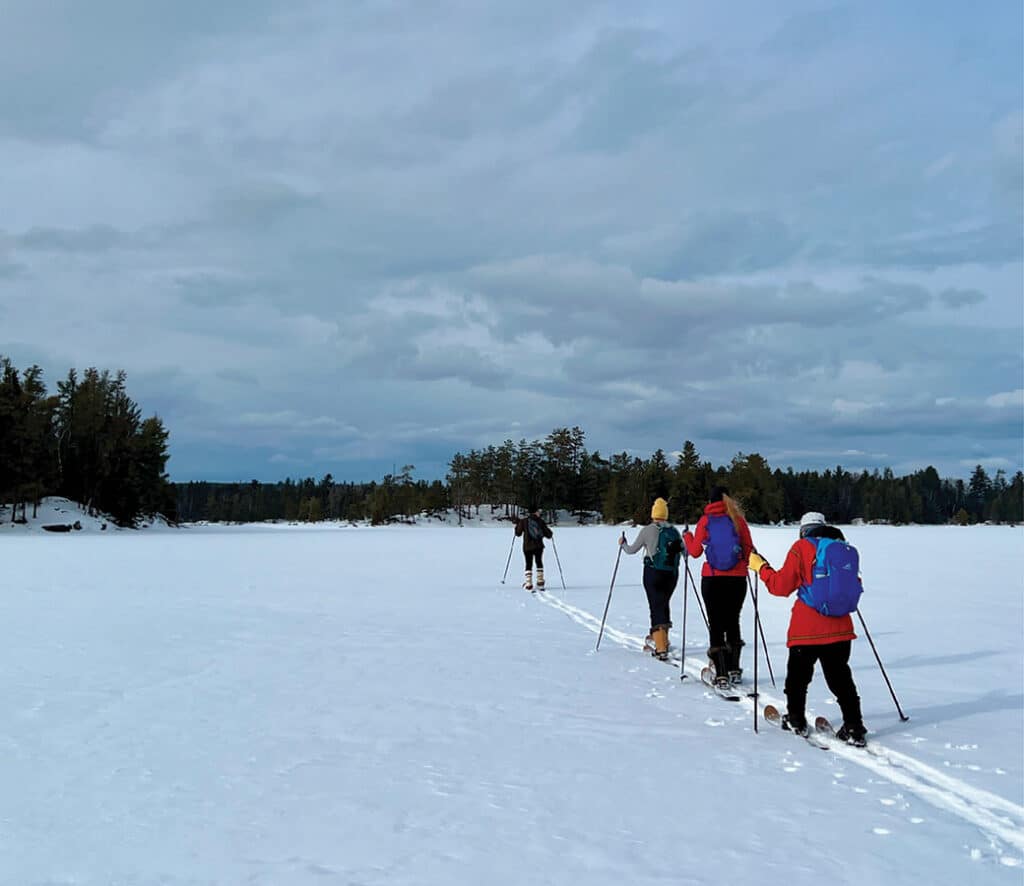
Some of the official guidelines
- You will need a permit. Between October 1 and April 30, it’s easy to get a permit and it’s free. Pick up a self-issued permit at one of the recommended issuing stations or at the trailhead kiosk. Fill it out, put it in a ziplock, and keep it accessible in case a ranger asks to see it.
- Boundary Waters Canoe Area Wilderness (BWCAW) rules still apply. Group size is limited to 9 people. Everyone listed on the permit must camp together. See page 11 in the USFS Boundary Waters planning guide for more on winter travel.
- Set up your campsite on the ice. If conditions prevent this, camp in other low-impact areas.
- Taking care of waste. Set up your tent near a summer campsite, so you have access to the latrine. Garbage is not allowed in latrines, only toilet paper. This means things like menstrual products and body wipes must be packed out. If you’re not near a latrine, dig a hole as deep as you can, at least 200 feet from water sources. Bury the waste and pack out the toilet paper. And yellow snow? Nobody wants to see it, so cover that with snow, too.
- Toss the dirty dishwater back in the woods. When you’re done washing dishes, toss the dirty water at least 200’ back into the woods. Biodegradable soap must also be tossed back into the woods.
- Pack out all garbage. If you place garbage in a bin when you exit, be sure it’s designated for public use.
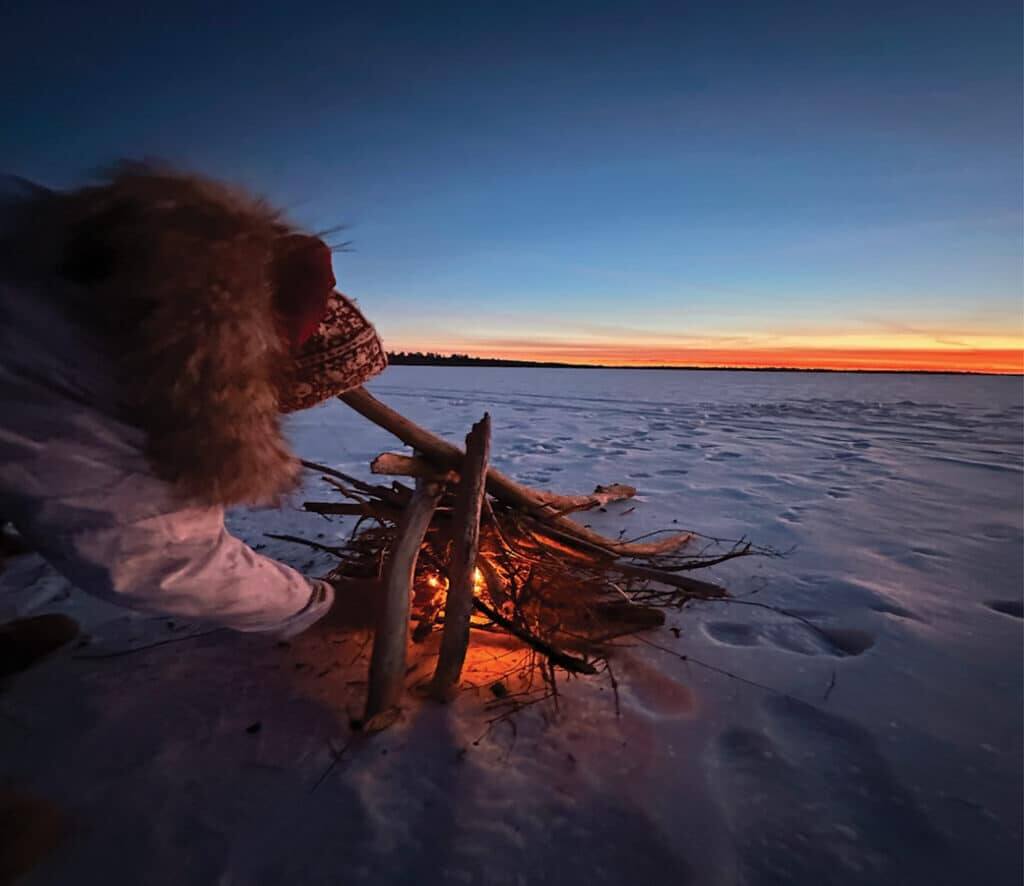
- Build your campfire on ice. The USFS recommends this method to minimize scars on rocks or shorelines. Bring a portable fire pan or use logs as a base to start your fire. Thoroughly douse the fire and cover the ashes with snow. Also, spread and cover woodstove ashes back in the woods.
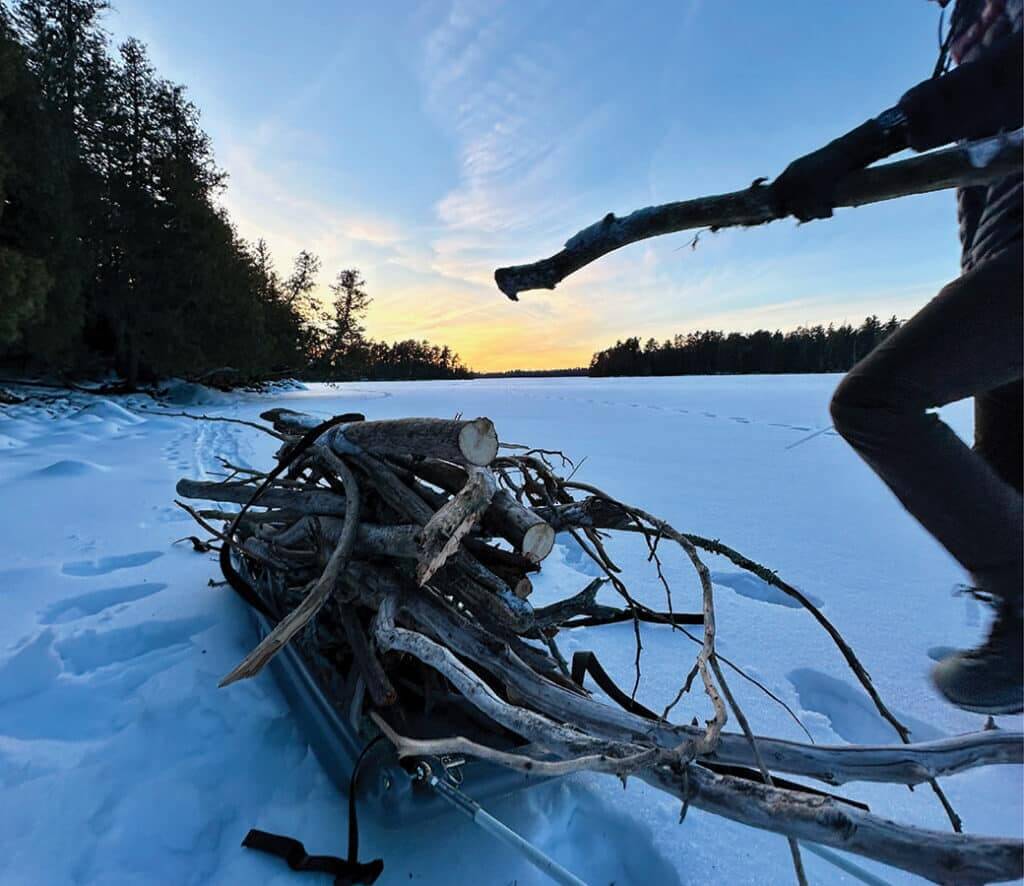
- Collect firewood away from shorelines. Walk downshore to avoid impacted areas like campsites and trails. Hike into the woods, where you will likely find dead and downed wood.
- Remove fish remains and live bait. Dump fish remains at least 200′ back into the woods. Pack out any unused bait as it can’t go in the water.
- Secure your food from critters. During most winter months, keep food in insulated packs or heavy-duty bins near or inside your tent. However, you must hang your food or store it in an approved container between April 1 and November 30.
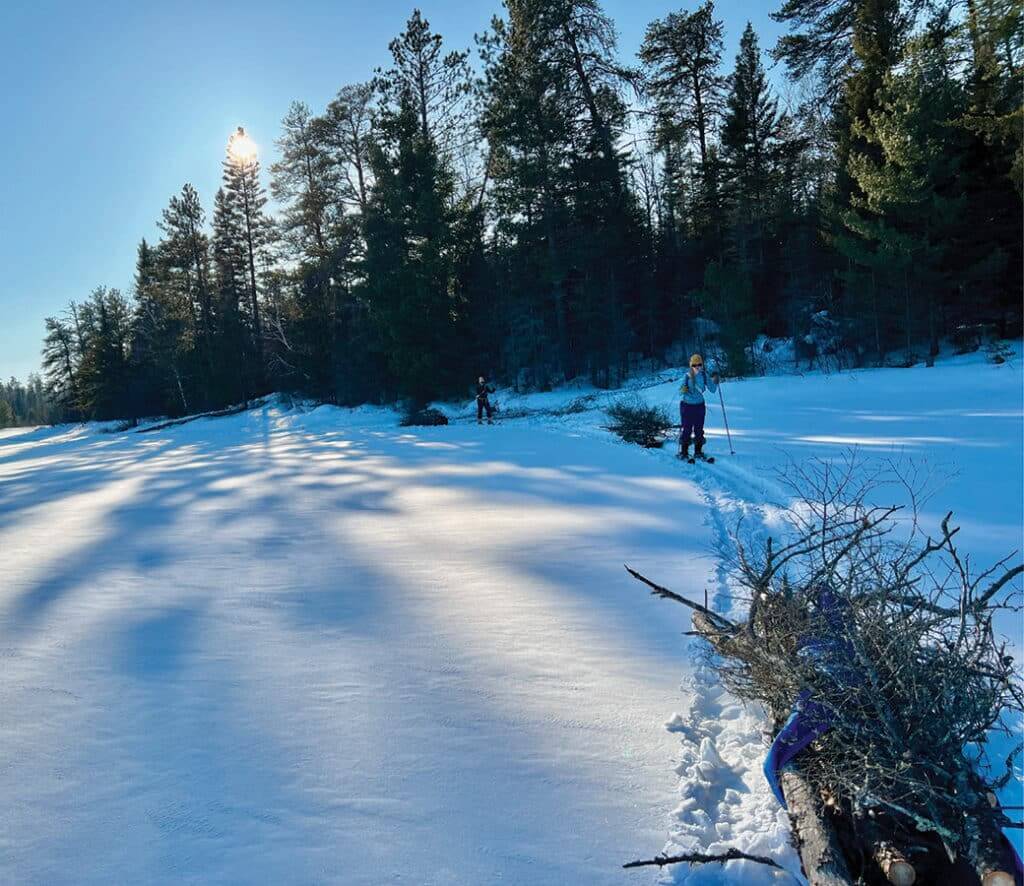
More good trail etiquette
- Mushers have the right of way. As you travel, you may encounter mushers on some of the lakes or portage trails. Step off the trail and let them pass. Plus, it’s a great excuse to watch a joyful team of dogs go by.
- Camp only where it’s allowed. If you plan to camp near an entry point, be sure it’s not on private property or a parking area. Outfitters report that visitors sometimes camp in parking lots that require regular plowing and vehicle access, and they’re trying to discourage that.
- Watch where you’re walking. Please do not walk or snowshoe on groomed ski trails. Check with a ranger station or an outfitter to see if a trail is for skiing only before you venture out.
- Speak quietly. Sound carries far over lakes (and even farther in the cold), so keep your voices low. You’re also more likely to see wildlife.
Winter wilderness travel offers a completely different experience compared to the busy summer months. Night falls early, revealing spectacular skies filled with stars and sometimes, the northern lights. It’s an incredible time to be in the woods, where encounters with other people are rare. Practicing a bit of etiquette helps ensure everyone can have the same amazing experience in this wild place.