
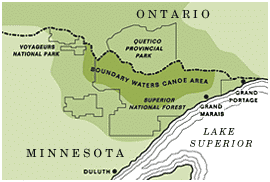
Ely has many great trail systems, some of which are especially fun to explore in the winter. One favorite winter hike is the Secret Blackstone Trail. Located near Moose Lake, quiet trails loop around scenic lakes flanked by thick woods. It has a wilderness feel, though it’s not far from town. Here are a few pro tips from outdoor enthusiast and guide Pam Wright.
Wilderness-like trails
During our visit to Ely, we decided to go on a winter hike along a trail we had explored several times in other seasons. The Secret Blackstone trail is about 30 minutes east of Ely, along Moose Lake Road. After parking our car at the trailhead, we grabbed our daypacks, threw in microspikes, and wandered over to the kiosk to check out the information and map.
The trail system consists of two scenic loops around lakes, each featuring multiple overlooks. The shorter, 2-mile Blackstone loop is easier to hike, whereas the longer, 3-mile Secret-Ennis loop has more technically challenging ups and downs and rocky sections. Even though the trails are well used, they still feel remote and wild. For our winter hike, we chose the Secret-Ennis route (which follows part of the Blackstone trail) and allowed about 2.5 hours to complete it, including rest breaks.
The snow was packed down as we headed south towards Scenic and Ennis Lakes. Along the way, we passed two backcountry campsites along Blackstone Lake. Similar to sites in the Boundary Waters, they have water views, a fire grate, primitive log seating, and a latrine.

Trail is well marked, but carry a map
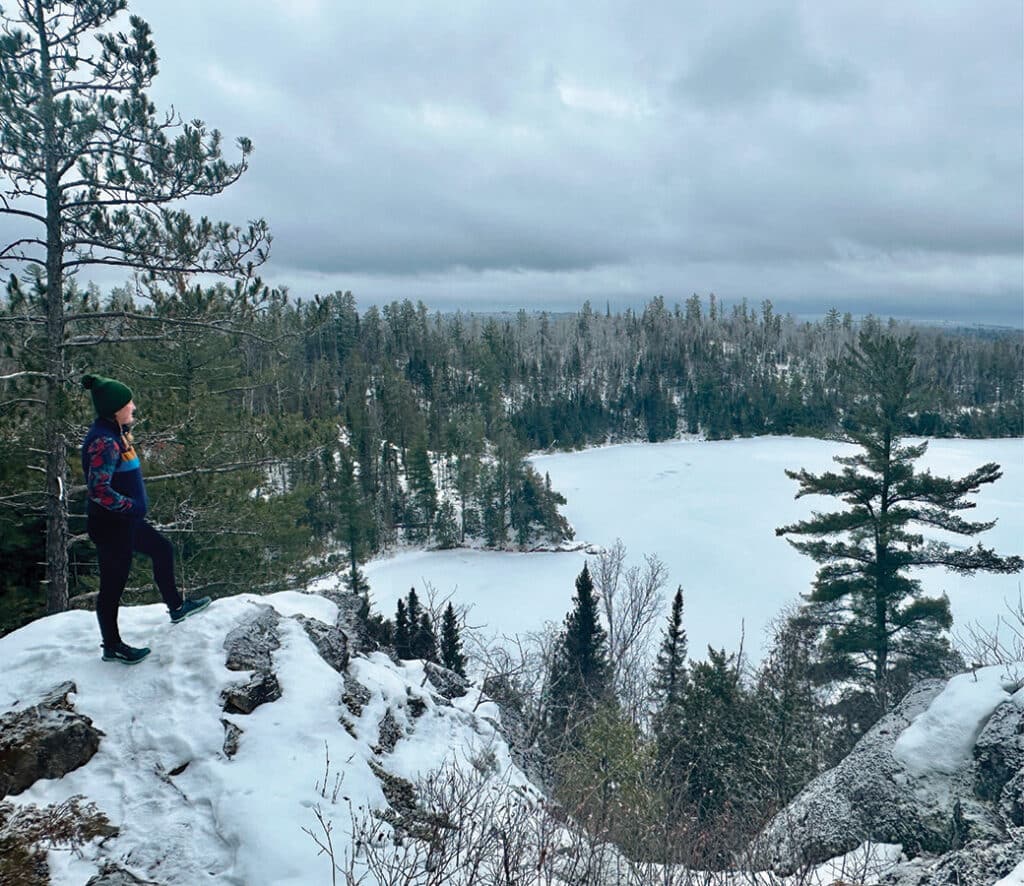
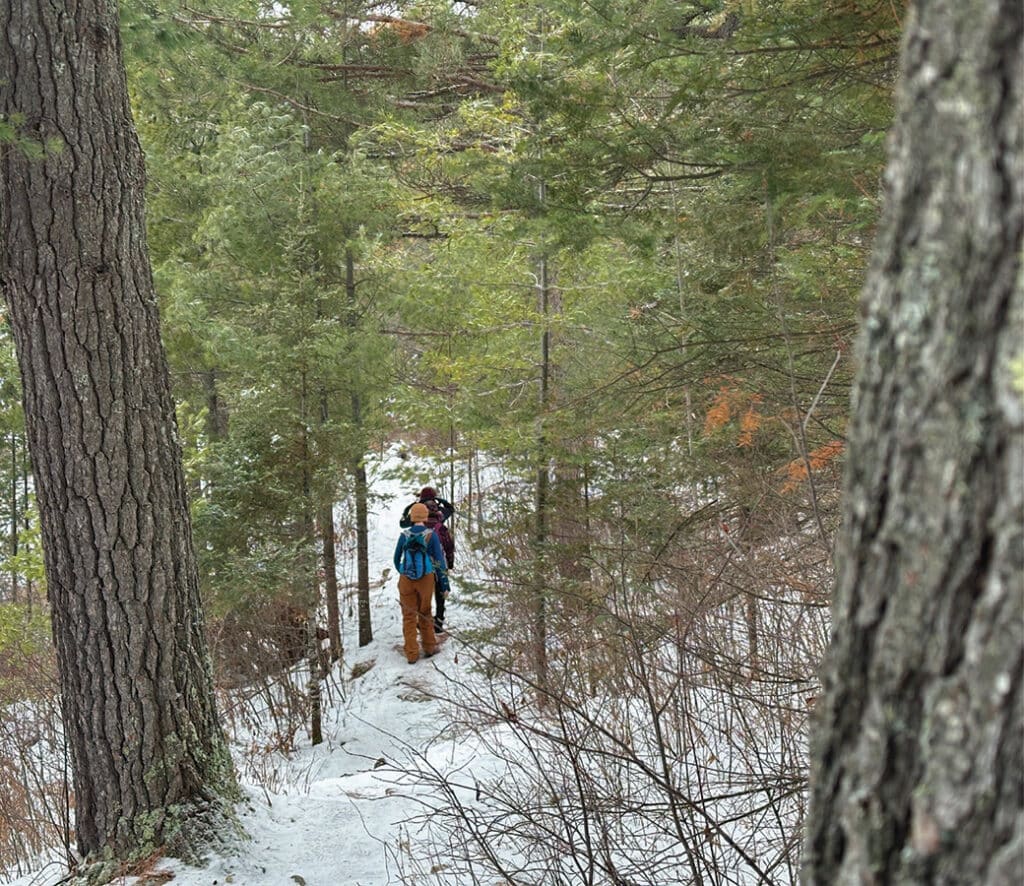
At the trail juncture, the sign offered two options: continue the shorter loop around Blackstone Lake, or head south toward Secret and Ennis Lakes for a longer route. We chose the lesser-used Secret-Ennis trail, which wove through rolling woods of birch and various conifers. As the trail climbed towards the overlooks above Ennis Lake, it became rockier. There are few places with such elevated vistas in an area typically experienced beside lakes or deep in the woods.
We paused on one of the outcrops to have a snack and take in the silence below. The mild winter weather allowed us to swap out a few layers and grab a cup of tea from our thermos. Eventually, the trail drew us back into the woods. The wildlife is active here, and we identified tracks of small mammals as well as larger ones, such as snowshoe hare and red fox.


After a while, we reached a trail junction where you could either finish the Secret loop or continue along the trail around Blackstone Lake. We chose to continue on the Secret loop towards the trailhead, although we’ve taken the other choice before. One of my favorite sections is along the trail that weaves between Blackstone and Secret Lakes. Towering white pines envelop us as the wind softly shushes through the trees. There are several nice spots near the shore to take in a view of the lake.
After a couple of hours, we reach a familiar part of the trail again, and the connector that takes us back to the parking lot. We’ve only seen a couple of other groups on the trail. The silence and solitude have been just what we were looking for on our adventure north.


Good to know before you go
- A permit is not required, and hiking the trail is free.
- Trail conditions and difficulty will vary depending on the season and your preparedness. Check with the USFS Kawishiwi Ranger Station in Ely for updates before you head out.
- Carry a reliable map when you go. You can pick one up at the Kawishiwi Ranger Station, an outfitter, or another Ely-area business.
- You can download a map to your phone from AllTrails or another mapping app, but always carry a paper map as backup.
- Carry a day pack with essentials, such as 1-2 liters of water, a thermos of hot beverage, emergency supplies, extra clothing, snacks, and a whistle. Dress in layers to avoid sweating. Wear solid footwear and bring snowshoes, poles, and microspikes just in case.
- The Blackstone Lake loop is 2.1 miles long and relatively easy. The terrain is mildly hilly with generally easier footing.
- The Secret-Ennis Trail loop is 3.1 miles long and moderately challenging. The terrain is rocky and hilly in places. Rocky areas can be slippery and uneven.
- There are numerous scenic views and overlooks above Secret, Ennis, and Blackstone Lakes. They range from 30 to 80 feet and offer spots to rest and grab a snack.
- There are 3 backcountry campsites along Blackstone Lake and 1 backcountry campsite off a spur trail on Ennis Lake. We spoke to a ranger at the Kawishiwi Ranger Station, who confirmed this but said the information found online or at the trailhead may not be up to date.
- Backcountry campsites are non-reservable and don’t have a fee. While they are primitive, they all have a fire grate and a latrine. Camping is allowed in the winter.
- Other than latrines near campsites and pit toilets at the Moose Lake entry point, there are no toilet facilities nearby. Bury any waste as deep as you’re able to in the winter (6″+ inches when the ground isn’t frozen). Pack out toilet paper and menstrual products in a zip-lock bag.
- Dogs are allowed as long as they’re kept on a leash.
- Practice Leave No Trace and pack out all garbage.
- Let someone know where you are going and when you plan to return. Parking is available at the trailhead. It is usually plowed; however, check with the ranger station or local DOT for updates. For those planning overnight trips, parking is also available at the Moose Lake entry point parking lot just down the road.
Northern Minnesota has many great places to snowshoe or hike in the winter. Best of all, it is one of the quietest seasons to explore. While you’re out there, keep an eye out for animal tracks and wildlife activity. For the more adventurous, try camping at one of the backcountry sites for total solitude. Plus, you won’t be too far from your car.


Editor’s Note: Weather conditions, ice-out dates, permit restrictions and trail conditions vary from year to year. Always check with the US Forest Service or a local outfitter for current conditions before heading out.
More info:
- Secret/Blackstone Lake Trail – USFS – Superior National Forest
- Kawishiwi Ranger Station – Ely
- 10 Essentials – NPS