
Planning a trip to the Boundary Waters Canoe Area Wilderness this year? Not sure where to start? Or, maybe it’s been a while since you last pulled together a canoe trip. Here are a few tips to help plan your trip and secure your permit so you can create memories that last a lifetime.
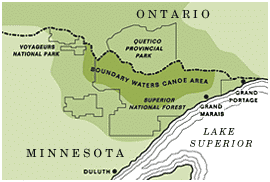
The Boundary Waters Canoe Area Wilderness (BWCAW) spans 1.1 million acres in northern Minnesota. It is one of the most visited wilderness areas in the U.S. Dotted with thousands of lakes and river systems, it draws paddlers, anglers, hikers, and winter campers throughout the year. Still, summer is the most popular season. But with some planning and preparation, you can put together a memorable trip and hopefully, snag a campsite with sunset views.
The BWCAW is generally divided into two main regions—eastern and western. When planning a trip, most people start from the gateway communities of Ely, Tofte, and Grand Marais, though there are other access points.
Throughout the wilderness, there are approximately 80 entry points, each named and numbered. These are rustic trailheads with parking lots, an information kiosk, and usually pit toilets. Entry points give visitors endless route options. You can return to the same entry point you started at, or for variety, exit at another entry point.

Planning essentials
The BWCAW is managed by the U.S. Forest Service (USFS) as part of the Superior National Forest. Because of how it’s managed, it has retained its wilderness character. Portage trails are rustic, and campsites are kept simple. They feature a fire grate, some logs for seating, a few tent pads, and a latrine. The USFS publishes a trip planning guide to help you prepare. It includes wilderness rules and regulations.
Here are a few practical tips to help you get started. They are especially useful for beginners or returning visitors who want to avoid common mistakes.
- Which season do you want to explore? Spring is great for fishing and early-season solitude. Expect cool conditions and rain, so plan accordingly. Ice typically goes out in late April, but not always. Summer attracts everyone—the fish are biting, swimming is excellent, kids are out of school, and berries are widespread. Yes, the bugs are out, but you can manage them in several ways (bug spray, wind facing campsite, treated clothing). Fall brings cooler weather. You may encounter rain, but you’ll also find warm, sunny days and vibrant fall colors. By the end of September, the bugs have usually died off. Depending on the year, winter conditions might arrive in October or not begin until November. Always check the weather.
- Plan a trip that will be enjoyable, whether you travel solo or with a group. Consider skills, experience, fitness, and personal preferences when putting together a route. Decide if you want to basecamp and take day trips or move campsites almost every day.
- Review a planning map or use an online route planner to help plan your route and pick an entry point. Pay attention to the locations of campsites and portage trails.
- Narrow your entry points based on your interests and reserve a permit. Book your lodging and arrange to rent or buy any gear you need.

Once you secure your permit, you can tackle the other details.
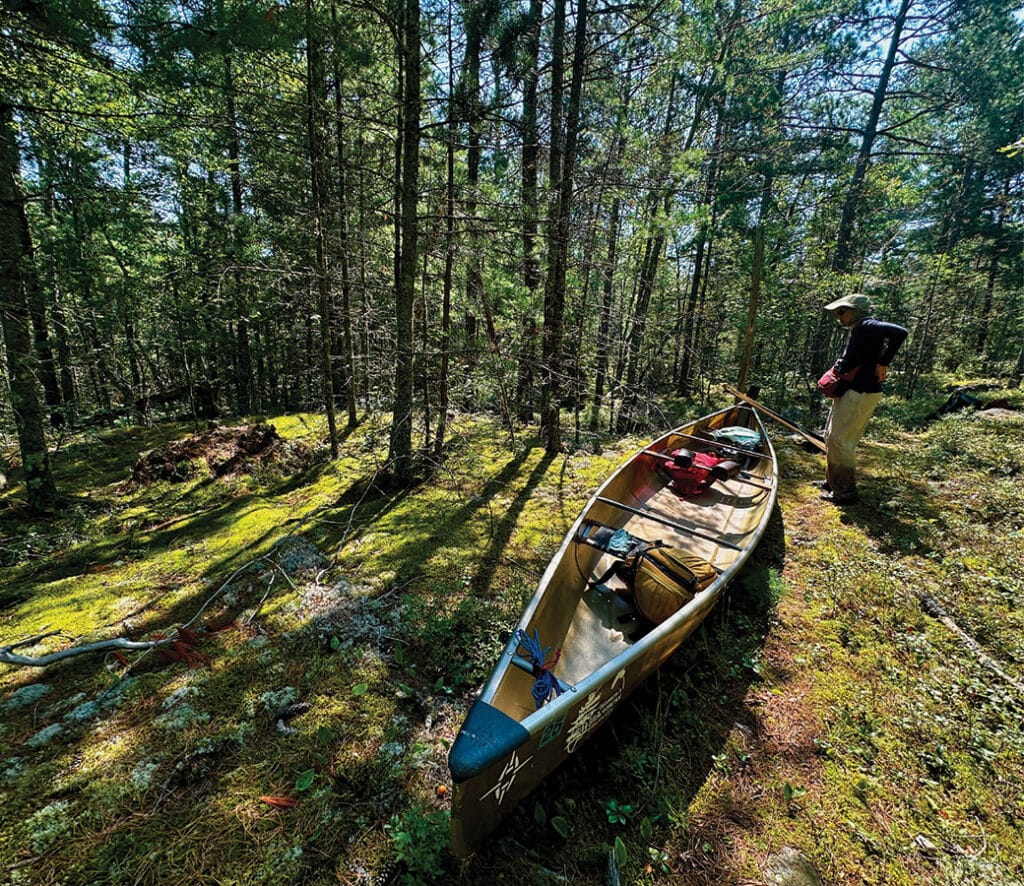
- Follow a training plan to prepare for the rigors of a canoe trip. Many people underestimate the effort required to carry a canoe (or two!) and all their gear over numerous portage trails. Staying in good physical condition also reduces your risk of illness or injury. Plus, it’ll make the trip more enjoyable.
- Prepare for the conditions you might encounter. Summer storms can happen anytime. Evenings are often cool. Lakes are cold in the spring. Pack a tarp that is easy to set up, and ensure everyone has reliable rain gear.
- Take inventory of the gear you own. What can you borrow, or rent? Check to see that everything works properly before you go. Pack clothing that wicks away moisture, offers sun protection, and keeps you warm or cool. Reduce what you bring by wearing the same clothes each day. Wear durable shoes on portage trails and bring a dry pair to wear in camp.
- Pack and organize your gear and food into a system that stays consistent throughout the trip. Most people use canoe packs as they are designed for this type of wilderness travel. They also fit well into a canoe and hold a lot of gear, but other packs may work. Putting things in the same place increases safety and comfort and reduces stress.
- Plan out all of your meals. Many people bring a combination of dehydrated, store-bought, and fresh options. Label, pack and prepare as much as you can ahead of time for each meal. Don’t forget seasonings, oils/butter, and beverages.
- Prioritize safety and find ways to minimize risks. Bring a satellite communicator (you can rent one from an outfitter). Check whether your phone supports satellite connectivity outside cell coverage. Carry a first aid kit and know how to use it. Don’t paddle in conditions beyond your skill level and always wear a lifejacket.
- List the activities you want to do during your adventure. If you plan to fish, consult local outfitters to find out what’s biting and pick up a fishing license. Packing hammocks, small paint kits, journals, games, and books can enhance your trip.
- Remember to leave no trace. Pack out your garbage (and any garbage you find). Minimize impact on campsites and portage trails. Keep your voices low—you’re more likely to see wildlife. Store your food properly to minimize the chance of an animal getting into your stash. Care for the wilderness well so it’s just as lovely when you visit again.
- Leave an itinerary at home with your emergency contact. Tell them who to call and when to call if you haven’t returned to town by a certain time.
A permit is required year-round
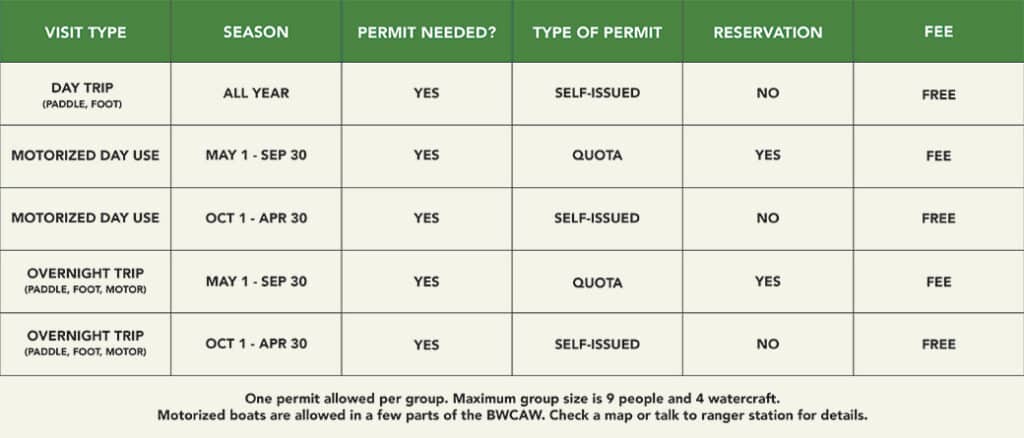
Between May 1 and September 30, the USFS requires visitors to have a quota permit. A quota means that a limited number of permits are available for each entry point, each day. This helps minimize the impact on the landscape and creates more solitude for all visitors.
If you’re traveling with a group, you only need one quota permit. Choose one person to be the trip leader, have them reserve the permit, and list everyone else in the group on the permit. You can also add a second trip leader as an alternate in case the primary leader can’t pick up the permit. If you’re travelling by yourself, you must also have a permit.
You can reserve a quota permit online or by calling or visiting an issuing station, such as an outfitter. From Oct 1 to April 30, you still need a self-issued permit, but entry points do not have quotas. We’ll share more on those below.
Quota permits become available at 9 am (CST) on the last Wednesday of January each year.

What to know before reserving a permit
Before you reserve a quota permit, you should be aware of several requirements listed on the reservation website. They include information on how permits may be used, what to do if you need to cancel, and where to pick up your permit. Once you pick it up, place it in a waterproof map case or plastic bag in case a ranger requests to see it.
Be sure to have your plans in place before you reserve a permit. Decide which issuing station you’d like to pick up your permit from, as you don’t want to discover in Ely that your issuing station is in Grand Marais. In the past, there have also been issues with permit hoarding and numerous cancellations. By planning ahead, you can avoid this.
If you wait until the last minute, a walk-in permit may be available, but it is best to reserve in advance, as your choices may be limited. You can pick up a walk-in permit at an issuing station such as an outfitter.
Outside of the quota season, self-issue permits are required for overnight trips from October 1 through April 30. They are also available year-round for day trips, whether traveling on foot (hiking) or by paddle. In addition, visitors using motorized boats in designated motorized zones must use self-issue permits between October 1 and April 30. Best of all, self-issued permits don’t require a reservation or fee.
If you’re unsure which permit is needed for your trip, contact an issuing station or ranger station. Since April 2025, the Gunflint and Kawishiwi Ranger Stations no longer issue BWCAW permits. However, they remain a good source to gather information on canoe routes, road closures, and current conditions.
Keep it fun and flexible
While you can control many things on a canoe trip, you can’t control everything. Planning ahead and staying flexible helps you avoid disappointment, injury, or worse. When you’re in the woods, pay attention to how your group is doing and adjust your plans as needed. Build a rest day into your trip, as wilderness tripping can be tiring. Plus, who knows, maybe you’ll want to take a side trip to a special waterfall.
Nature’s unpredictability is part of what makes the wilderness experience unique and sometimes wonderful. Embrace the rain and wind as much as you embrace the starry nights. No matter what happens, you’ll have pictures and stories to share for years to come.

Editor’s Note: Weather conditions, ice-out dates, and permit regulations in the BWCAW vary from year to year. Always check with the US Forest Service or a local outfitter for current conditions before heading out.
More info:
- Boundary Waters Canoe Area Wilderness – USFS-Superior National Forest
- Boundary Waters Canoe Area Wilderness Permits – USFS-Superior National Forest
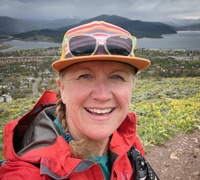
Wilderness guide and outdoorswoman Pam Wright has been exploring wild places since her youth. Remaining curious, she has navigated remote lakes in Canada by canoe, backpacked some of the highest mountains in the Sierra Nevada, and completed a thru-hike of the Superior Hiking Trail. Her professional roles include working as a wilderness guide in northern Minnesota and providing online education for outdoor enthusiasts.