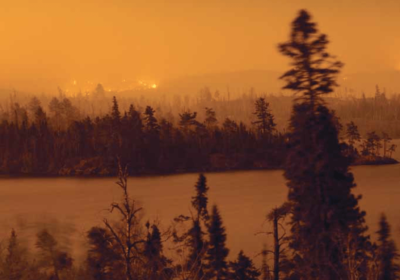
One Big Fire
In July of last year, a lightning strike ignited the Cavity Lake fire in the Boundary Waters Canoe Area Wilderness (BWCAW). Over 32,000 acres burned in what was then called …

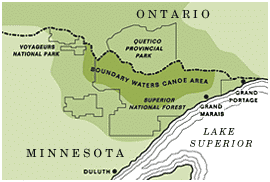
In July of last year, a lightning strike ignited the Cavity Lake fire in the Boundary Waters Canoe Area Wilderness (BWCAW). Over 32,000 acres burned in what was then called …
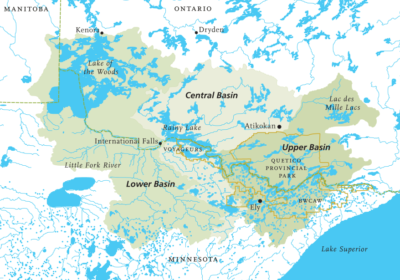
By Charlie Mahler, Wilderness News Contributor In early 2008, when the Minnesota Pollution Control Agency releases its updated list of impaired waters in Minnesota, it is likely that Lake of the …
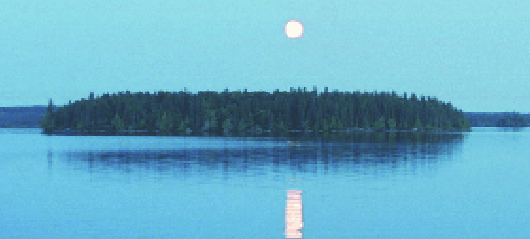
While the plants and animals of Quetico Provincial Park settle in for the winter, the Canadian government at all levels is examining the park’s management strategies and preparing for the years …
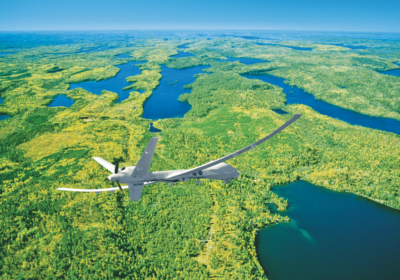
By Charlie Mahler, Wilderness News Contributor The Boundary Waters. The Border Route. Those dividing “B” words have long been embedded in the names used to describe the Quetico-Superior region. The notion, …
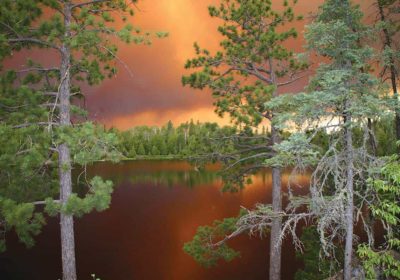
Over 31,800 acres have burned in the largest fire to hit the Boundary Waters Canoe Area region since 1894. A lightning strike near Cavity Lake on July 13th, started a wildfire …
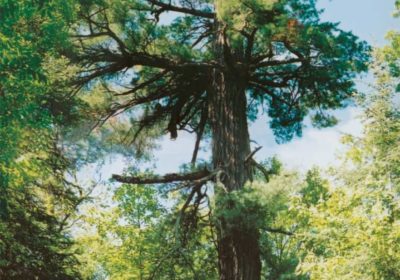
Bold against the sky, the feathery branches of an old white pine have a distinctive silhouette. Although not the most abundant species in the Quetico-Superior forest today, generations have strongly identified …
Management of All-Terrain Vehicle riding in Minnesota, especially in the north, continues to rev as an environmental and recreational issue. Despite a compromise law initiated by Governor Tim Pawlenty in 2003, …

By Sally Nankivell, Northeastern Minnesotans for Wilderness Board Member A recent snowmobile trail controversy has resulted in a familiar scenario: local motor enthusiasts versus environmentalists, each passionately arguing over the …
By Charlie Mahler, Wilderness News Contributor Three new mining projects inside and adjacent to the Superior National Forest signal a new era in northern Minnesota mining. In a region known world-wide …
The long-range health of Minnesota’s forests will some day be improved by management decisions that better recognize the opportunities for restoring ecological forest health while maintaining economic productivity. The Minnesota Center …
by Anthony X. Hertzel Minnesota Ornithologists’ Union In the fall and winter of 2004-2005, Great Gray Owls moved into northern Minnesota in unprecedented numbers. By the end of the winter season, …
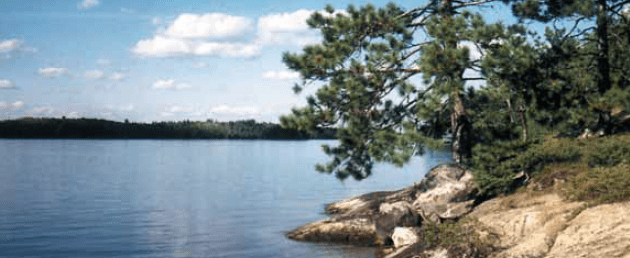
The Quetico Superior Foundation was excited to participate in the Trust for Public Land’s purchase of Long Island on Burntside Lake located northwest of Ely, Minnesota. According to the foundation, Burntside …
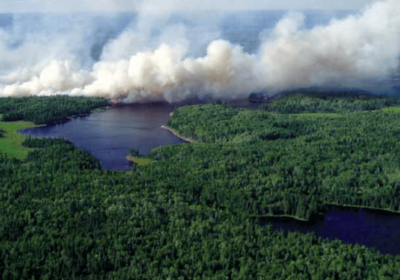
Federal parks and forest officials had a perfect opportunity last summer to advance two of their goals for Voyageurs National Park: restoring fire as part of the natural ecosystem and regenerating …
The Roadless Area Conservation Rule is the most significant public lands conservation measure of recent years. Protecting nearly 60 million acres of national forest land form logging and road-building, including 147,000 …
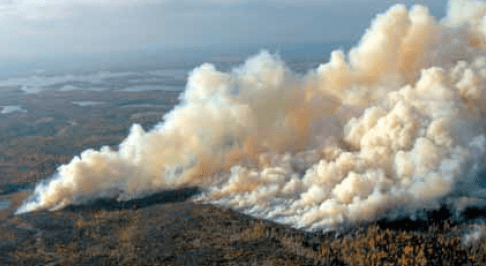
The US Forest Service, partnering with the Ontario Fire Service, carried out two successful prescribed burns within the Boundary Waters Canoe Area Wilderness (BWCAW) on October 10th and 11th. The Arc …
The Fall issue of Wilderness News is in the mail and online. Download a PDF here. Highlights: Special Feature Part I: The Historic Lodges of the …
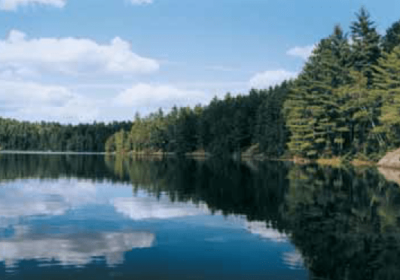
The Minnesota Land Trust uses conservation easements to protect tracts in three high-visibility lakes of canoe country. The Minnesota Land Trust, with funding from the Quetico Superior Foundation, has completed three …
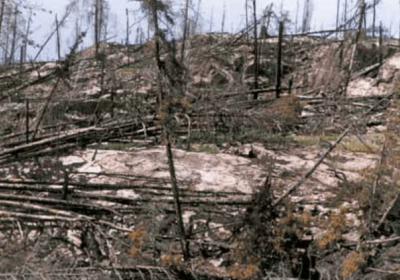
Results of the prescribed burn that took place on Three Mile Island last September. With the completion last September of the Magnetic Lake and Three Mile Island prescribed burns, the Forest …
The Nature Conservancy of Minnesota is making two land purchases that will help preserve the scenery, history and unusual ecosystem of the Pigeon River border area between Minnesota and Ontario.
The 1999 blowdown in the BWCAW damaged many acres of undisturbed boreal forest, destroying the nesting habitats for
many species of birds. The Three-toed Woodpecker, (Picoides tridactylus) however, is benefiting from this disturbance twofold. Their preferred habitat is disturbed areas within coniferous forests, but recentlyburned conifers are an added attraction. Damaged conifers become home to many insects, and this abundant food source attracts Three-toed Woodpeckers.